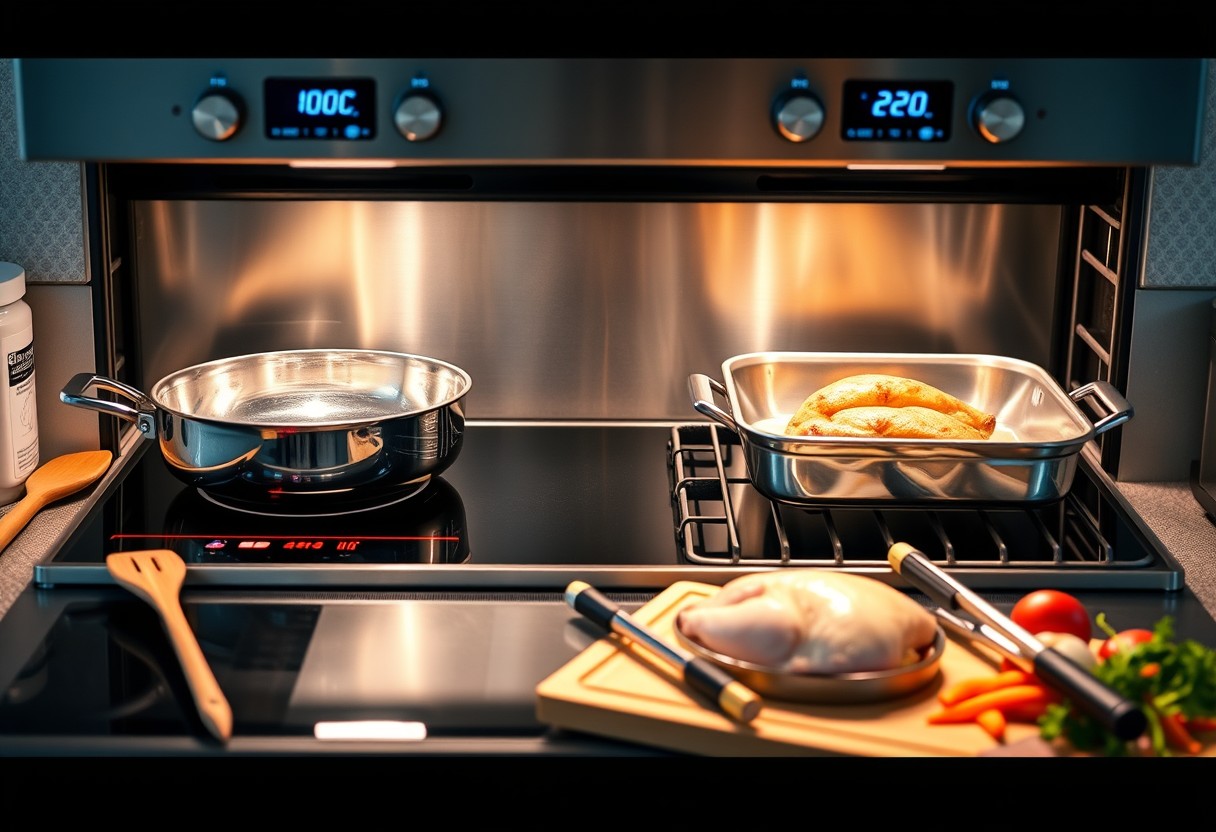
You can save time and energy by cooking two dishes simultaneously, even when they require different oven temperatures. The key is understanding how to balance heat distribution and timing. Mistakes can lead to undercooked meals or food safety risks, but with the right techniques, you’ll achieve perfectly cooked results every time.
Key Takeaways:
- Cooking two foods at different temperatures works best when you identify a compromise temperature that safely and effectively cooks both items, even if it’s not the ideal setting for either.
- Oven racks can be positioned to take advantage of natural temperature gradients-many ovens are hotter at the top, so placing one dish on the upper rack and another on the lower helps approximate dual-temperature cooking.
- Timing adjustments, such as adding one item later or using residual heat after turning off the oven, allow for better control when exact temperature separation isn’t possible.
Assessing the Core Factors
Understanding how different foods respond to heat begins with evaluating their physical properties. Food density and moisture content are primary determinants in how quickly and evenly a dish cooks. Dense items like thick-cut meats or root vegetables absorb heat more slowly, requiring longer exposure to achieve doneness. In contrast, moist, delicate foods such as fish fillets or leafy greens heat rapidly and risk drying out or overcooking at high temperatures. Recognizing these behaviors allows you to pair foods strategically, even when oven settings aren’t ideal for both.
- Moisture content affects how quickly food heats and risks drying out
- Density determines heat penetration speed and required cooking duration
- Temperature tolerance varies by ingredient structure and composition
- Thermal mass influences how food retains and distributes heat
Identifying Temperature Tolerance
Every ingredient has a threshold beyond which texture and flavor degrade. High-moisture foods like tomatoes or zucchini begin to break down rapidly above 375°F, losing structure and taste. In contrast, dense proteins such as pork shoulders or whole chickens tolerate higher heat but require time for internal temperatures to catch up. You must recognize these limits-exceeding them leads to burned exteriors and undercooked centers. Matching each item’s tolerance to the available oven setting prevents waste and ensures quality results.
Evaluating Density and Moisture Content
Dense foods with low moisture, such as potatoes or squash, conduct heat slowly and benefit from longer roasting times. Their compact structure resists quick temperature shifts, making them more forgiving at moderate heat. On the other hand, foods high in water content-like broccoli or fish-heat rapidly and can overcook in minutes. You face a higher risk of drying out delicate items when sharing oven space with heartier dishes. Matching each food’s density and moisture level to the overall cooking environment improves outcomes significantly.
Common Foods and Their Heat Response
| High-Density, Low-Moisture Foods | Low-Density, High-Moisture Foods |
| Beef roast, sweet potatoes, carrots | Spinach, fish fillets, mushrooms |
| Slow heat absorption; needs sustained cooking | Rapid heat absorption; cooks quickly |
| Tolerates higher temperatures with longer exposure | Best at lower or moderate heat to prevent drying |
Using the Oven Rack Strategy
Positioning dishes on different oven racks takes advantage of the natural vertical temperature gradient, where heat rises and creates warmer zones near the top and cooler areas at the bottom. Place the food requiring higher heat on the upper rack, where temperatures can be up to 25°F hotter than the set oven temperature, while the lower rack offers a slightly more moderate environment ideal for delicate items. This stratification allows simultaneous cooking without compromising doneness, as long as each dish is placed intentionally based on its heat needs.
Maximizing Vertical Heat Distribution
You can optimize cooking results by matching each dish’s ideal temperature zone to its rack position. The top third of the oven typically delivers the most intense ambient heat, making it best for foods that thrive under high heat, like roasted vegetables or crusty breads. Keep the item needing a lower setting toward the bottom rack, where rising hot air has dissipated some intensity. Proper placement ensures both foods receive appropriate thermal exposure without relying on guesswork.
Leveraging Hot Spots and Airflow
Air circulation inside your oven isn’t uniform-areas near the heating element often develop hot spots, while corners may lag in warmth. Position the food that benefits from aggressive browning closer to these active zones, such as the back or sides near the rear burner. Allow space around each dish to maintain consistent airflow, preventing steam buildup and ensuring even cooking. Watch for uneven coloration, which signals you should rotate pans halfway through if needed.
Adjusting Cooking Times for Temperature Variance
When roasting two foods at once with different temperature requirements, calculating a balanced midpoint allows both dishes to cook safely and effectively. You can avoid undercooking or drying out delicate items by applying a simple mathematical average of the two recommended temperatures. This method works best when the temperature gap is no more than 50°F (10°C), ensuring neither food is subjected to extreme deviation. Always monitor internal doneness rather than relying solely on time, as oven accuracy varies.
| Temperature Pair (°F) | Mid-Point Setting (°F) |
|---|---|
| 325°F and 375°F | 350°F |
| 350°F and 400°F | 375°F |
| 375°F and 425°F | 400°F |
| 400°F and 450°F | 425°F |
Calculating Mid-Point Temperature Settings
Achieving consistent results starts with averaging the ideal temperatures each dish requires. Add both recommended settings and divide by two to find the compromise heat level. For example, if one item needs 375°F and the other 425°F, set your oven to 400°F. This reduces thermal shock while maintaining cooking integrity. Be cautious when the difference exceeds 50°F-such wide gaps make mid-point settings less effective and increase risk of uneven outcomes.
| Dish A Temp (°F) | Dish B Temp (°F) |
|---|---|
| 350 | 400 |
| 375 | 425 |
| 325 | 375 |
| 400 | 450 |
Extending Duration for Lower-Heat Items
Items that require lower temperatures will need extra time when cooked at a higher compromise setting. Start checking for doneness 10-15 minutes before the original lower-temp recipe suggests. Overcooking becomes a real risk, especially with proteins or moist baked goods. Use foil to tent sensitive dishes near the end to prevent excessive browning. This adjustment preserves texture while aligning finish times across both foods.
| Original Low-Temp Time (min) | Adjusted Time at Mid-Point (min) |
|---|---|
| 45 | 50-55 |
| 60 | 65-70 |
| 30 | 35-40 |
| 90 | 95-100 |
Utilizing Dual-Zone Appliances
Dual-zone ovens and air fryers give you precise control over separate cooking environments within a single appliance. You can roast vegetables at 400°F in one chamber while gently warming delicate fish at 325°F in the other, eliminating temperature conflicts that typically disrupt meal timing. These appliances use insulated compartments to prevent heat transfer, ensuring each zone maintains its set point without interference. The independent design allows for true simultaneous cooking, making them ideal for complex meals requiring different thermal conditions.
Operating Independent Heating Elements
Your dual-zone appliance’s heating elements function separately, letting you establish distinct climates in each chamber. When roasting chicken thighs in the top zone at 425°F, the lower zone can gently melt chocolate at 175°F without risk of scorching. Each element responds only to its zone’s thermostat, maintaining accurate, isolated temperatures throughout the cook. This level of control ensures foods develop properly without cross-compartment thermal interference, giving you restaurant-grade precision at home.
Setting Discrete Timers for Concurrent Cooking
You can assign individual timers to each zone, aligning perfectly with the unique cook times of different dishes. While one timer alerts you when garlic rolls are golden at 18 minutes in the upper chamber, the second continues counting down for lasagna baking below. This prevents overcooking or missed cues when managing multiple items. With independent countdowns, you maintain full oversight of both processes, ensuring every dish finishes exactly when needed-no guesswork, no overlap.
Mastering the Carry-Over Cooking Method
Timing becomes your most powerful tool when foods finish at different points but need to be served together. Remove the item that cooks faster slightly before it reaches peak doneness, knowing residual heat will continue the process. This pause prevents overcooking while freeing up space for the second dish to catch up. Plan each exit based on texture and target temperature, not just the clock-delicate proteins especially benefit from this breathing room.
Staggering Entry and Exit Times
You can synchronize completion by introducing items into the oven at different moments. Start with the food requiring longer exposure or higher heat, then add the quicker-cooking item later. Removing one early gives it time to rest while the other finishes, maintaining ideal texture and temperature across both dishes. This method works best when you’ve tested one or both recipes before and understand their behavior near the end of cooking.
Using Foil and Insulation to Hold Heat
Foil acts as a buffer that slows carry-over cooking while preserving warmth. Tent the finished dish loosely to avoid trapping too much steam, which can soften crispy exteriors. Insulating with a lid or warming drawer keeps food safe and ready without pushing it past its optimal point. This technique ensures the first item stays warm and stable, giving you full control over final plating timing.
Tips for Maintaining Food Safety and Quality
- Cook delicate proteins at lower temps to preserve moisture
- Use instant-read thermometers to verify doneness
- Shield foods with foil to prevent drying
- Allow carry-over cooking to finish heating without over-browning
Always ensure each item reaches its required internal temperature, especially when cooking poultry, seafood, or ground meats alongside vegetables or grains. Cooking at different oven temperatures demands attention, but you can safely finish foods at varying rates by positioning them strategically. The most dangerous mistake is assuming oven time equals doneness-always verify with a probe. Letting foods rest after removal helps stabilize texture while maintaining safety.
Monitoring Internal Temps with Probes
A reliable probe thermometer gives you real-time insight into how each dish progresses internally. You avoid undercooking chicken breasts or over-baking fish fillets by inserting the probe into the thickest part before placing in the oven. Digital models with dual sensors let you track two foods simultaneously, alerting you when either reaches its target. The greatest advantage is catching the exact moment meat hits safe temperatures without guesswork, preserving juiciness and preventing dry, overcooked results.
Preventing Surface Drying and Overcooking
Exposure to direct heat or prolonged cooking can leave the outer layers of food tough and leathery, even if the inside is perfectly done. You can shield sensitive items like fish or chicken with a loose tent of foil, reducing surface browning while allowing heat to penetrate evenly. Rotating pans halfway helps, but timing matters-removing food just before it hits target temperature prevents excessive carry-over cooking. The best results come from balancing ambient heat with protective barriers to maintain both safety and texture.
Summing up
You can successfully cook two foods at once even when they require different temperatures by applying practical strategies and understanding heat dynamics. Positioning dishes on separate oven racks allows for better control, while adjusting cooking times compensates for temperature gaps. Using dual-zone appliances or finishing one item while the other rests takes advantage of carry-over heat. Monitoring internal temperatures ensures both safety and quality. With careful planning and attention to detail, you maintain consistency and serve well-cooked meals without compromising flavor or texture.
FAQ
Q: Can I cook a roast and a casserole at the same time if they require different oven temperatures?
A: Yes, you can cook both dishes together by finding a compromise temperature. Set the oven to a midpoint-say 350°F if one dish needs 325°F and the other 375°F. The roast may take slightly longer to reach tenderness, while the casserole might brown a bit faster. Monitor both toward the end of cooking, covering the casserole with foil if it’s browning too quickly.
Q: What should I do if one food needs high heat and another requires low and slow cooking?
A: In cases like roasting vegetables at 425°F and baking a custard at 325°F, prioritize the more temperature-sensitive dish-the custard. Cook the custard first or use a second heat source such as a slow cooker or stovetop for one item. Roasted vegetables can often be finished under a broiler later if needed, but custards break down easily with sudden heat changes.
Q: How does oven rack placement affect cooking two foods at once?
A: Position one dish on the upper third rack and the other on the lower third to maximize air circulation and minimize interference. For example, place a lasagna needing even heating on the lower rack and a sheet of roasted Brussels sprouts on the upper rack for better browning. Rotate pans halfway through if your oven has hot spots.
Q: Is it safe to adjust cooking times when balancing two temperatures?
A: Adjusting times is safe as long as internal doneness is verified. A chicken dish set in a cooler oven will take longer to reach 165°F internally, so use a meat thermometer instead of relying on the clock. Dense foods like potatoes or casseroles also need time to heat through, so check center temperature with a probe.
Q: Can I use the stovetop and oven simultaneously to manage different temperature needs?
A: Yes, this is an effective way to handle multiple dishes. Simmer a soup on the stove at low heat while roasting salmon in the oven at 400°F. Using both appliances lets you maintain precise control over each food’s environment. Just ensure ventilation is adequate to manage steam and odors.