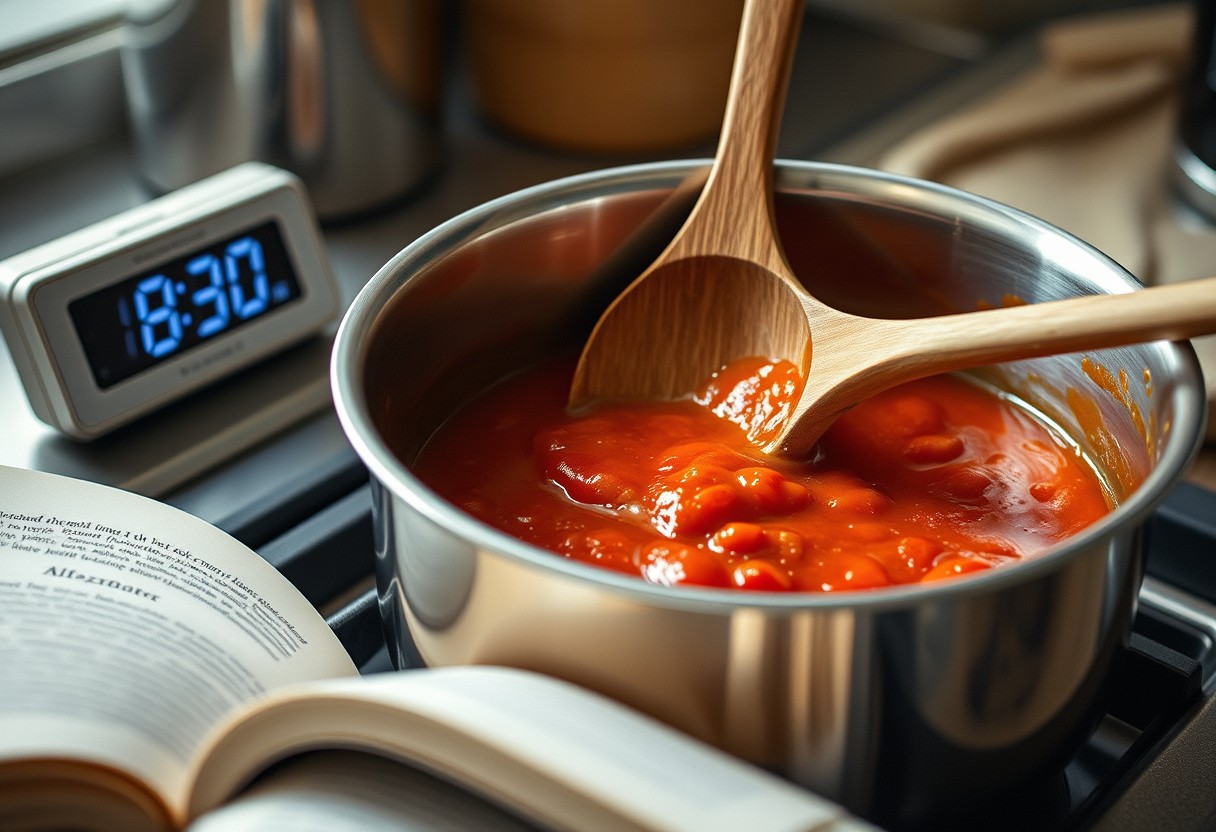
You’ve probably ruined a sauce by stirring too much or let food stick to the pan because you didn’t stir enough. Over-stirring can break down delicate textures, while under-stirring risks burning and uneven cooking. Knowing when to stop is one of the most powerful yet overlooked skills in home cooking. This guide shows you how to make that decision with confidence, using simple cues anyone can learn.
Key Takeaways:
- Over-stirring can break down delicate ingredients, especially in dishes like risotto or scrambled eggs, where texture relies on controlled heat and minimal intervention.
- Visual cues-such as the consistency of sauces, the formation of a skin, or how quickly a liquid returns to a simmer-often signal when stirring should be reduced or stopped entirely.
- Some cooking methods, like caramelizing onions or searing meat, require leaving food undisturbed for periods to develop flavor through browning, making timing and patience more effective than constant agitation.
Identifying Stirring Types and Techniques
Understanding the difference between folding and whipping is essential for achieving the desired texture in your dishes. Folding gently combines ingredients while preserving air, ideal for batters and whipped creams. Whipping actively incorporates air, increasing volume and creating a light structure. Misusing these methods can collapse delicate mixtures or fail to aerate properly. Recognizing when to apply each motion ensures your soufflés rise and your emulsions hold.
- Use folding to maintain air in delicate batters
- Apply whipping when building volume and structure
- Always match technique to recipe goals
- Folding uses a spatula in a slow, arc-like motion
- Whipping relies on speed and consistent force
| Folding | Gentle mixing motion to preserve air bubbles |
| Whipping | Energetic beating to incorporate air and increase volume |
| Spatula | Primary tool for folding; minimizes deflation |
| Whisk | Ideal for whipping; maximizes aeration through rapid movement |
| Air retention | Critical outcome when folding light ingredients like egg whites |
Folding for Delicate Batters
You use folding when combining airy components like beaten egg whites or whipped cream into heavier bases. The goal is to blend without losing the trapped air that gives lift during baking. A silicone spatula moves in a slow, bottom-up arc, cutting through the center and sweeping along the bowl’s edge. Overmixing here leads to a dense cake or flat soufflé. Your patience ensures a tender crumb and proper rise.
Continuous Agitation for Emulsions
Stirring constantly matters most when creating emulsions like hollandaise or vinaigrette. You must maintain steady motion to bind oil and water-based liquids, preventing separation. A whisk works best, rapidly dispersing fat into tiny droplets suspended in the aqueous phase. If you stop too soon, the mixture breaks and loses its smooth texture. Consistent movement builds stability and a rich mouthfeel from the start.
Environmental Factors Affecting Stirring Frequency
Your pan’s material and burner intensity directly influence how often you need to stir. Thick, heavy pans like cast iron or clad stainless steel distribute heat evenly, reducing hot spots and the need for constant movement. In contrast, thin aluminum or nonstick cookware heats quickly and unevenly, demanding more frequent stirring to prevent scorching. High burner output increases surface temperature rapidly, especially in lightweight pans, raising the risk of burnt food. Matching your stirring rhythm to these variables ensures consistent results without overhandling.
- Cast iron retains heat steadily, requiring less stirring
- Nonstick surfaces heat fast and can degrade with excessive scraping
- Gas burners offer instant control, affecting response time
- Induction cooktops deliver rapid, precise heat, increasing vigilance needs
- Stainless steel reveals food release cues through browning patterns
Heat Conductivity and Pan Surfaces
Different pan materials respond uniquely to heat, altering how food behaves during cooking. A copper or aluminum-core skillet spreads energy fast, minimizing localized burning and allowing longer intervals between stirs. When using a thin steel pan, hotspots develop quickly, making it dangerous to leave food unattended. Nonstick coatings reduce friction but are prone to damage from aggressive stirring. Your choice of cookware changes the rules-understanding its conductivity helps you decide when motion supports cooking and when it interferes.
Moisture Evaporation and Viscosity
Liquids behave differently based on how fast they lose moisture, which depends on your stove’s output and pan shape. Wide, shallow pans expose more surface area, speeding evaporation and thickening sauces faster, which increases the chance of sticking. As mixtures become more viscous, their ability to self-distribute heat drops, making stirring more necessary. Letting a high-viscosity mixture sit too long on strong heat can lead to bottom-layer scorching before the top shows warning signs. Adjust your movement frequency as textures change.
A Step-by-Step Guide to Mastering the Motion
Following a systematic approach protects your ingredients from breaking down too soon, especially when working with delicate proteins or starches. Overstirring can disrupt structure formation, leading to mushy textures or failed emulsions. By adhering to timed, intentional motions, you preserve integrity while ensuring even heat distribution. The key lies in consistency-not frequency-allowing each ingredient to react properly before the next movement.
| Phase | Action & Outcome |
| Initial Integration | Quick, broad motions to disperse ingredients |
| Mid-Cook Consistency | Gentle folds to assess thickness without overworking |
The Initial Integration Phase
You begin by introducing your ingredients into the pan with a swift but controlled motion, ensuring even dispersion from the start. This early stage demands brief contact-just enough to prevent clumping or sticking. Overmixing now can fracture proteins or release too much starch, compromising texture later. A few decisive strokes are sufficient; let the heat do the work after incorporation is complete.
Monitoring Mid-Cook Consistency
You observe how the mixture responds to gentle movement as it thickens, adjusting based on resistance and flow. A slow pull across the surface reveals whether the base coats the back of a spoon or runs off too quickly. Excessive stirring at this point risks deflating air or breaking down soft components, so reduce your motion to minimal folds. Let pauses between stirs give the dish time to stabilize.
Practical Tips for Sensory Monitoring
Learning to read your dish through sight and touch transforms uncertainty into confidence. You don’t need timers or thermometers for every step-your senses are precise tools when properly tuned. Watch for subtle shifts in texture and consistency, and train your hand to feel the evolving resistance of food as it cooks. These real-time signals tell you far more than a recipe ever can. Trusting them helps prevent overworking delicate mixtures that lose structure or become gummy. Ignoring visual cues can lead to scorching or splitting, while misreading texture may result in a failed emulsion or uneven doneness.
- Watch for surface sheen and bubble size to determine doneness
- Feel the thickness and drag on your spoon during stirring
- Listen for changes in sizzle or simmer rhythm
- Notice how ingredients cling together or pull away from the pan
- Pause often to assess without disturbing the cook
Recognizing Visual Surface Changes
Surface appearance offers immediate feedback about what’s happening beneath. When a sauce begins to gloss instead of pooling, it’s gaining body. Bubbles in a simmering stew shifting from small and frantic to slow and wide indicate reduction is underway. A custard that starts to crease slightly at the edges is nearing set. If scrambled eggs form soft curds that hold their shape, they’re done-even if still moist. Over-stirring after this point breaks down structure and leads to dryness. Train your eyes to catch these fleeting transitions before they pass.
Interpreting Spoon Resistance and Sound
Resistance against your spoon reveals hidden progress within thickening dishes. As a risotto absorbs liquid, you’ll feel a gradual increase in drag with each stir, signaling starch release and creaminess building. A silent shift occurs too-the loud sputter of oil in a sauté softens as moisture evaporates and browning takes over. When porridge begins to push back firmly rather than swirl freely, it has reached its ideal thickness. Continuing to stir past this stage risks breaking down gelatinized starches, resulting in a gluey texture you can’t recover.
Pros and Cons of Frequent Stirring
Consistency in heat can make or break a dish, especially when working with delicate ingredients that respond poorly to temperature swings. Frequent stirring promotes even cooking by preventing hot spots and ensuring every particle spends time away from direct contact with the pan’s surface. This is particularly helpful in sauces, porridges, and custards where uneven heating leads to scorching or curdling. However, over-stirring introduces excess motion that can damage texture, especially in starchy or aerated preparations. Balancing these opposing effects requires awareness of both your ingredients and your goal for the final dish.
| Pros | Cons |
|---|---|
| Ensures uniform heat distribution | Triggers excessive starch release in grains and legumes |
| Prevents burning on the bottom layer | Breaks down delicate food structures like poached eggs or fish |
| Helps incorporate ingredients evenly | Deflates air bubbles in whipped batters or meringues |
| Improves consistency in thick sauces and soups | Can turn rice or oatmeal gummy and sticky |
| Reduces risk of localized overheating | Limits crust development in seared foods |
| Maintains smooth texture in dairy-based dishes | Increases cooking time due to heat disruption |
| Supports gradual flavor integration | Interferes with natural settling in layered dishes |
| Minimizes lumps in roux or gravies | Disrupts emulsification in fragile dressings |
| Enhances control during temperature-sensitive stages | Encourages water absorption, leading to mushiness |
| Protects sensitive proteins from overcoagulation | Reduces surface browning critical for flavor depth |
Advantages of Heat Distribution
Even temperature across your mixture prevents weak spots that lead to undercooked centers or burnt edges. When you stir regularly, each portion of food cycles through the hotter zones near the pan, reducing the chance of scorching while promoting thorough cooking. This is especially beneficial in dense mixtures like polenta or cheese sauces, where cold pockets can form without intervention. Your consistent motion ensures ingredients integrate smoothly and cook at a similar rate, giving you greater control over the final outcome without relying solely on visual cues.
Disadvantages of Starch Release and Aeration Loss
Every stir risks agitating starch granules in grains, potatoes, or legumes, causing them to burst and leach into the surrounding liquid. This excess starch creates a gummy, unappetizing texture that’s difficult to reverse once developed. Similarly, frequent agitation deflates air incorporated into batters, whipped creams, or foamy egg mixtures, collapsing the structure needed for lightness. You may not notice the damage immediately, but the result becomes clear at serving-dense cakes, slimy risotto, or flat soufflés that fail to rise despite careful prep.
Summing up
You now understand that knowing when to stop stirring isn’t about following a rigid timeline-it’s about observation, timing, and trusting your senses. Over-stirring can disrupt texture and temperature, while under-stirring risks uneven cooking. You’ve learned how different ingredients react to movement and how heat, vessel shape, and moisture influence your approach. By paying close attention to visual cues, aroma, and consistency, you maintain control over the outcome. Letting the food rest between stirs often yields better results than constant agitation. With practice, you’ll develop an instinct for the right rhythm, turning simple meals into consistently well-executed dishes.
FAQ
Q: How do I know when to stop stirring a sauce to avoid overmixing?
A: Watch for visual and textural cues. When a sauce begins to coat the back of a spoon and leaves a clear trail when you run your finger through it, it has likely reached the desired consistency. Over-stirring after this point can break down emulsions or reduce the sauce too much, leading to a bitter or overly thick result. Turn off the heat and give it one final gentle stir before removing from the burner.
Q: Does stirring affect how evenly my food cooks on the stovetop?
A: Yes, but timing matters. Stirring too often prevents browning, which is essential for flavor development in dishes like stir-fries or seared meats. For even cooking without sacrificing texture, let food sit undisturbed for 1-3 minutes between stirs to allow proper contact with the hot surface. This builds color and prevents steaming.
Q: Should I stir rice constantly while it’s cooking?
A: No. Constant stirring activates the starch in rice, making it gummy or mushy. After bringing the water to a boil and reducing to a simmer, cover the pot and avoid lifting the lid or stirring. Let it cook undisturbed for about 15-18 minutes, depending on the variety. Fluff only once at the end with a fork to separate grains gently.
Q: What happens if I keep stirring scrambled eggs?
A: Continuous stirring breaks the curds into very small pieces and can lead to dryness. For creamy scrambled eggs, stir slowly and intermittently, pulling the pan off the heat as the eggs thicken. Residual heat will continue cooking them. Stop stirring when they look slightly underdone-they’ll finish setting on the plate.
Q: Can the type of pan influence how often I should stir?
A: Absolutely. Thin stainless steel or aluminum pans have hot spots that require more frequent stirring to prevent burning. Heavy-bottomed or clad cookware distributes heat evenly, so less stirring is needed. Nonstick pans need gentle, infrequent stirring with silicone tools to avoid scratching the surface and ensure food develops light texture without sticking.