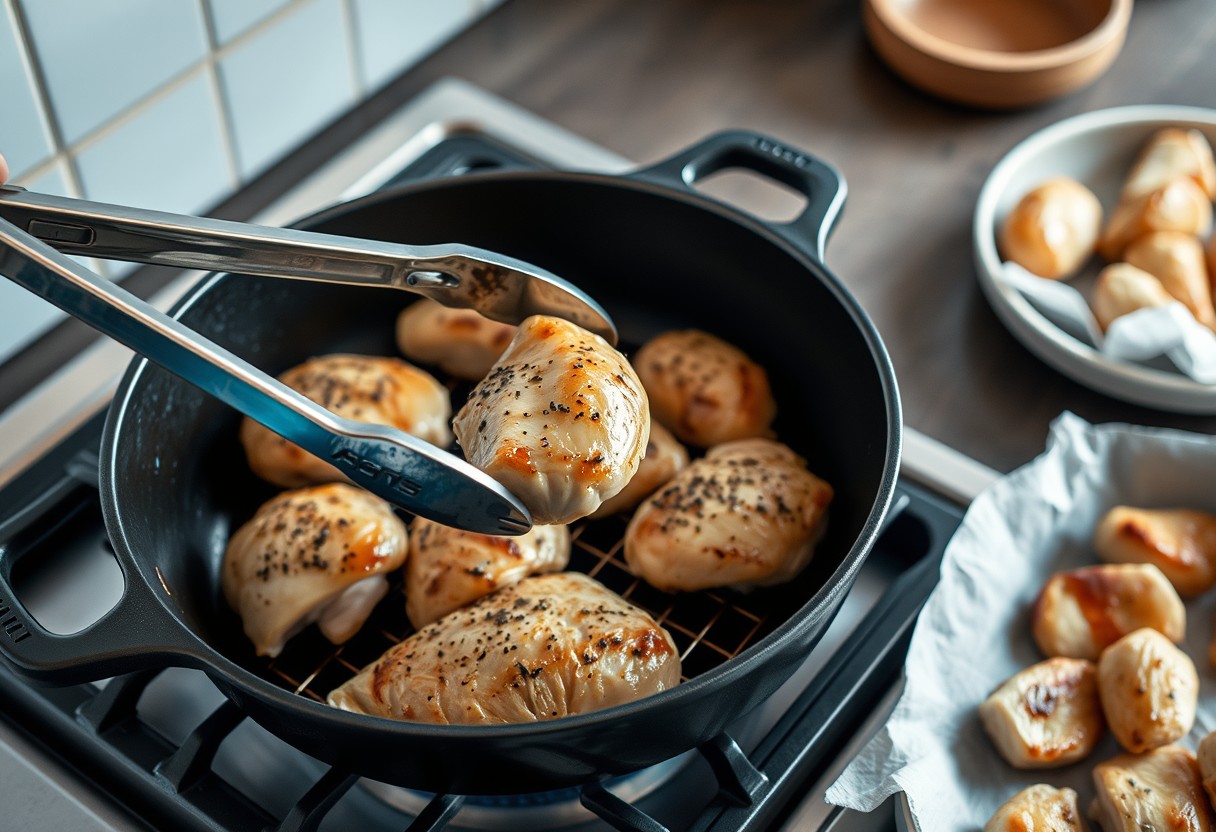
You can prevent food from steaming instead of searing by spacing items properly, even in a small pan. Overcrowding lowers the temperature rapidly, leading to soggy results and uneven cooking. You don’t need a larger pan-just smarter techniques. High heat retention and proper timing transform how effectively your current pan performs, giving you restaurant-quality browning every time.
Key Takeaways:
- Crowding a pan leads to steaming instead of searing; leaving space between ingredients ensures better browning and faster evaporation of surface moisture.
- Batch cooking in intervals, rather than all at once, allows the pan to recover heat between additions and prevents temperature drops that hinder proper cooking.
- Pre-drying ingredients, cutting them to uniform sizes, and using room-temperature proteins improve contact with the cooking surface and reduce excess moisture release during searing.
Assessing the Factors of Pan Capacity
Understanding how ingredient volume and density affect cooking performance is essential to preventing overcrowding. When food is packed too tightly, airflow is restricted, leading to steaming instead of searing. Dense ingredients like cubed potatoes take up less visual space but occupy more thermal mass, while leafy greens may look voluminous but compress significantly. Your pan’s capacity isn’t just about surface area-it’s about how ingredients interact with heat and each other. Recognizing these differences helps you make smarter decisions about how much to cook at once.
Identifying volume vs. surface area
Volume refers to the space ingredients occupy in three dimensions, while surface area determines how much contact occurs with the hot pan. A pile of broccoli florets may seem small in volume but spreads out widely when sautéed, quickly exceeding your pan’s effective cooking area. Overestimating available surface space is a common mistake that leads to uneven browning. You need to account for how ingredients expand or shrink during cooking. Judge capacity not by how much fits in a heap, but by how well items lie in a single layer without touching.
Recognizing high-moisture ingredients
Ingredients like zucchini, tomatoes, or mushrooms release significant liquid when heated, increasing the risk of steaming if too many are placed in the pan at once. Even if they appear to fit, their moisture output overwhelms the pan’s ability to evaporate steam, lowering the temperature rapidly. This creates a soggy, boiled texture instead of a crisp sear. You’ll notice excessive sizzling followed by a dull simmer-a sign of overcrowding. Plan for these ingredients to behave differently than drier ones, even if they seem to fit initially.
Evaluating ingredient shape and fit
Irregular shapes such as chopped peppers or unevenly cut meats create gaps and overlaps that disrupt even heat distribution. Even if the total quantity seems reasonable, poor geometric fit can leave some areas overcrowded while others remain unused. Flat items like scallops or chicken breasts benefit from maximum pan contact, so spacing is critical. You’ll achieve better results by adjusting cut consistency or cooking in sequence. Think of the pan as a puzzle where each piece needs room to develop color and texture without interference.
Strategic Batch Cooking Techniques
When working with a standard-sized pan, dividing large quantities into smaller batches keeps the cooking surface hot enough to sear rather than steam. Crowding cools the pan rapidly, leading to soggy textures and uneven browning. By cooking in stages, you maintain consistent high heat, which is essential for developing rich flavor. Each round benefits from direct contact with the hot metal, ensuring faster, more even results. Let the pan reheat briefly between batches to preserve this advantage throughout the process.
Splitting proteins into rounds
Proteins release moisture when heated, and too much at once floods the pan. You avoid this by separating meat, poultry, or fish into smaller portions and cooking them one round at a time. Place only enough in the pan to leave space between pieces-this allows rapid evaporation of surface moisture, promoting a crisp sear. Remove each batch as it finishes and keep it warm while the next cooks. Reintroduce all portions at the end if needed to reheat evenly before serving.
Sequential vegetable sautéing
Dense vegetables like carrots or potatoes take longer to cook than softer ones like zucchini or bell peppers. You preserve texture and avoid overcrowding by adding them in stages based on cook time. Start with the firmest, letting them develop color before introducing quicker-cooking varieties. This method ensures each type reaches its ideal doneness without turning mushy. Stir only when necessary to maintain pan heat, and resist the urge to add everything at once, which traps steam and hinders browning.
Using a holding plate for cooked items
Once a batch finishes cooking, transfer it immediately to a warm plate or sheet pan rather than leaving it in the skillet. This simple step prevents overcooking and frees up space for the next round. Cover loosely with foil if holding for more than a few minutes to retain heat without trapping steam. Keeping cooked food off the cooking surface ensures the pan can return to optimal temperature quickly, maintaining efficient, high-heat performance throughout the process.
Optimizing Food Placement and Surface Area
Positioning food properly on the pan ensures even cooking and reliable browning. You must maximize direct contact between the food and the metal surface to achieve consistent heat transfer. Crowding inhibits this process, but strategic arrangement allows each piece to sear rather than steam. Leave measurable space between items so heat circulates effectively and dangerous moisture doesn’t accumulate. Proper spacing also promotes crispness, especially with proteins and vegetables. How you lay out ingredients directly impacts texture and flavor development-treat the pan surface like prime real estate.
The checkerboard arrangement method
Placing items in a staggered, alternating pattern across the pan mimics a checkerboard layout and significantly improves cooking efficiency. You gain more usable space without sacrificing airflow or surface contact. This method works especially well with uniform pieces like chicken thighs, tofu cubes, or potatoes. The offset positioning prevents steam from getting trapped between adjacent items, promoting faster evaporation and better browning. Maintain at least a thumb’s width between each piece to preserve the effect. Precision here leads to noticeably improved results.
Avoiding overlapping layers
Stacking or letting pieces overlap creates insulated zones where heat cannot penetrate evenly. You risk ending up with soggy, undercooked sections even if the outer surfaces appear done. Each item needs full exposure to the pan’s surface-overlapping blocks this essential contact. This is especially dangerous with meats, where uneven cooking can lead to food safety issues. Treat every piece as if it requires its own spot on the pan. Resist the urge to squeeze in one extra item; it compromises the entire batch.
Utilizing the vertical space of pan walls
The raised edges of your pan aren’t just for containing liquids-they can aid in organizing food without overcrowding. You can lean thicker items like fish fillets or steak slices slightly against the sides if the center is full, allowing their bases to stay in contact with the hot surface. This subtle use of elevation keeps items off each other while maintaining effective heat transfer. Just ensure the leaning pieces remain stable and don’t block steam from escaping upward. Smart use of the pan’s full dimensions improves outcomes without needing extra cookware.
Managing Moisture and Steam Release
Excess moisture is the enemy of a proper sear, turning your ingredients from golden-brown to pale and boiled. When food releases too much liquid in a crowded pan, steam builds up and traps heat, preventing crisp edges from forming. To avoid this, remove any standing liquid from proteins or vegetables before they hit the skillet. This simple step ensures the surface temperature stays high enough for effective browning. Learn more about how to prevent overcrowding when cooking chicken in moist environments by checking out this discussion on effective techniques.
Patting ingredients dry before cooking
Water on the surface of meat, poultry, or vegetables instantly lowers the pan’s temperature when added, sabotaging your sear. You can prevent this by thoroughly drying each piece with paper towels before seasoning. This physical removal of moisture allows direct contact between the food and hot metal, promoting rapid browning. For proteins like chicken thighs or steak, dry surfaces mean crisp, flavorful crusts instead of gray, steamed exteriors. Never skip this brief but high-impact step, even if you’re in a hurry.
Salting at the optimal moment
Salt draws out moisture through osmosis, which is helpful-but only if timed correctly. If you salt too early before cooking, especially with delicate proteins like chicken breast or fish, you’ll end up with a wet surface that steams instead of sears. Wait until just before placing the food in the pan to apply salt. This ensures maximum surface dryness at the moment of contact, preserving the conditions needed for browning. Applying salt too soon can undermine even the most careful prep work.
Allowing steam to escape between pieces
Crowded ingredients trap steam in the gaps, creating a mini pressure-cooker effect that softens exteriors and prevents color development. Even if you can’t use a larger pan, space each piece slightly apart to give vapor a path to escape. This small adjustment maintains higher ambient heat around the food and encourages evaporation instead of condensation. Proper spacing lets steam dissipate, preserving the searing environment you need for rich, complex flavors and appealing texture.
Utilizing Prep and Resting Intervals
Timing your ingredient additions strategically prevents overcrowding by using the pan’s surface efficiently over time. Instead of dumping everything at once, introduce components in stages, allowing space for proper browning and heat retention. When you stagger entry, you maintain higher surface temperatures, which is essential for developing flavor through Maillard reactions. Let cooked elements rest off-heat while finishing others, preserving texture and freeing up room. This method turns limited space into an advantage through rhythm, not volume.
The cook and clear method
You start by searing the first batch of ingredients, such as diced onions or chicken, then remove them from the pan before they overcook. Leaving space immediately after removal prevents steam buildup and allows the next layer to make direct contact with the hot surface. Return the reserved ingredients only at the end to reheat. This cycle keeps the pan functional and avoids crowding without requiring additional equipment or larger cookware.
Resting meats while finishing vegetables
After pulling seared steaks or chicken from the pan, you let them rest on a warm plate, which frees up critical real estate. During this downtime, the meat continues to cook internally while you sauté greens or finish a sauce in the same pan. Resting isn’t idle time-it’s an active phase that improves texture and avoids pan congestion. Returning the meat too early forces overcrowding; patience here ensures each component gets the attention it needs without sacrificing quality.
Pre-searing for later integration
You can brown proteins or dense vegetables in advance, setting them aside until the final minutes of cooking. This pre-searing locks in color and flavor while keeping the pan accessible for other tasks. Finishing everything together at the end ensures cohesion without sacrificing space. The key is to time it so reheating doesn’t overcook the food-especially delicate items like scallops or asparagus. Planning ahead turns a single pan into a rotating stage for multiple cooking phases.
Leveraging Heat Conductivity and Recovery
Mastering the preheat phase
Allow your pan to heat fully before adding any food, ensuring the surface reaches a high and even temperature. A properly preheated pan creates an immediate sear, reducing sticking and minimizing moisture pooling. Skipping this step risks steaming instead of browning, especially with dense ingredients. You can test readiness by flicking a few water droplets-if they dance and evaporate instantly, the pan is ready. This foundation supports better heat recovery when food is introduced, maintaining the intensity needed for clean searing without overcrowding.
Adjusting burner output for density
When cooking dense items like thick steaks or root vegetables, increase the burner output slightly to offset the thermal load. Higher density foods pull more heat from the pan on contact, so a stronger flame helps maintain surface temperature. You’ll notice less sputtering and faster searing when the energy input matches the demand. Monitor for smoke or charring-adjust down if needed-but don’t reduce the heat so much that the pan cools between additions.
Monitoring pan temperature between batches
After removing a batch, pause briefly to assess the pan’s heat level before adding the next. A cold pan leads to soggy, uneven results, even with perfect prep. If the surface looks dull or water droplets no longer skitter, reheat for 30 to 60 seconds. This brief recovery maintains consistent cooking performance and mimics the effect of a larger pan by preserving thermal momentum. You stay in control without needing extra cookware.
| Factor | Action & Impact |
| Preheat duration | Heating 3-5 minutes on medium-high ensures even surface temperature; prevents cold spots and improves sear initiation |
| Burner setting during cooking | Raising output by 25-30% for dense foods counteracts rapid heat loss and sustains browning reactions |
| Recovery time between batches | 30-60 seconds of reheating restores optimal searing temperature and prevents moisture buildup |
Conclusion
You can effectively prevent overcrowding in your pan without needing a larger one by focusing on technique and timing. Cooking in batches, adjusting your ingredient sizes, and arranging food to maximize surface contact all contribute to better browning and even cooking. Letting the pan recover heat between batches and managing moisture keeps conditions optimal. You maintain control over the cooking process by using the tools and space you already have, turning a potential limitation into an opportunity for more consistent, high-quality results.
FAQ
Q: Why does overcrowding a pan lead to poor cooking results?
A: Overcrowding lowers the pan’s surface temperature rapidly, causing food to steam instead of sear. When items like meat or vegetables are packed too tightly, moisture released from the first layer cannot evaporate quickly. This creates a damp environment that prevents browning and leads to uneven texture. A steak placed in a crowded skillet may turn gray and rubbery rather than developing a crisp, caramelized crust.
Q: Can I cook large quantities effectively without increasing pan size?
A: Yes, you can handle large volumes by dividing the process into batches. Remove ingredients as they cook and set them aside while finishing the next portion. A mid-sized SaaS firm might use one 12-inch skillet over medium-high heat to brown four chicken breasts by doing two at a time. Return all pieces to the pan briefly at the end to reheat evenly before serving.
Q: How does cutting food into uniform sizes help avoid overcrowding?
A: Uniform pieces cook at the same rate, allowing consistent timing and spacing on the cooking surface. Diced potatoes cut to ¾-inch cubes will release moisture simultaneously and brown evenly when spread in a single layer. Irregular chunks result in some burning while others remain undercooked, requiring longer stovetop exposure and increasing the risk of pan congestion.
Q: Is it safe to return cooked food to the pan after setting it aside?
A: Returning pre-cooked food to the pan is safe if done near the end of cooking and only for warming. Preheat the reserved items gently with residual heat or a final sauce to avoid overcooking. For stir-fries, reintroduce cooked proteins after sautéing fresh vegetables so both components retain optimal texture without waterlogging from prolonged contact.
Q: What role does preheating play in preventing overcrowding issues?
A: A properly preheated pan maintains higher initial contact temperature, promoting immediate searing upon contact. Cold or inadequately heated surfaces react poorly to added mass, dropping below the threshold needed for Maillard reactions. Heating a stainless steel skillet for 3-5 minutes over medium-high flame before adding oil ensures better control when working with limited surface area.