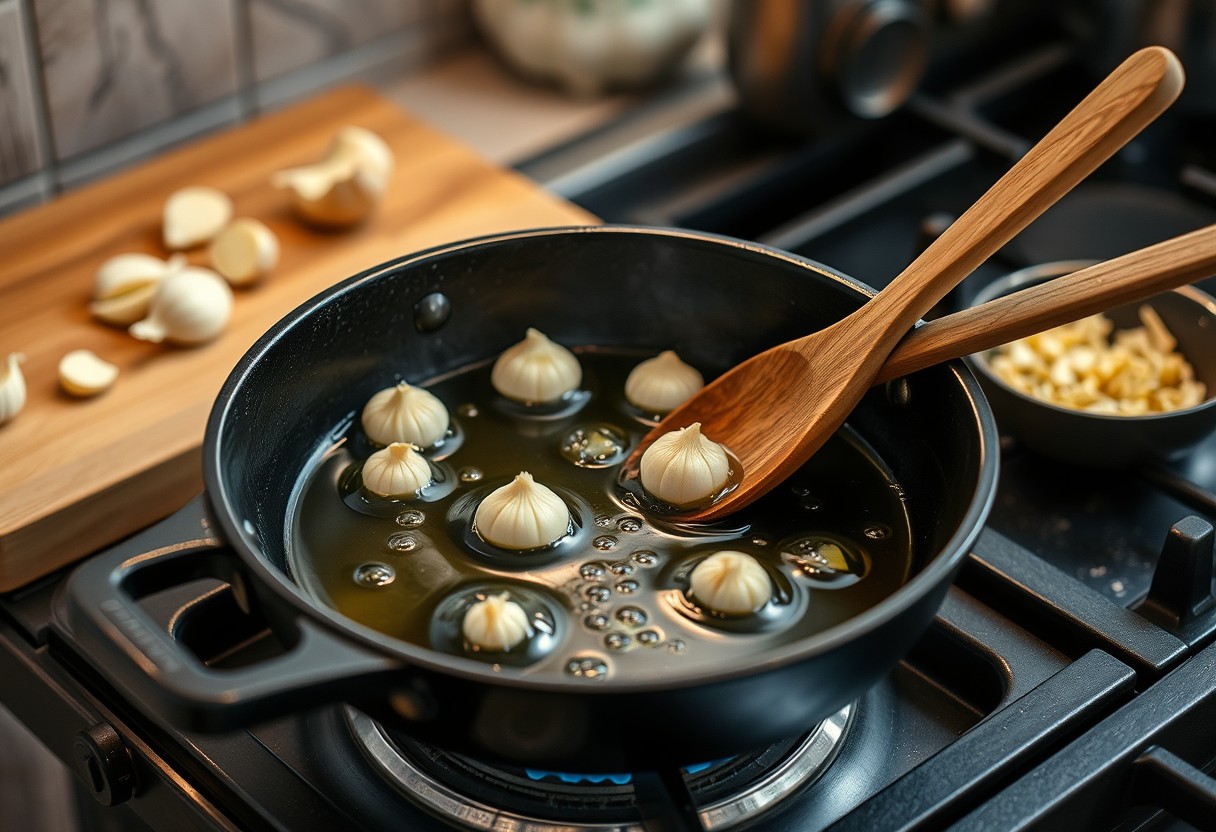
You can stop garlic from turning bitter and black in seconds by adding it to a pan only after lowering the heat. High temperatures destroy its delicate flavor fast, but this one small change keeps it aromatic and golden. Burnt garlic isn’t just unpleasant-it ruins entire dishes. You’re in control of the outcome with the right timing and technique.
Key Takeaways:
- Adding garlic to a cold pan and heating it gradually with oil prevents scorching by allowing even flavor infusion without hotspots.
- Keeping the heat at medium or lower ensures garlic cooks slowly and develops sweetness instead of turning bitter and burnt.
- Chopping garlic uniformly helps it cook at the same rate, reducing the chance of some pieces burning while others remain raw.
The Bitter Reality of the Burn
You’ve likely experienced it-garlic hitting the pan, the aroma building, then suddenly turning sharp and acrid. That unmistakable bitterness signals one thing: burnt garlic, and once it happens, there’s no going back. The compound responsible for garlic’s pungent flavor breaks down rapidly under high heat, releasing a harsh, unpleasant taste that can ruin an entire dish. Even a few seconds too long on a hot stove transforms sweetness into smoky regret. You can’t salvage it by adding more ingredients or adjusting seasoning-this is a point of no return. Prevention isn’t just helpful, it’s essential to preserving flavor.
The Cold Start Revelation
You unlock the secret to perfect garlic by starting in a cold pan. Dropping minced garlic into hot oil is where most go wrong-within seconds, it darkens and turns acrid. Instead, add your garlic to the pan before heating, then introduce oil and turn on the burner. This slow ramp-up gives you control, ensuring even cooking. A cold pan is the key for never burning garlic again, as confirmed by experts at The Daily Meal. The difference is immediate: golden, aromatic, and never bitter.
Policing the Flame
You keep the heat low the moment garlic hits the pan-even medium-low can be too high. Garlic burns in seconds, not minutes, and once it turns black, there’s no saving your dish. Watch it closely, stirring constantly with a wooden spoon, and never walk away, even if you think dinner is nearly done. The fragrance will shift from raw to nutty and sweet; that’s your cue to proceed. Remove the pan immediately if edges darken, as residual heat continues cooking. A steady hand and calm focus make all the difference here.
The Liquid Fire Extinguisher
You already know garlic turns bitter the moment it darkens, but here’s how to stop that from happening: introduce oil early. When you add a generous splash of oil to the pan right after the garlic hits the heat, you create a thermal buffer that dramatically slows down browning. This isn’t just about moisture-it’s about controlling conductivity. The oil absorbs and distributes heat more evenly, giving you a longer window to stir and cook without panic. Without this step, even a second’s distraction can mean ruined flavor. Keep the oil on hand, and treat it like an emergency brake-because in real time, it is.
The Art of the Blade
Size matters when it comes to garlic and heat tolerance. When you slice or crush garlic too finely, you increase its surface area, causing it to cook much faster and burn in seconds. Instead, keep your pieces larger-a thick chop or light smash gives you flavor without the risk. A chef’s knife offers the most control, letting you shape each piece with purpose. You’re not just cutting; you’re determining how quickly your garlic will react to the pan. This small adjustment makes a dramatic difference in avoiding bitterness.
Conclusion
You now know the simple habit that keeps garlic from burning-adding it to cold oil and heating both together. This small adjustment controls the cooking environment, preventing the sharp bitterness that ruins dishes. You’ve seen how temperature missteps lead to disappointment and how a cold start changes everything. By slicing garlic consistently and monitoring heat, you maintain flavor and texture. You don’t need special tools or techniques, just attention to timing and temperature. This method works every time, turning a common mistake into a repeatable success at your stove.
FAQ
Q: Why does garlic burn so easily compared to other ingredients?
A: Garlic contains natural sugars and amino acids that react quickly under high heat. These compounds begin browning and breaking down at temperatures above 325°F (163°C), which most stovetops exceed in under a minute. Unlike heartier vegetables or meats, garlic has little moisture and mass, so it heats up almost instantly. A thin slice or minced piece can go from golden to black in seconds, especially in a dry or overheated pan.
Q: Does the type of pan affect how fast garlic burns?
A: Yes. Thin stainless steel and nonstick pans heat up quickly and develop hot spots, increasing the risk of scorching. Cast iron retains heat intensely and continues cooking even after the flame is lowered. For delicate ingredients like garlic, a well-seasoned carbon steel or medium-thick stainless pan with even heat distribution offers more control. Preheating the pan at a moderate temperature reduces the likelihood of sudden burning.
Q: Can I add garlic at the beginning of cooking if I’m sautéing onions or other vegetables?
A: It’s not advisable. Onions and similar vegetables require longer cooking times, often 5-7 minutes to soften and caramelize. Garlic added at the start will overcook and blacken long before the other ingredients are ready. A better method is to add garlic halfway through, after the onions have softened and the pan temperature has slightly dropped. This preserves its aroma and prevents bitterness.
Q: Is there a way to cook garlic without oil or butter and still avoid burning?
A: Water or broth can be used as a low-fat alternative. Add a tablespoon of liquid to the pan before introducing garlic, then stir constantly over medium heat. The liquid creates steam, which moderates the temperature and prevents direct scorching. This method works well in stir-fries or vegetable sautés where oil is not desired. Just make sure the liquid doesn’t fully evaporate before the garlic is removed.
Q: How finely should I chop garlic to prevent burning?
A: Finely minced garlic browns faster due to increased surface area. For recipes with longer cooking times, use larger pieces-thin slices or lightly crushed cloves-to slow the reaction. If a recipe calls for minced garlic, add it later in the cooking process or lower the heat significantly. A chef’s knife with a sharp edge ensures clean cuts, minimizing the release of enzymes that accelerate browning when cells are torn.