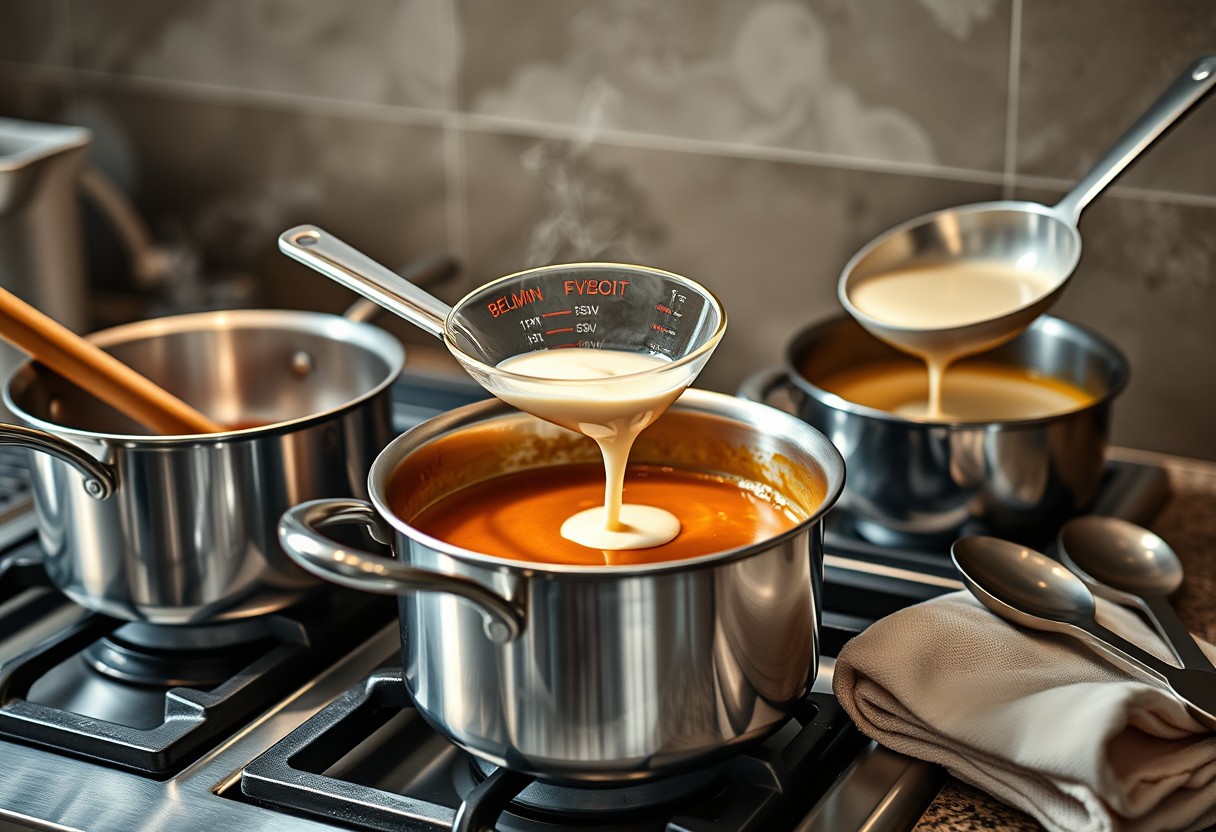
You’ve just finished simmering your sauce, only to find it’s too thin to coat the back of a spoon, so thick it sticks like paste, or watery with separated oils and liquids. These issues can ruin a dish fast, but they’re fixable in minutes. Knowing the right correction saves time, prevents waste, and ensures your sauce has a smooth, restaurant-quality texture every time.
Key Takeaways:
- A sauce that’s too thin can often be salvaged by simmering it to reduce excess liquid or by introducing a small amount of thickener like a cornstarch slurry, roux, or mashed vegetable for body.
- When a sauce turns out too thick, gradually incorporate more liquid-stock, water, or cream-while reheating to restore a smooth, pourable consistency without diluting flavor.
- Watery separation usually happens when fat and liquid break apart; re-emulsify by slowly adding a spoonful of fat while whisking vigorously or by blending in an emulsifying agent like mustard or egg yolk.
The Runny Disaster: Fixing Thin Sauces
When your sauce clings to the spoon like water instead of coating it smoothly, you’re dealing with a runny consistency that undermines flavor and presentation. The most effective fix is a slurry-mix one teaspoon of cornstarch with an equal amount of cold water and whisk it into your simmering sauce. Heat activates the starch, thickening the liquid in minutes without altering taste. Avoid dumping in dry powder directly, as it will clump. If dairy is part of your base, a small addition of cream or grated cheese can also enrich and thicken while enhancing mouthfeel. Always add gradually and let the sauce stabilize before deciding on a second adjustment.
The Cement Mix: Loosening Thick Sauces
When your sauce resembles paste rather than a smooth glaze, heat and liquid are your best allies. Start by removing the pan from direct heat to avoid scorching-thick sauces burn quickly. Gradually whisk in warm stock, broth, or water, a tablespoon at a time, until the desired consistency emerges. Never pour large amounts at once; this can over-dilute your flavor. If lumps form, a quick pass through a fine sieve or immersion blender restores silkiness. Acidic liquids like wine or vinegar can also thin and brighten, but use them sparingly to avoid altering the taste profile.
The Watery Separation: Managing Texture
Seeing your sauce split into a greasy film atop a thin, watery layer can be disheartening, but it’s often fixable with careful reintegration. Start by removing the pan from heat immediately-continued cooking worsens separation. If the sauce contains fats like butter or oil, slowly whisk in a small amount of warm liquid such as broth or cream to help rebuild the emulsion. Never boil a broken sauce; high heat will prevent re-binding. For dairy-based sauces, a spoonful of cornstarch slurry can stabilize the mixture. Patience and gentle technique make the difference between salvage and surrender.
The Final Polish and Seasoning
Taste your sauce after adjusting its texture, because balance shifts as ingredients concentrate or dilute. You may need to add a pinch more salt, a splash of acid like lemon juice or vinegar, or a touch of sweetness to round out sharp edges. A small pat of butter or swirl of cream can enrich the mouthfeel and mute excessive tang or salt. Always season at the end-this ensures flavors are calibrated precisely and prevents overcompensation. Underseasoned sauce dulls even perfect consistency, while overseasoning can ruin an otherwise excellent dish. Adjust gradually, tasting as you go, to achieve a finish that’s bright, layered, and restaurant-quality.
To wrap up
You now have practical solutions for every common sauce issue, whether it’s too thin, overly thick, or unappetizingly watery. Adjusting texture is part of mastering everyday cooking, not a sign of failure. You can confidently thicken with starch, dilute with liquid, or re-emulsify separated components using simple techniques. The key is patience and tasting as you go. Trust your instincts, apply the right fix at the right time, and your sauces will consistently enhance the dish instead of detracting from it.
FAQ
Q: How can I thicken a sauce that’s too thin without changing the flavor?
A: Simmer the sauce uncovered over low to medium heat to allow excess liquid to evaporate. This concentrates the flavor while thickening the texture. Stir occasionally to prevent sticking. If you need a faster solution, mix a small amount of cornstarch with cold water to create a slurry-start with one teaspoon of cornstarch per tablespoon of water-and stir it into the simmering sauce. Cook for a few minutes until the desired consistency is reached. Arrowroot powder or a beurre manié (equal parts softened butter and flour kneaded together) are also effective and blend smoothly without altering taste when used in moderation.
Q: My sauce turned out too thick-can I fix it without making it watery?
A: Yes, gradually add more of the base liquid-such as broth, wine, cream, or water-while stirring constantly. Add one tablespoon at a time, allowing the sauce to warm through between additions. This prevents over-thinning and helps maintain emulsion. For pan sauces, deglaze with a splash of wine or stock to lift flavorful bits while adjusting consistency. Avoid adding cold liquid all at once, as it can shock the sauce and cause separation.
Q: Why does my sauce separate and become watery, especially after refrigeration?
A: Sauces based on emulsions-like hollandaise or cheese sauces-can break when fats and liquids fail to bind. Temperature changes, overcooking, or adding ingredients too quickly often cause this. Refrigeration can destabilize the structure, leading to pooling liquid upon thawing. To minimize separation, reheat gently over low heat while whisking in a spoonful of cream, a fresh egg yolk (for egg-based sauces), or a starch slurry to help rebind the components.
Q: Can I use flour to fix a watery sauce, and how should I apply it?
A: Flour works well but must be incorporated properly to avoid lumps or a raw taste. Mix it with a small amount of cold fat (like butter) to form a paste, then whisk it into the sauce a little at a time. Cook for at least 3-5 minutes to eliminate the raw flour flavor. Alternatively, make a roux by cooking flour in fat before adding liquids. This method is ideal for gravies or creamy sauces where a slight nuttiness from a browned roux can enhance flavor.
Q: Is there a way to fix a sauce that’s both watery and bland at the same time?
A: Reduce the sauce first by simmering to concentrate flavor and thicken texture. As the excess water evaporates, the taste naturally intensifies. After adjusting consistency, taste and season with salt, acid (like lemon juice or vinegar), or umami-rich ingredients such as soy sauce, tomato paste, or Parmesan rind. A small pat of cold butter swirled in at the end can enrich mouthfeel and mask residual thinness.