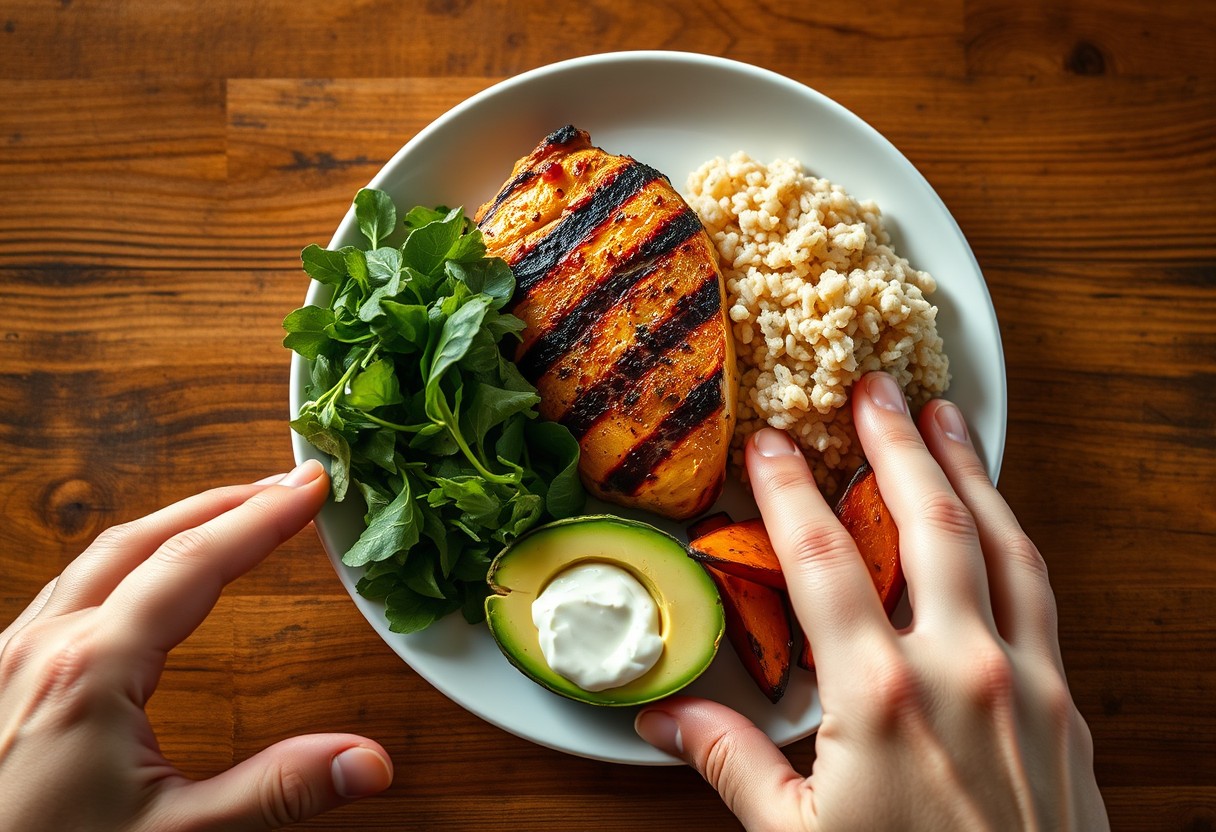
You can build a balanced plate without measuring cups, scales, or apps. This method prevents overeating and supports steady energy. Relying on visual cues and simple hand portions helps you eat well even when you’re tired or busy. The risk of skipping structure leads to blood sugar swings and cravings. You’ll learn how to assemble meals that satisfy hunger naturally.
Key Takeaways:
- Fill half your plate with vegetables or fruits, one-quarter with lean protein, and one-quarter with whole grains or starchy vegetables-this simple visual split supports balanced nutrition without counting or measuring.
- Your hand can serve as a built-in portion guide: a fist equals about one cup of carbs, a palm-sized portion fits protein needs, a cupped hand holds roughly the right amount of grains, and a thumb’s length approximates healthy fats.
- Satisfaction matters as much as nutrition-include foods you enjoy, chew slowly, and pause halfway through meals to assess fullness, helping prevent overeating while still feeling content.
The Hand Estimation Method
Your hand is a reliable, always-available tool for estimating portion sizes without ever touching a scale. By using your palm, thumb, fist, and fingers, you can quickly gauge appropriate amounts of protein, fats, carbohydrates, and vegetables based on your body’s natural proportions. This method aligns with individual needs since hand size often correlates with overall frame and caloric requirements. No two hands are exactly alike, making this approach both personal and practical. Simply place your hand next to your food to guide your plate composition with confidence and ease.
Measuring protein with your palm
Palm size offers a precise way to estimate your protein portions without measuring cups or scales. One serving of meat, poultry, fish, or tofu should match the size and thickness of your open palm, about four to six ounces for most people. This amount supports muscle maintenance without overloading your system with excess. When you see your palm, think “portion”-not just a visual cue but a biologically tuned guide that adjusts naturally if your body changes over time. Stick to one palm per meal for balanced intake.
Sizing fats with your thumb
Thumb volume helps you manage high-calorie fats like oils, butter, nuts, and seeds with accuracy. A single serving fits within the length and width of your thumb, roughly equivalent to one tablespoon or 5-7 grams of fat. Overestimating fat portions is one of the most common dietary pitfalls-and the thumb rule prevents unintentional calorie creep. Whether drizzling olive oil or snacking on almonds, let your thumb be the limit. It’s a simple, effective barrier against excess without sacrificing flavor or satiety.
Plate Mapping for Macronutrients
Divide your plate into clear visual zones to balance macronutrients without measuring tools. Imagine your plate as a map, where each section holds a specific food group. This spatial approach helps you meet nutritional needs while keeping portions intuitive. By assigning zones, you naturally limit overconsumption of starches and proteins while ensuring vegetables dominate visually and volumetrically. Over time, this method trains your eye, making balanced eating automatic even when dining quickly or without utensils.
The half-plate rule for vegetables
Fill half your plate with vegetables to maximize volume and nutrient density without adding calories. These foods are rich in fiber and water, helping you feel full with less effort. Non-starchy vegetables like broccoli, spinach, peppers, and zucchini should make up the majority of this zone. Even if you don’t measure, this rule ensures you’re getting essential micronutrients and antioxidants. Stick to colorful, varied options to cover a broad spectrum of plant compounds that support long-term health.
Dividing the remaining half for proteins and starches
Split the other half of your plate between protein and starch, each taking up about a quarter. Choose lean or plant-based proteins such as chicken, tofu, or beans, placing them in one section. In the other, add whole-food starches like brown rice, sweet potato, or quinoa. Keeping starches to just one-quarter helps manage blood sugar spikes while still providing energy. This visual division prevents overreliance on animal proteins or refined carbs, promoting steadier energy and better digestion.
Managing Factors That Influence Hunger
Hunger isn’t always driven by physical need-external cues like stress, screen time, and even lighting can prompt you to eat when your body doesn’t require fuel. Bright lights or loud environments may increase appetite stimulation, while boredom often leads to unconscious snacking. Social settings frequently encourage overeating, especially when food is used as a comfort tool. Recognizing these non-physical triggers helps you respond more accurately to true hunger signals instead of reacting to environmental prompts.
- Stress levels can trigger cortisol-driven cravings
- Screen exposure during meals disrupts satiety awareness
- Sleep quality impacts ghrelin and leptin regulation
- Emotional states often mimic hunger sensations
- Food accessibility increases impulsive eating chances
Identifying emotional versus physical hunger
You’ve likely reached for a snack when feeling lonely, anxious, or tired-emotions that mimic true hunger but don’t require food. Physical hunger builds gradually and feels like a growling stomach or low energy, while emotional hunger strikes suddenly and craves specific comfort foods. If you’re eating to soothe feelings rather than meet bodily needs, the satisfaction is brief and often followed by regret. Learning to pause and ask “Am I truly hungry?” creates space to choose a more effective response.
The role of hydration in satiety
Dehydration can masquerade as hunger, leading you to eat when your body actually needs water. Thirst signals overlap with appetite cues, especially in early stages, making it easy to misinterpret what your body is asking for. Drinking a glass of water before meals may help you differentiate real hunger from fluid deficiency. Staying consistently hydrated supports metabolic function and can reduce unnecessary calorie intake caused by this common confusion.
Mindful Eating Tips for Satisfaction
Slow down and let your body’s natural signals guide your eating experience. Paying attention to sensory cues-like the aroma of your meal, the texture of each bite, and shifting flavors-helps your brain register satisfaction before overeating occurs. When you tune into these physical and sensory details, recognizing fullness becomes easier and more intuitive. Distractions dull this awareness, making it harder to notice when you’ve had enough. Let your senses lead the way, so eating feels satisfying without needing to measure a single portion.
- Notice the color and smell of your food before taking the first bite
- Chew slowly to enhance flavor perception and digestion
- Pause halfway through your meal to assess hunger levels
- Put your fork down between bites to support awareness
- Stop eating when enjoyment begins to decrease, even if food remains
Eating without digital distractions
Your phone, TV, or laptop pulls focus away from how your body feels during meals. Without constant alerts and scrolling, you’re more likely to notice subtle shifts in hunger and taste satisfaction. The absence of screens allows your brain to fully engage with the eating process, increasing the chance you’ll detect when you’re comfortably satisfied. This simple change strengthens your ability to respond to internal fullness signals instead of external triggers like an empty plate or autoplaying videos.
Recognizing the “80% full” signal
You don’t need to feel stuffed to know a meal was good. The sensation of being 80% full often arrives just before discomfort-when your hunger has faded but space remains. It may feel like mild pressure in your stomach or a quiet thought that says, “I could stop now.” Acting on this cue prevents sluggishness and supports long-term comfort. Over time, honoring this gentle signal builds trust between you and your body’s natural regulation system.
How-to Guide for Meal Assembly
Start by filling half your plate with leafy greens to create a nutrient-dense foundation.
Building a base with leafy greens
You can rely on spinach, arugula, romaine, or kale to add volume and fiber with minimal calories. These greens provide essential vitamins like A, C, and K, plus folate and antioxidants that support long-term health. Tossing them with a splash of vinegar or citrus juice enhances flavor without added fat. Even if you’re not hungry at first glance, eating this base encourages slower consumption and helps prevent overeating richer components later.
Choose bold, low-calorie additions to lift your meal’s taste without tipping the scale.
Adding flavor boosters without extra calories
You’ll want to keep items like fresh herbs, garlic, ginger, hot sauce, lemon zest, or fermented vegetables on hand. These ingredients deliver intense flavor with negligible calories while stimulating digestion and satisfaction. A sprinkle of red pepper flakes or a spoonful of kimchi can transform a simple bowl into something exciting. Relying on these enhancers means you won’t miss high-fat dressings or salty condiments.
Strategies for Dining Out Without Scales
When you’re faced with a restaurant menu, rely on visual comparisons to maintain balance without measuring. A serving of protein should match the thickness and width of your palm, while cooked grains or starches fit within your cupped hand. Steamed vegetables fill both hands gathered together, giving you a clear sense of volume. Even when dishes arrive oversized, you can pause and assess before eating everything automatically. Trust these mental images as reliable guides, allowing you to stay aligned with your goals even in unpredictable settings.
Requesting sauces on the side
Sauces and dressings often hide large amounts of sugar, oil, or sodium that can shift a meal’s balance without changing its appearance. By asking for them on the side, you retain full control over how much actually lands on your plate. Dip your fork lightly into the sauce before each bite, or use a separate spoon to add just a teaspoon. This small habit prevents accidental overconsumption while preserving flavor. Restaurants typically accommodate this request without hesitation, making it one of the simplest yet most effective choices you can make.
Visualizing the standard plate model in large portions
Larger restaurant plates can distort portion expectations, but you can still apply the balanced plate concept mentally. Picture dividing your dish into sections: half filled with non-starchy vegetables, a quarter with lean protein, and the final quarter with whole grains or starchy vegetables. If the plate overflows with pasta or meat, move excess to a separate plate or box it immediately upon arrival. Eating slowly also helps recalibrate fullness signals, so you stop when satisfied, not stuffed.
Final Words
You already have everything you need to build a balanced plate without measuring cups or scales. Your hand serves as a reliable guide, with your palm shaping protein portions, your fist estimating vegetables, your cupped hand indicating carbs, and your thumb reflecting fats. When you combine these cues with mindful eating-slowing down, noticing hunger signals, and choosing whole foods-you support steady energy and satisfaction. This approach works whether you’re at home or ordering a meal out, making balance simple, repeatable, and sustainable over time.
FAQ
Q: How can I build a balanced plate without using measuring cups or a food scale?
A: Use visual cues and everyday objects to estimate portion sizes. Fill half your plate with non-starchy vegetables like spinach, broccoli, or bell peppers. Reserve one-quarter for lean protein such as chicken, tofu, or beans, and the remaining quarter for cooked grains, starchy vegetables, or other carbohydrates. Your palm can estimate protein portions, a cupped hand works for grains, and two hands cupped together approximate a serving of greens. This method relies on proportions, not precision, making it easy to apply anywhere.
Q: Can I still eat carbs if I’m not measuring portions?
A: Yes, carbohydrates can be part of a balanced meal without exact measurements. Focus on whole, minimally processed sources like brown rice, sweet potatoes, oats, or quinoa. Use your cupped hand as a guide for cooked grains or starchy vegetables-this typically holds about half a cup to a cup, depending on hand size. Pair carbs with protein and fiber-rich vegetables to slow digestion and maintain steady energy, reducing the urge to overeat.
Q: What if I’m still hungry after eating what looks like a balanced plate?
A: Hunger after meals may signal missing components or eating too quickly. Check if your plate included enough fiber, protein, and healthy fats-all contribute to fullness. If your meal was light on vegetables, add another handful of leafy greens or sliced cucumbers. Drink a glass of water before deciding on seconds; thirst can mimic hunger. Eating slowly also allows your brain time to register fullness, which takes about 20 minutes.
Q: How do I adjust my plate if I’m more active on certain days?
A: On days with more physical activity, increase portions of protein and carbohydrates slightly. Add an extra palm-sized portion of chicken, fish, or legumes, and expand your grain serving by half a cupped hand. Keep vegetables abundant regardless of activity level. You don’t need to measure-just notice how your energy feels. If you’re consistently hungry or fatigued, your body may need more fuel, especially from carbs and protein.
Q: Is this method suitable for people with diabetes or blood sugar concerns?
A: Many people with blood sugar concerns find this visual approach helpful when combined with consistent carbohydrate intake and food variety. Using the plate method-half non-starchy vegetables, one-quarter lean protein, one-quarter carbs-helps prevent large blood sugar spikes. Pairing carbs with protein or healthy fats, like adding avocado to a grain bowl, further stabilizes glucose. Always consult a healthcare provider or dietitian to tailor the approach to individual health needs.