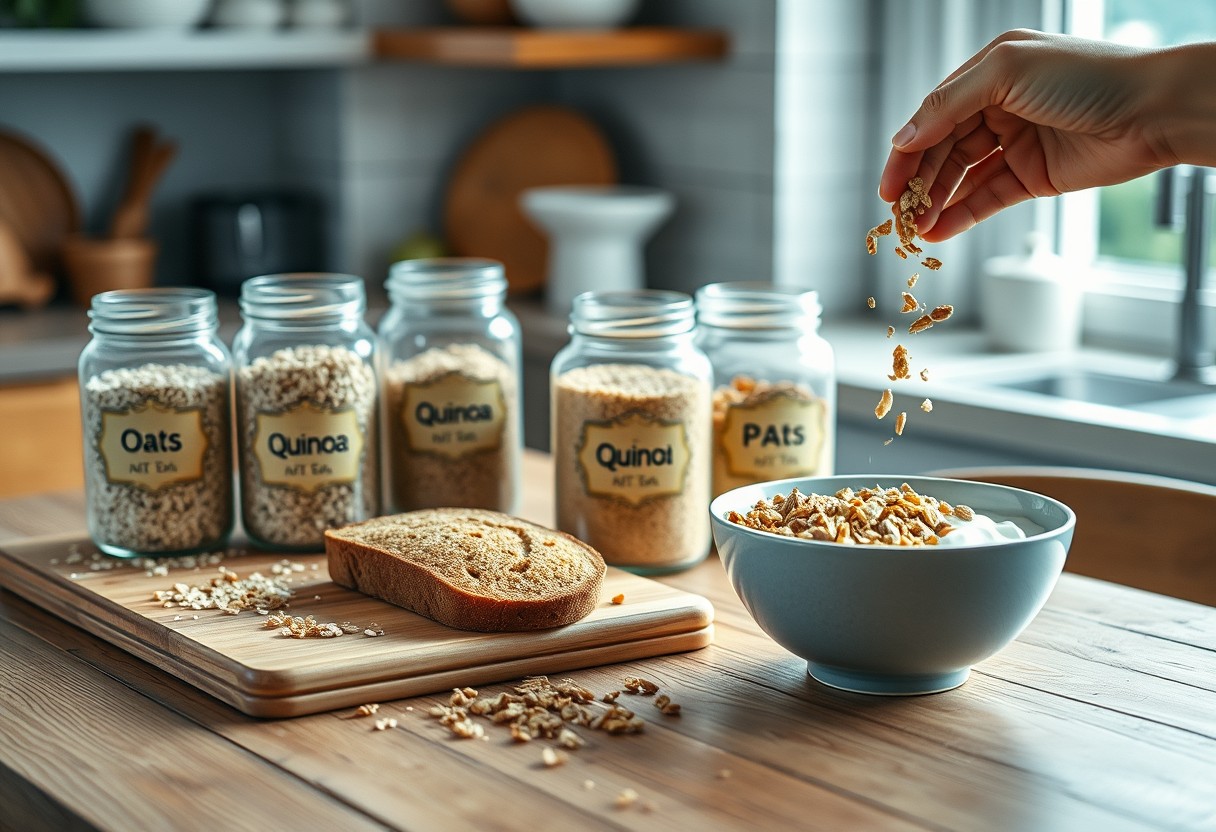
You can improve your health by adding whole grains to your current meals without overhauling your routine. Refined grains lack fiber and nutrients, increasing risks for chronic conditions. Swapping just one refined item for a whole grain alternative delivers measurable benefits. You don’t need drastic changes-small, consistent choices lead to lasting results.
Key Takeaways:
- Small, consistent swaps-like choosing whole grain bread instead of white-can increase fiber and nutrient intake without requiring a complete diet overhaul.
- Whole grains can blend seamlessly into meals you already enjoy, such as using brown rice in place of white in a favorite stir-fry.
- Building flavor with herbs, spices, and healthy fats makes whole grains more appealing, helping them become a natural part of daily eating habits.
The Stealth Substitution Strategy
Swapping refined carbohydrates for whole grains in meals you already eat is one of the most effective ways to increase fiber and nutrients without overhauling your routine. You don’t need to abandon your favorite dishes-simply replace white rice with brown, choose 100% whole grain pasta, or use whole wheat tortillas instead of white. These small changes deliver lasting health benefits, including improved digestion and more stable energy levels, all while keeping your taste preferences intact.
The Half-and-Half Blending Technique
Start by mixing half whole grain pasta with half white pasta when preparing meals. This gradual blend helps your palate adapt to the nuttier flavor and denser texture of whole grains without feeling like a sacrifice. Over time, you can shift to a 75/25 ratio and eventually go fully whole grain. The smooth transition reduces resistance from picky eaters and makes long-term change far more achievable than an abrupt switch.
Transitioning the Morning Toast
Breakfast can become a whole grain opportunity simply by choosing sprouted or 100% whole grain bread instead of white. Check labels carefully-many “wheat” breads are still highly processed. When you toast up a slice of true whole grain bread, you’re delivering more fiber, protein, and B vitamins to start your day. If the texture feels heavy at first, try lightly toasting it to enhance crispness and improve acceptance.
Elevating Your Snack Game
Swapping processed crackers for whole grain alternatives is one of the simplest upgrades you can make to your daily eating habits. Most conventional crackers are made with refined flour, stripped of fiber and nutrients, leading to quicker blood sugar spikes. By choosing whole grain versions, you gain sustained energy and greater satiety without overhauling your routine. Look for labels that list “whole grain” as the first ingredient-this ensures you’re getting the real benefit, not just a brown-colored imitation.
Popcorn as a Whole Grain Hero
Popcorn is a whole grain you already love, even if you didn’t realize it. When air-popped and lightly seasoned, it delivers fiber and volume with minimal calories. Unlike chips or pretzels, which are often stripped of nutritional value, popcorn retains its bran, germ, and endosperm-the full grain package. Skip the heavy butter and artificial flavors; instead, try a sprinkle of nutritional yeast or smoked paprika for a satisfying crunch that supports your health goals.
Seeded Crackers and Nut Butters
Seeded whole grain crackers paired with natural nut butters create a balanced, nutrient-dense snack. These crackers often include flax, chia, or sunflower seeds, boosting fiber and healthy fats beyond basic whole wheat. When you spread on almond or cashew butter, you add protein that helps stabilize blood sugar and keeps cravings at bay. Just check the ingredient list-many “artisanal” options still hide added sugars and refined oils.
Reimagining the Dinner Plate
Transforming your meals starts with what’s already on your plate. Instead of overhauling recipes, swap refined grains for nutrient-rich ancient varieties in dishes you already love. A bowl of chili becomes more satisfying with a base of cooked amaranth, while creamy risotto gains texture using farro instead of Arborio rice. Even simple weeknight stir-fries benefit from the nutty depth of teff. For more inspiration, explore 10 Easy Ways to Eat More Whole Grains to see how small tweaks yield lasting health benefits.
Quinoa in Your Favorite Salads
Adding quinoa to your go-to salad transforms it into a complete meal with minimal effort. This ancient grain brings a light, fluffy texture and a boost of plant-based protein that keeps you full longer. You’ll notice a subtle nuttiness that complements greens, roasted vegetables, and tangy dressings. Unlike refined grains, quinoa retains its structure after chilling, making it ideal for meal prep. The result is a dish that feels familiar but delivers far greater nutritional value with every bite.
Farro as a Hearty Rice Replacement
Farro offers a rich, chewy alternative to white rice that stands up beautifully in savory dishes. When cooked, it releases a warm, earthy aroma that enhances stews, casseroles, and grain bowls. Its high fiber content supports digestion without altering the comfort-food appeal of your favorite meals. You won’t miss the refined grain once you experience how farro absorbs flavors while maintaining a satisfying bite. This simple switch increases satiety and delivers long-lasting energy through balanced carbohydrates and protein.
The Baker’s Subtle Shift
Swapping refined flour for whole grain doesn’t require a complete recipe overhaul. Start by replacing just half the all-purpose flour in your muffins, pancakes, or quick breads with a whole grain alternative. This small change increases fiber and nutrients without sacrificing texture or taste most people are accustomed to. Over time, your palate adjusts, and so can the ratio-gradually leaning heavier into whole grains as you go. The result is a baked good that feels familiar but delivers a measurable boost in nutritional value with minimal effort.
White Whole Wheat Flour Advantages
You might assume whole wheat means dense, heavy baked goods, but white whole wheat flour changes that perception. Made from a naturally lighter wheat berry, it offers the same full nutritional benefits of whole grains-including fiber, vitamins, and minerals-yet blends seamlessly into recipes with a milder flavor and softer crumb. It performs nearly identically to all-purpose flour, making it one of the most effective swaps for improving your baking’s nutrition profile without anyone noticing the difference.
Using Oats as a Texture Enhancer
Oats bring more than nutrition-they add a pleasing chew and warmth to cookies, bars, and breads. When you incorporate rolled oats into your batter or dough, you gain a subtle heartiness that enhances mouthfeel while increasing soluble fiber. Even a modest addition, like a half-cup per batch, delivers a noticeable upgrade in texture and satiety. They work especially well in banana bread, muffins, or as a partial flour substitute, making your everyday treats more satisfying without altering their familiar appeal.
Stocking the Modern Pantry
Time often stands between you and better eating, but quick-cooking whole grains eliminate that barrier without sacrificing nutrition. By choosing grains that cook in under 15 minutes-like red quinoa, farro, or freekeh-you maintain momentum on busy nights while still feeding your body fiber-rich, nutrient-dense carbohydrates. These staples blend seamlessly into your routine, whether stirred into soups or tossed into salads. The key is keeping them visible and accessible, so reaching for white rice becomes the harder choice.
Pre-cooked Frozen Grain Packs
Pre-cooked frozen grain packs transform weeknight cooking from a chore into a streamlined process. You simply thaw and heat, gaining access to fluffy brown rice, quinoa, or barley in under five minutes. These packs retain texture and flavor better than older instant versions, making them ideal for stir-fries or grain bowls. Look for varieties with no added salt or preservatives to keep the health benefits maximized without compromising convenience.
Instant Brown Rice Efficiency
Instant brown rice delivers the nutritional advantages of whole grains with minimal time investment-some brands ready in under 90 seconds. You trade only a slight difference in texture for major gains in speed and consistency. Unlike instant white rice, this option keeps the bran and germ intact, delivering more fiber, B vitamins, and sustained energy. When stored in a cool, dry place, it remains shelf-stable for months, ensuring you’re always prepared to make a healthier choice.
To wrap up
You do not need to overhaul your daily meals to benefit from whole grains. Small, consistent changes fit into your existing routine and deliver lasting results. You already make decisions about food every day-use those moments to your advantage. Swap white rice for brown, choose whole grain bread without overthinking it, or stir oats into your morning routine. These choices add up quietly, improving your intake without demanding perfection. You are not aiming for a dramatic shift but a smarter, sustainable one that works with your life, not against it.
FAQ
Q: How can I start adding whole grains if I’m used to white bread and pasta?
A: Begin by swapping half of your usual white pasta or rice with a whole grain version, like brown rice or whole wheat pasta. Many people don’t notice a big difference in taste when they mix them. Over time, your palate adjusts, and you can increase the ratio. Some brands also make blends-like half white, half whole wheat pasta-that cook the same way and blend seamlessly into your favorite dishes.
Q: Are all products labeled “multigrain” or “wheat” actually whole grain?
A: No. Terms like “multigrain” or “wheat bread” don’t guarantee whole grains. Look for “100% whole grain” or “100% whole wheat” as the first ingredient on the label. If the first ingredient is “enriched flour,” it’s mostly refined grain. A quick rule: if the ingredient list starts with “whole,” you’re on the right track.
Q: Can I get enough whole grains without cooking big batches of quinoa or farro?
A: Yes. Ready-to-eat whole grain options are more common now. Look for pre-cooked whole grain pouches like brown rice or quinoa that heat in 90 seconds. Whole grain cereals made from oats, bran, or puffed millet can be eaten as snacks or quick breakfasts. Even air-popped popcorn counts as a whole grain-just skip the heavy butter and salt.
Q: What’s the easiest meal to modify for more whole grains?
A: Breakfast is often the simplest place to start. Switch to oatmeal instead of sugary cereals, or choose a whole grain toast with nut butter. Even a whole grain English muffin with eggs can make a noticeable difference. These changes take no extra time and fit easily into a morning routine.
Q: I don’t like the texture of whole grains. Is there a way around that?
A: Try whole grain products with a finer texture, like whole wheat pastry flour in pancakes or 100% whole grain sandwich bread with a soft crumb. Some people prefer the milder flavor and softer bite of products made with white whole wheat flour, which is still a whole grain but less dense. Blending whole grains with other ingredients, like adding cooked farro to soups or casseroles, also masks texture while boosting nutrition.