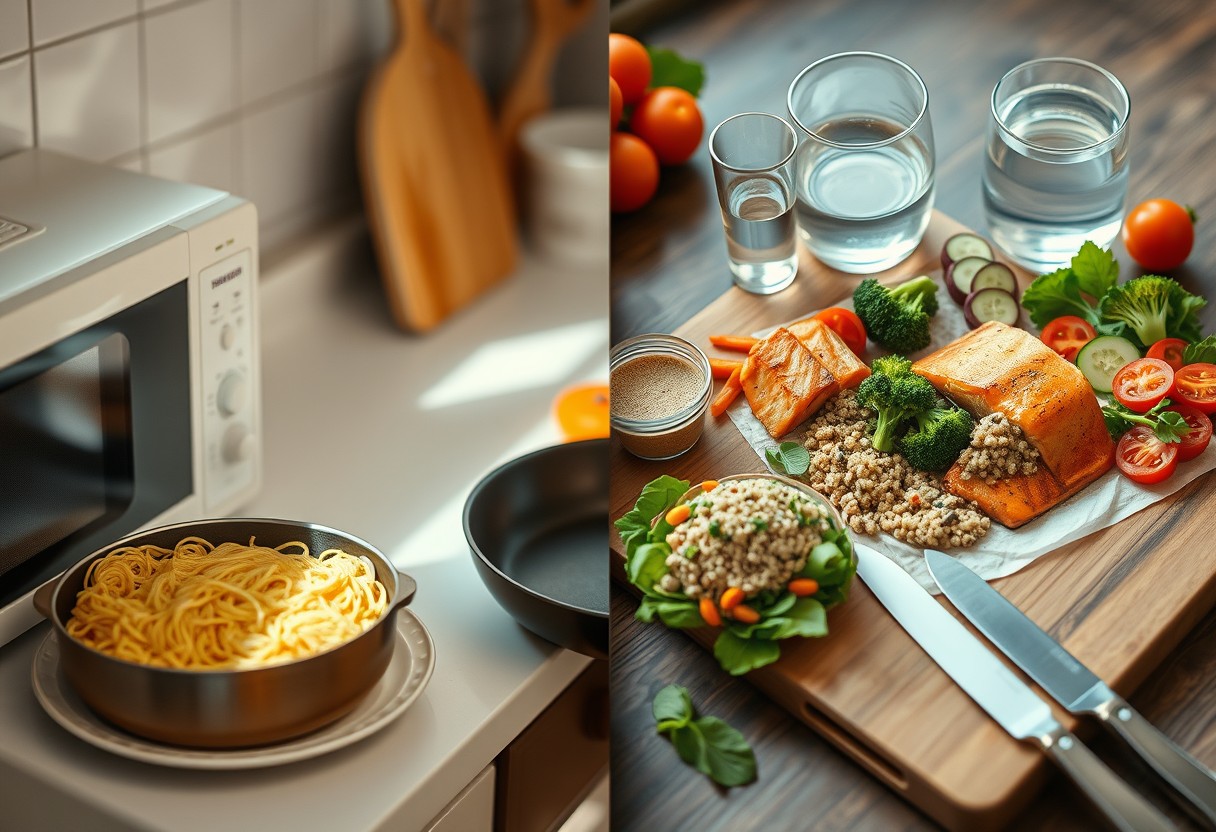
You’ve likely swapped butter for spray, chicken for tofu, and rice for cauliflower grits in the name of “light” cooking. But cutting calories doesn’t guarantee nutrition. Many light meals lack protein, fiber, and healthy fats, leaving you hungry and nutrient-deficient. True balance means intentional ingredient pairing-not just fewer ingredients. You’re not just reducing weight on the plate; you’re building sustained energy and long-term health.
Key Takeaways:
- Light cooking often focuses on reducing calories by cutting out fats or carbs, but a balanced meal requires all three macronutrients-protein, fat, and complex carbohydrates-to support energy, satiety, and metabolic function.
- A plate that looks healthy might still lack essential nutrients if it’s missing variety; colorful vegetables alone don’t make a complete meal without adequate protein and healthy fats to stabilize blood sugar and support cell function.
- Building a balanced meal means planning for long-term satisfaction, not just short-term calorie savings-this includes considering fiber content, food texture, and flavor balance to prevent energy crashes and unnecessary snacking later.
The Illusion of the Low-Calorie Plate
Empty volume masquerades as a meal when you pile your plate with watery vegetables and skip anything satisfying. You finish eating, yet the hollow feeling returns within the hour because calories without substance offer no real signal to fullness. A plate that looks large but lacks density tricks your eyes, not your metabolism. This is the illusion: believing that space on the plate equals nourishment, when in truth, it’s just air and water passing through a system waiting for real fuel.
The misery of the iceberg lettuce mountain
Stacking iceberg lettuce into a towering salad gives the appearance of abundance, but it delivers little beyond crunch and disappointment. You chew through half a head, stomach rumbling louder than before, because lettuce is 95% water and contains negligible protein, fat, or fiber. The volume swells your stomach temporarily, yet provides no staying power. That bloated emptiness after eating such a meal isn’t fullness-it’s the frustration of chewing without truly consuming.
Why air and water don’t stop the shakes
Drinking a broth-based soup or nibbling on celery sticks might fill space in your stomach, but they do nothing to steady your blood sugar. When you rely on foods composed mostly of air and water, your body registers the absence of energy-dense components. The shakes set in fast-light-headedness, irritability, fatigue-because your brain demands more than just volume. Water expands the stomach briefly, but only macronutrients sustain neurological and metabolic function.
The Architecture of Satiety
Protein and fiber form the structural core of meals that truly satisfy. Without them, even the most colorful plate collapses under the weight of hunger shortly after eating. You rely on these elements not for trend-driven reasons but because they stabilize energy, support muscle integrity, and keep cravings at bay. A meal without sufficient protein and fiber isn’t a solution-it’s a delay of the inevitable snack.
Lean protein as the essential anchor
Lean protein grounds your meal with a steady release of amino acids that your body can’t store for later. When you skip it, hunger returns quickly and often more intense. Including a solid portion-chicken, tofu, fish, or legumes-ensures your body has the materials to maintain tissue and balance blood sugar. This isn’t about bulk; it’s about providing a metabolic foundation that keeps you steady for hours.
Fiber and the slow burn of real fuel
Fiber slows digestion, turning meals into a longer-lasting source of energy rather than a fleeting spike. You feel full not because of volume alone, but because fiber-rich foods-like beans, vegetables, and whole grains-interact with gut hormones to signal satiety. Without it, food passes through too quickly, leaving you searching for more. The most dangerous oversight is treating fiber as optional when it’s central to sustained fullness.
The Soul and the Spice Rack
You can have all the nutrients in the right proportions, but without flavor, your meal is already failing. Blandness isn’t virtue-it’s a trap that leaves you staring into the fridge at 10 p.m., craving texture, depth, and satisfaction. Salt and acid aren’t optional extras; they’re the foundation of taste, the difference between eating to live and living to eat. When every bite falls flat, it’s not your willpower that’s broken-it’s your seasoning strategy.
Salt and acid as basic survival tools
Salt sharpens every other flavor in your dish, pulling quiet ingredients into the conversation. Without it, even perfectly cooked vegetables taste hollow and distant. A splash of lemon juice or vinegar, however, adds tension and brightness, making your mouth pay attention. Used with intention, salt and acid transform simple ingredients into something compelling, so you don’t need excess fat or sugar to feel satisfied. They’re not enhancements-they’re essentials.
The heat that keeps the palate interested
Heat isn’t just about temperature-it’s about sensation, progression, and surprise. A pinch of chili flake, a crack of black pepper, or a seared edge on roasted vegetables introduces dynamic contrast that keeps your brain engaged. Monotony kills appetite regulation, but a subtle burn or aromatic warmth encourages slower, more mindful eating. When your taste buds stay curious, you’re less likely to overeat from boredom or dissatisfaction. Flavor variety is satiety in disguise.
The Fat-Free Lie
The biological necessity of high-quality oils
Your brain is nearly 60% fat, and without dietary lipids, cognitive function declines. Every cell membrane in your body relies on fats to maintain integrity and communicate effectively. When you eliminate fats, especially essential fatty acids like omega-3s, you disrupt hormone production and inflammation control. High-quality oils-such as extra virgin olive oil, avocado oil, and cold-pressed flaxseed oil-deliver the building blocks your nervous system demands. Depriving yourself of these fats impairs mood, memory, and metabolic health, no matter how “clean” the rest of your plate appears.
Why fat-free labels are a marketing scam
Fat-free often means loaded with sugar, starch, and synthetic additives to compensate for lost flavor and texture. Manufacturers exploit your trust, painting products as healthy when they’re biologically unrecognizable. These processed items spike insulin, promote fat storage, and leave you hungry soon after eating. A yogurt cup labeled “fat-free” might contain more sugar than a dessert. You’re not avoiding calories or improving health-you’re consuming a product designed to keep you coming back, physically unsatisfied and metabolically compromised.
Fueling the Machine
Starch isn’t the enemy-properly chosen carbohydrates fuel your focus, stamina, and mood throughout the day. You rely on steady energy to power through meetings, workouts, and family time, and refined grains won’t deliver that. Instead, reach for complex sources like oats, sweet potatoes, or quinoa that digest slowly and keep you sharp. For more guidance, explore How to Build a Balanced Plate Without Counting Calories to refine your approach.
Grains that avoid the blood sugar crash
Whole grains like farro, brown rice, and barley release glucose gradually, preventing the sharp spikes and crashes that leave you drained and hungry. When you choose these over processed alternatives, you maintain consistent energy and avoid mid-afternoon slumps. Even small swaps-like using quinoa instead of white rice-can make a noticeable difference in how alert and capable you feel by 3 p.m.
The myth of the carb-free existence
Eliminating carbs might seem like a shortcut to energy control, but your brain and muscles depend on glucose for peak function. Without it, you risk fatigue, irritability, and brain fog. Long-term restriction can disrupt hormones and metabolism, making sustainability nearly impossible. You don’t need to cut out carbs-you need to choose the right ones that support your body’s natural rhythm and demands.

The Professional Setup
Consistency in your kitchen hinges on preparation that respects both your time and your body’s needs. When fatigue sets in, having a structured system ensures you don’t default to choices that leave you drained and dissatisfied. A well-stocked pantry, sharp tools, and a clear plan act as your first line of defense. Without this foundation, even the best intentions collapse under the weight of convenience. You’re not aiming for perfection-you’re building resilience in the moments when energy is lowest and decisions matter most.
Mise en place for the exhausted home cook
Even when you’re running on empty, a few strategic moves can preserve your standards. Wash and chop vegetables right after grocery shopping, store them in clear containers, and keep proteins pre-portioned in the fridge. This small investment means dinner becomes a matter of minutes, not willpower. You don’t need energy to think-just reach. The difference between surrender and success often comes down to whether the path of least resistance leads toward nourishment or compromise.
Repetition kills motivation, but repetition also builds habit-so design your batches to evolve. Cook a base of grains and proteins, then divide them into portions you’ll season differently throughout the week. One bowl gets a spicy tomato sauce, another a lemon-herb drizzle, a third a curry twist. Flavor variance prevents burnout while maintaining nutritional control. You’re not stuck in a cycle-you’re cycling through options that keep your plate interesting and your body fueled without daily effort.
Conclusion
You now understand that light cooking often strips meals of essential components, leaving you unsatisfied and nutritionally shortchanged. Building a balanced meal means including quality proteins, healthy fats, fiber-rich carbohydrates, and vibrant produce in thoughtful proportions. You feel fuller longer, maintain steady energy, and support metabolic health when your plate reflects true nutritional balance. Choosing depth over deception transforms not just your meals, but your long-term well-being.
FAQ
Q: What exactly makes “light” cooking different from building a balanced meal?
A: “Light” cooking typically focuses on reducing calories by cutting out ingredients perceived as heavy-like fats, carbohydrates, or sauces-often resulting in meals that are low in energy but also low in satisfaction. Building a balanced meal goes beyond calorie count. It includes intentional portions of protein, complex carbohydrates, healthy fats, fiber, and micronutrients to support energy, digestion, and long-term health. A salad with plain grilled chicken and no dressing might be “light,” but adding olive oil, quinoa, avocado, and roasted vegetables transforms it into a balanced meal that sustains fullness and nutrition.
Q: Can eating too many “light” meals negatively affect my metabolism?
A: Yes. When meals consistently lack sufficient macronutrients-especially protein and healthy fats-the body may enter a conservation state, slowing metabolic rate to preserve energy. For example, someone who eats only steamed vegetables and skinless chicken breast daily might see short-term weight loss, but over time, their energy levels drop, muscle mass decreases, and hunger spikes lead to overeating later. Balanced meals help maintain stable blood sugar and hormonal signals that regulate appetite and metabolic function.
Q: Why do I still feel hungry after eating meals labeled as “healthy” or “light”?
A: Many marketed “healthy” meals remove fat or carbs but keep refined carbohydrates or lack fiber. Fat slows digestion and helps carry flavor, so removing it often leaves food unsatisfying. A study comparing two lunches with identical calories found that participants who ate nuts and olive oil reported feeling fuller longer than those who consumed low-fat versions without these components. Hunger after a “light” meal usually signals missing satiety factors-fat, protein, or fiber-that tell your brain you’ve eaten enough.
Q: Is it possible to enjoy flavorful food and still eat balanced meals?
A: Absolutely. Flavor doesn’t come from salt, sugar, and fat alone-it comes from technique and layering. Roasting vegetables brings out natural sweetness, herbs add brightness without calories, and spices like cumin or smoked paprika deepen taste without compromising balance. A well-seasoned lentil stew with tomatoes, garlic, turmeric, and a drizzle of tahini offers rich flavor while delivering protein, fiber, and healthy fats. Enjoying taste and nutrition isn’t a trade-off; it’s the goal of thoughtful cooking.
Q: How can I rebuild my approach to meals if I’ve spent years focusing on “light” options?
A: Start by auditing what you currently eat. If most meals center around a lean protein and one vegetable, begin adding a quality carbohydrate-like brown rice or sweet potato-and a source of fat such as sliced almonds or a teaspoon of flaxseed oil. Plan one balanced dinner per week and observe how you feel afterward. A mid-sized SaaS firm employee who made this shift reported fewer afternoon crashes and reduced evening snacking within three weeks. Small, consistent changes retrain both body and palate to recognize true nourishment.