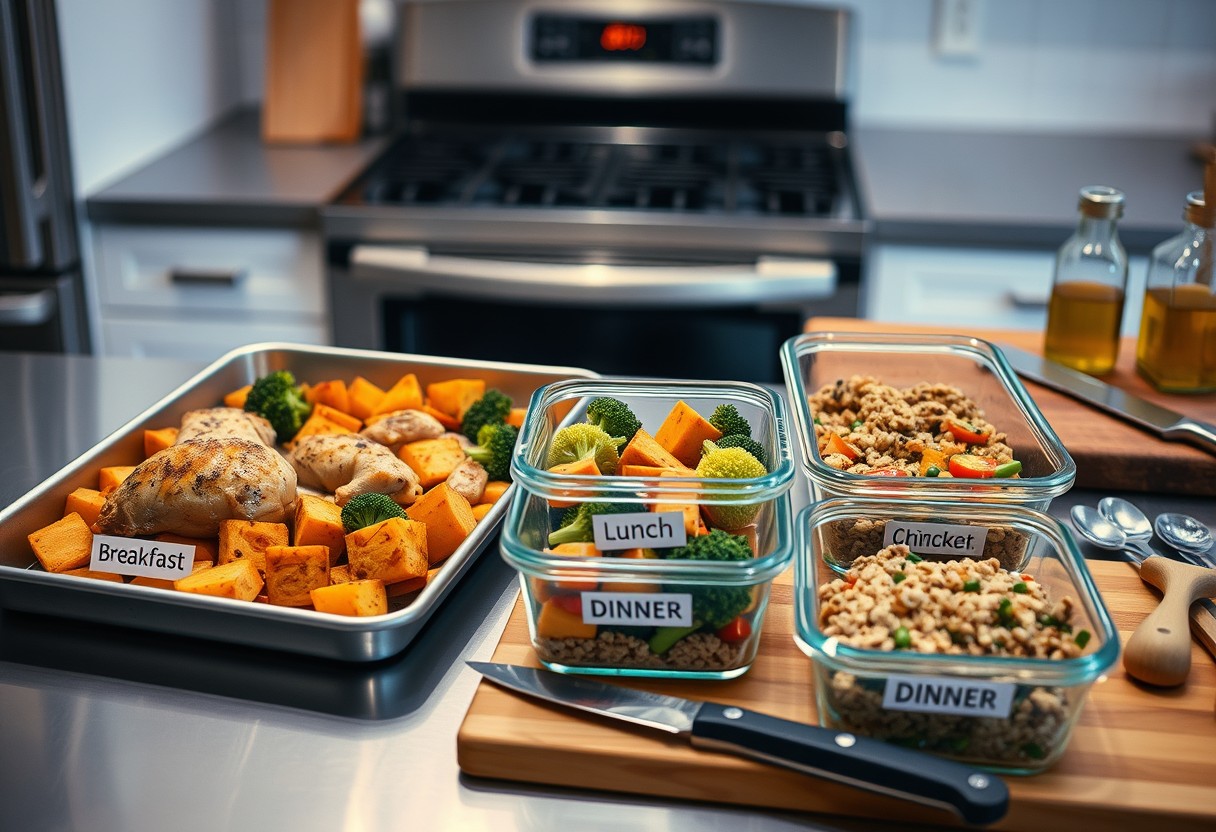
You can save hours every week by planning meals that share core ingredients and cooking methods. Instead of cooking separately for each meal, build a system where one batch of base components transforms into three distinct dishes. The key is starting with versatile proteins and grains that don’t lose quality when repurposed. Avoid the common trap of overcooking or flavor fatigue by seasoning strategically after cooking.
Key Takeaways:
- Prepare versatile base components like grilled chicken, roasted vegetables, and cooked grains in one session to mix and match across multiple meals, cutting active cooking time.
- Use bold, distinct seasoning profiles-such as Mexican spice blends, Italian herbs, or soy-ginger marinades-to repurpose the same ingredients into unique breakfast, lunch, and dinner dishes.
- Plan meals backward from the week’s busiest days, prioritizing make-ahead dishes that reheat well, like frittatas, grain bowls, and soups, to maintain variety without daily effort.
Identifying Overlapping Ingredient Factors
Select ingredients that naturally bridge breakfast, lunch, and dinner without requiring separate prep sessions. Staples like eggs, beans, roasted vegetables, and cooked proteins can transition seamlessly across meals when stored properly. Focus on building a base of versatile, nutrient-dense foods that maintain quality over several days. For example, a batch of quinoa works as a breakfast bowl base, midday salad component, or dinner side. Discover more inspiration by exploring real-life examples such as What are healthy meal prep ideas for breakfast, lunch, and …, where home cooks share practical overlap strategies.
- Beans serve as both breakfast scrambles and dinner burritos
- Eggs add protein to morning dishes and grain bowls later in the day
- Roasted vegetables enhance flavor across multiple meal types
- Cooked chicken transitions from lunch wraps to dinner stir-fries
- Quinoa functions as a neutral base for sweet or savory applications
Selecting multi-purpose proteins for the week
Protein doesn’t need to be reinvented each time you eat. Choose options that hold up well in varied preparations and absorb different flavors easily. Shredded chicken breast, hard-boiled eggs, canned tuna, and black beans are all strong candidates because they work in hot and cold formats. You might add them to breakfast hash, fold into a lunch wrap, or toss onto a dinner salad. Their adaptability reduces cooking time while ensuring consistent protein intake throughout the week.
Choosing grains and starches with neutral profiles
Grains should support your meals, not dominate them. Opt for white rice, couscous, oats, or sweet potatoes, which pair well with both sweet and savory seasonings. These starches won’t clash when repurposed-morning oatmeal can become an evening grain bowl with a simple sauce swap. Because they reheat well and maintain texture, they reduce waste and save active kitchen time. A single cook cycle delivers three distinct meal experiences with minimal extra effort.

Mastering the Component Cooking How-To
Cooking meals as fully assembled dishes often leads to repetition and wasted effort. Instead, you build flexibility by preparing individual components that combine in different ways across breakfast, lunch, and dinner. Grilled chicken, roasted vegetables, cooked grains, and hard-boiled eggs aren’t meals on their own, but together they form the foundation of multiple dishes. This method cuts active cooking time dramatically while expanding your daily meal variety without extra work or guesswork at dinner rush hour.
Preparing base elements in bulk for efficiency
Start by selecting three to five staple bases like quinoa, brown rice, sweet potatoes, or lentils and cook them in large quantities at once. A doubled batch of farro takes only marginally longer than a single portion and lasts all week. You save both time and energy by avoiding daily stove use, while ensuring nutritious anchors are always ready. Store them properly in airtight containers, and you’ll have reliable building blocks that transform into bowls, scrambles, or salads with minimal effort each day.
Batching modular sauces and seasonings
Tahini dressing, chimichurri, peanut-lime sauce, or spice blends can redefine a simple dish with just a spoonful. Prepare these flavor boosters in small batches every few days and keep them refrigerated in jars. A single sauce can bridge meals across cuisines-drizzle it over grain bowls, stir into scrambled eggs, or toss with roasted vegetables. This approach ensures consistent taste and eliminates the need to measure spices repeatedly, making assembly faster and more enjoyable every time you eat.
Workflow Optimization Tips for the Home Chef
To get the most out of your cooking time, organize your kitchen space and schedule like a professional line cook. Arrange tools, containers, and ingredients within arm’s reach before you begin, so motion waste is minimized. Use every zone of your oven and stovetop purposefully-roast vegetables on one rack while proteins rest on another, or simmer sauces on low heat as grains finish cooking. When you design your layout and workflow with efficiency in mind, you cut down on stress, save energy, and make multitasking feel natural.
Maximizing oven and stove space simultaneously
You can run multiple cooking processes at once without overcrowding or temperature conflicts by planning heat zones strategically. Place a sheet pan of root vegetables on the lower oven rack at 400°F while a tray of chicken thighs bakes above, shielded from direct heat with foil if needed. On the stove, use a large skillet for searing and a saucepan beside it for grains. This parallel cooking method prevents bottlenecks and ensures all components finish close in time, maximizing appliance use and minimizing cleanup.
Timing prep sequences to reduce idle time
Start with tasks that require passive cooking, like boiling beans or toasting rice, then shift immediately to active chopping or marinating. While food simmers unattended, portion proteins or wash greens for later use. By aligning hands-off intervals with hands-on prep, you eliminate dead time and maintain momentum. The result is a smooth, uninterrupted flow where each step feeds directly into the next, making full use of every minute you spend in the kitchen.
Transforming One Base Into Three Distinct Meals How-To
Start with a single batch of roasted chicken or grilled tofu, then apply different flavor profiles and preparations to create entirely unique dishes by mealtime. A simple change in seasoning, sauce, or accompaniment can turn one base protein into a breakfast hash, a vibrant lunch bowl, and a globally inspired dinner. The most positive detail is how minimal extra effort yields maximum variety, keeping meals exciting without daily cooking. You maintain control over ingredients while drastically reducing active kitchen time.
Morphing morning proteins into evening entrees
Roast a tray of chicken thighs at the start of the week, and use slices in a breakfast frittata with eggs and herbs. Later, shred the remaining portions and stir into a tomato-based sauce for a hearty pasta dish. The transformation from simple protein to complex dinner centerpiece happens with little effort, proving that one ingredient can evolve dramatically. You avoid repetition by adjusting spices and pairings, not by starting from scratch each time.
Repurposing roasted vegetables across different cuisines
Turn a single batch of roasted bell peppers, zucchini, and eggplant into a Mediterranean mezze platter at lunch, then reincorporate them into a Thai curry for dinner with coconut milk and red paste. The caramelized depth of the vegetables holds up under bold spices, making them surprisingly adaptable. You gain global flavors without extra prep, simply by shifting sauces and grains. This flexibility keeps meals diverse and satisfying, all from one original cook.
Essential Storage and Reheating Factors
To preserve both food safety and meal quality, proper storage techniques are non-negotiable. You must cool cooked components rapidly to prevent bacterial growth, using shallow airtight containers that promote even temperature distribution. Refrigerate within two hours of cooking, and always reheat to a safe internal temperature of 165°F (74°C). The right storage vessels-glass or BPA-free plastic with secure lids-not only protect flavor but also prevent cross-contamination in your fridge.
- Use shallow containers for faster, more uniform cooling
- Label each container with the date and contents to track freshness
- Store items like grains, proteins, and sauces separately to maintain integrity
- Choose microwave- and oven-safe containers for easy reheating
- Avoid overpacking the refrigerator to allow proper cold air circulation
Maintaining texture and flavor integrity during refrigeration
Different meal components react uniquely to cold storage, so you need to store them strategically to avoid sogginess or dryness. Sauces and dressings should be kept separate from bases like rice or roasted vegetables to prevent absorption that ruins texture. Crispy proteins lose their edge when trapped in moisture, so place a paper towel under them before sealing. Reheating with a splash of water or a quick toast in the oven restores much of the original mouthfeel, preserving the quality you worked hard to achieve.
Safe cooling methods and labeling practices
Leaving hot food out too long creates a breeding ground for pathogens, putting your health at risk. You must divide large portions into smaller containers to accelerate cooling and get them into the refrigerator within the two-hour window. Always label each container with the preparation date and contents to avoid guesswork later. Use color-coded lids or masking tape for quick identification, and never rely on smell alone to determine spoilage-some harmful bacteria don’t produce odors. This disciplined approach ensures every reheated meal remains safe and flavorful.
Strategic Menu Planning Tips for Long-Term Success
You create a clear roadmap when you map flavor profiles across your weekly meals, preventing repetitive tastes that lead to palate fatigue. Instead of defaulting to the same sauces or seasonings, rotate between global influences-think Moroccan one night, Thai the next, and Mediterranean later in the week. This variety keeps meals exciting without requiring extra prep time. By planning these distinctions early, you ensure each dinner feels distinct, even when built from shared components, making your routine sustainable and enjoyable over months.
Mapping out flavor profiles to prevent palate fatigue
Diversity in taste keeps your meals mentally satisfying throughout the week. When you assign unique seasoning blends or cultural themes to each day, you avoid the monotony that leads to disengagement with home cooking. For example, use cumin and smoked paprika for a taco bowl on Tuesday, then switch to ginger and soy for a stir-fry by Thursday. These shifts require minimal ingredient changes but deliver maximum sensory contrast, ensuring your brain stays engaged with every bite.
Inventory management to reduce food waste
Clarity in what’s already in your pantry stops unnecessary purchases and spoilage. You maintain control by listing perishables on a visible tracker and scheduling their use earlier in the week. Items like herbs, greens, and proteins get priority placement in Monday and Tuesday meals before they degrade. Organizing your fridge with a “use first” zone increases visibility and accountability, dramatically lowering the risk of forgotten ingredients becoming costly waste.
Summing up
You save time and energy by preparing breakfast, lunch, and dinner from shared components instead of cooking each meal separately. You build all three meals around a single protein, grain, or vegetable batch, adjusting seasonings, textures, and pairings to create variety. You streamline cleanup, reduce waste, and maintain flexibility by storing elements properly and recombining them with fresh touches. This method turns one round of cooking into multiple satisfying dishes across the day, making daily meal prep efficient and sustainable without sacrificing flavor or variety.
FAQ
Q: How can I cook one batch of food and turn it into breakfast, lunch, and dinner without getting bored?
A: Start by preparing a versatile base like roasted sweet potatoes, quinoa, or grilled chicken that can shift flavors depending on the meal. For breakfast, add eggs and spinach to the sweet potatoes for a hearty scramble. At lunch, mix quinoa with black beans, corn, and lime for a Southwest-style bowl. For dinner, toss the grilled chicken with pesto and roasted vegetables over pasta. Using different sauces, spices, and add-ons transforms the same ingredient into three unique dishes.
Q: What are the best ingredients to batch-cook for multiple meals?
A: Beans, lentils, whole grains like farro or brown rice, roasted vegetables, hard-boiled eggs, and proteins such as baked tofu or shredded turkey work well across meals. A pot of lentils can become a breakfast hash with tomatoes and paprika, a lunch salad with vinaigrette and feta, or a dinner stew with coconut milk and curry spices. These ingredients hold up in the fridge for 4-5 days and adapt easily to different cuisines.
Q: Can I really make all three meals in one cooking session without spending hours in the kitchen?
A: Yes, if you focus on multitasking and timing. Roast a sheet pan of vegetables while grains simmer on the stove and beans warm in a saucepan. Cook everything in 45-60 minutes, then portion into containers. Use one-pot meals like chili or grain pilaf to minimize cleanup. A mid-sized SaaS firm employee with a 30-minute lunch break reported prepping five days of meals in under an hour using this method.
Q: How do I keep prepped meals from tasting repetitive?
A: Vary your finishing touches. A bowl of brown rice and chicken can become a Thai-inspired plate with peanut sauce and cilantro, a Mexican option with salsa and avocado, or a Mediterranean version with olives, lemon, and oregano. Keep condiments like hot sauce, tahini, soy sauce, and fresh herbs on hand to change the profile of a dish instantly without extra cooking.
Q: Is it safe to reheat the same food multiple times throughout the week?
A: Reheat only the portion you plan to eat and store the rest at or below 40°F. Cooked rice, chicken, and beans are safe for up to four days when refrigerated in airtight containers. Reheat food to an internal temperature of 165°F to ensure safety. Avoid leaving prepped meals at room temperature for more than two hours, especially in warmer kitchens.