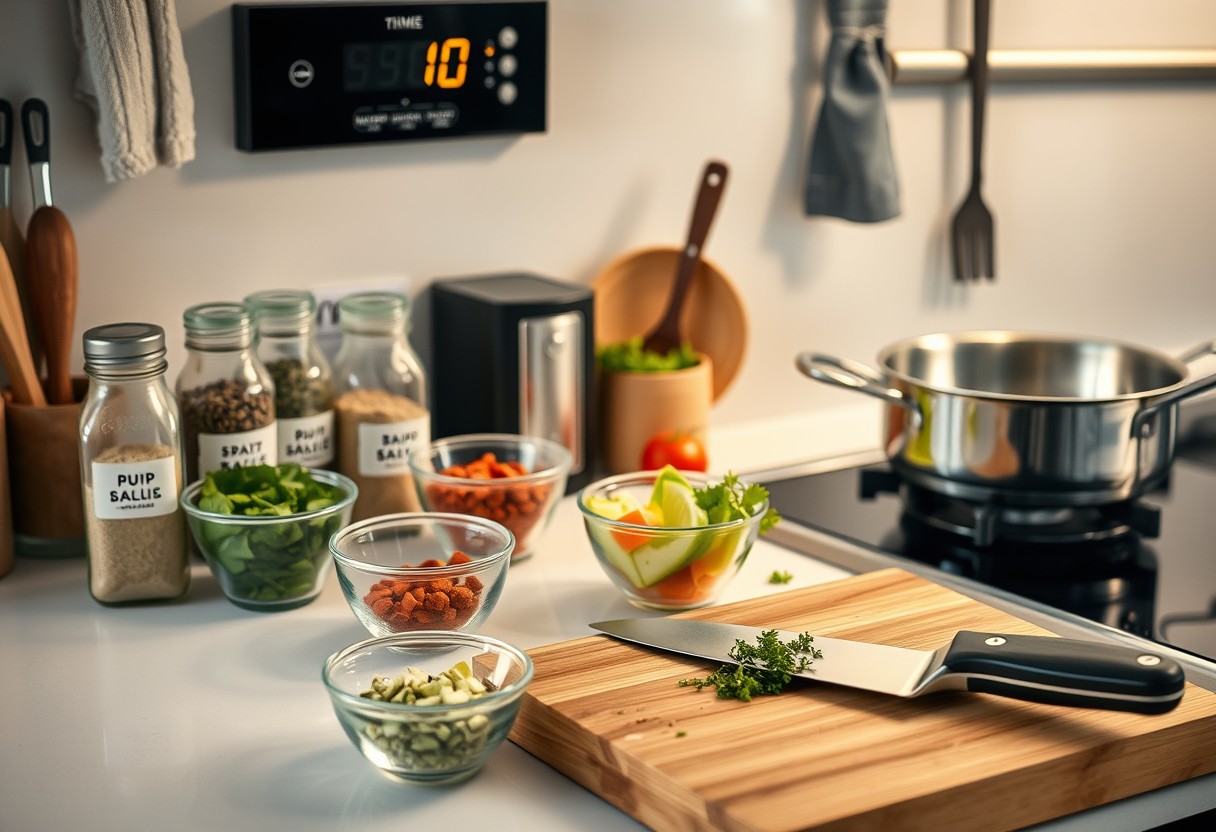
You can cut cooking time in half by organizing your kitchen for efficiency before you start. A clutter-free counter with tools at hand prevents frustration and mistakes. In just five minutes, you can transform chaos into control. This simple setup reduces stress, speeds up prep, and makes meals more enjoyable. You don’t need new gadgets-just smarter positioning.
Key Takeaways:
- A dedicated 5-minute kitchen setup before cooking reduces decision fatigue and keeps ingredients accessible, cutting active cooking time by streamlining workflow.
- Clear zones for prep, cooking, and cleanup prevent clutter and motion waste, turning chaotic moments into a smooth, repeatable rhythm.
- Using multipurpose tools and keeping them within arm’s reach eliminates unnecessary steps, making even last-minute meals feel manageable and stress-free.
The Mise en Place Manifesto
Order begins long before the first chop or sizzle-it starts with how you see your kitchen. Training your mind to instantly locate tools, ingredients, and surfaces cuts hesitation and prevents mistakes under heat. Clarity in motion comes from a mental map, not cluttered counters or last-minute searches. Think of it like muscle memory for your environment: knowing where everything lives allows your body to move without thought. For a real-world example of how fast habits form, check out this Teach me something in under 5 minutes. : r/Cooking thread where cooks share lightning-fast improvements.
Clearing the Decks
Before anything enters the workspace, remove every item that doesn’t belong. A clean counter isn’t just tidy-it’s tactical. Every dish, appliance, or stray utensil left behind becomes a potential obstacle when timing matters. Wipe down the surface so you’re working on a blank slate, free of residue or distractions. This step forces intentionality: only what’s needed earns a spot. You’ll move faster, think clearer, and avoid cross-contamination without clutter competing for space.
The Reach-Zone Rule
Your most-used tools and ingredients should land within a natural arm sweep-no leaning, twisting, or stepping required. This reduces movement waste during active cooking, where seconds count and momentum matters. Imagine seasoning, stirring, and tasting without breaking rhythm. Items beyond this arc slow you down and increase error risk. Design your zone based on your dominant side and stove placement, ensuring high-frequency items stay front and center, always ready.
The Death of the Unitasker
Every time you reach for a gadget that only does one thing, you’re trading space, time, and mental clarity for a shortcut that rarely pays off. Those single-use tools-avocado slicers, egg separators, garlic peelers-collect dust and block access to what you actually need. They create clutter that makes cooking feel harder than it should. You don’t need more tools; you need fewer, better ones. Letting go of these unitaskers clears not just counter space, but decision fatigue, so you can move through meal prep with focus and ease.
The Big Knife Priority
A sharp chef’s knife changes everything in your kitchen. It slices through vegetables, herbs, and proteins with control and precision, reducing prep time and effort significantly. You’ll use this tool in nearly every meal you make, so investing in one high-quality knife-and keeping it honed-removes frustration and improves safety. Dull or flimsy blades force you to work harder and increase the risk of slips. Make this knife the centerpiece of your toolkit, and you’ll realize how much easier cooking becomes when your most-used tool actually works.
Purging the Junk Drawer
Your junk drawer is likely hiding broken whisks, mismatched measuring spoons, and expired gadgets you forgot you owned. Sorting through it forces honest decisions about what stays and what goes. Keep only what you use regularly and what functions reliably. Toss anything chipped, rusted, or missing parts-those items slow you down when you’re mid-recipe. Once cleared, group like items together in small containers so they’re easy to find. A clean drawer means less hunting, less stress, and faster access when the pan is already hot.
The High-Speed Line Layout
Efficiency begins the moment you step into your kitchen, and how you arrange your primary work surface directly impacts your speed and focus. Position your cutting board, knife, and prep bowl in a straight line between the sink and stove-this clean, linear flow minimizes unnecessary steps. Keep frequently used tools within arm’s reach but off the main surface unless actively in use. A clear, organized line setup means you’re not wasting time searching or shifting items mid-task.
The Power Square Setup
Your most-used tools should form a compact zone that moves with you through prep. Place your knife, cutting board, mixing bowl, and waste container in a tight square on the countertop. This layout keeps everything contained and within easy reach, so you never break rhythm. You’ll reduce motion by up to 70% compared to scattered setups, making chopping, transferring, and cleaning nearly automatic.
Vertical Storage Solutions
Maximize usable space by going upward instead of outward. Install slim racks or rails behind the cutting board to hold knives, tongs, and peelers-tools stay visible and accessible without cluttering the counter. Even a simple over-the-sink rack can free up valuable surface area. Keeping essentials upright and anchored prevents misplacement and cuts setup time to seconds, not minutes.
The Essential Prep Station
Salt and Fat Stations
You keep salt and fat within arm’s reach because they’re the most-used elements in nearly every dish you cook. A small bowl of flaky sea salt, a container of fine kosher salt, and a few common fats-olive oil, butter, maybe bacon grease-form your foundation. Positioning them in dedicated spots means you never fumble mid-recipe. This consistency builds muscle memory, so your hand moves without thought. That split-second access prevents delays and reduces stress when heat is high and timing matters most.
Visibility and Access Logic
Clear sightlines to your core ingredients make decisions faster and cooking more fluid. Store frequently used items like garlic, onions, cooking oils, and spices where you can see and grab them instantly-front and center, not buried in cabinets. Use low-front containers or open bins so nothing hides. When everything you rely on daily is visible, you spend less time searching and more time building flavor. This simple visual order transforms how efficiently you move through even the busiest meals.
The Zero-Chaos Workflow
You finish cooking and instead of facing a mountain of dishes and scattered ingredients, you find your kitchen nearly back to baseline. This isn’t luck-it’s design. The zero-chaos workflow means every action during and after cooking has a designated move: wipe as you go, clear containers immediately, return tools to their homes. Letting mess accumulate is the single fastest way to make cooking feel like punishment. Build rhythm into cleanup, not as a separate chore but as part of the process, and you’ll walk away from the stove feeling lighter, not drained.
Scraps and Waste Management
Keep a dedicated container on the counter for vegetable peels, bones, or coffee grounds, clearly labeled and emptied daily. Leaving scraps in the sink invites pests and odors that undermine even the best-laid kitchen systems. Position this bin within arm’s reach of your prep zone so tossing waste becomes automatic. At the end of cooking, seal it and move it out-don’t let it linger. A clean waste routine prevents small messes from spiraling into unhygienic clutter.
The Damp Cloth Mandate
After every few steps in cooking, run a damp microfiber cloth over your counters, stovetop edges, and faucet handles. Spills left unattended dry into stubborn residue that demands scrubbing later. Make this cloth easily accessible-folded near the sink or hung on a hook-and commit to using it mid-task, not just at the end. Wiping as you go takes seconds but saves minutes, keeping your space functional and visually calm throughout the process.
Final Words
You now have a clear, practical system that transforms how you use your kitchen. Five minutes of intentional setup saves hours of frustration during meal prep. Your tools stay within reach, ingredients are prepped and organized, and the workflow follows a natural rhythm. This isn’t about perfection-it’s about consistency and reducing friction every time you cook. When your space supports your actions, cooking stops feeling like a chore and starts feeling like flow.
FAQ
Q: What exactly is the 5-minute kitchen setup?
A: The 5-minute kitchen setup is a quick daily ritual that organizes your cooking zone before you start preparing meals. It involves clearing clutter, placing essential tools within reach, filling a water bowl for cleanup, and arranging ingredients you’ll likely use. A home cook in Denver reported cutting their dinner prep time by nearly half after adopting this habit each evening before starting to cook.
Q: Do I need special equipment to make this work?
A: No special gear is required. The system relies on what most kitchens already have-cutting boards, knives, mixing bowls, and common utensils. One user transformed their routine using only a $10 caddy from a discount store to hold spices and oils, proving that affordability doesn’t limit effectiveness. The focus is on smart placement, not new purchases.
Q: How do I keep the setup from getting messy during cooking?
A: The method includes a designated “landing zone” for used items and a small bowl for scraps that goes straight into compost or trash. A line cook who adapted her restaurant habits to her home kitchen swears by the “one-bowl wipe” rule-wiping down surfaces with a damp cloth every time she finishes using a tool. This keeps counters functional throughout the process.
Q: Can this really save time if I only cook a few times a week?
A: Yes. Even occasional cooks benefit from reduced decision fatigue and faster cleanup. A freelance designer in Portland found that spending five minutes prepping her kitchen on Sunday nights made weekday meals feel less like a chore. She now starts cooking immediately instead of wasting ten minutes searching for pans or washing dried-up spoons.
Q: What if I have a tiny kitchen or limited counter space?
A: The setup adapts to small spaces by prioritizing mobility and vertical storage. A couple living in a Brooklyn studio uses a fold-down shelf above their sink as their primary prep station. They store tools in stackable bins underneath and pull everything out only when needed. Their entire system collapses back into storage in under three minutes.