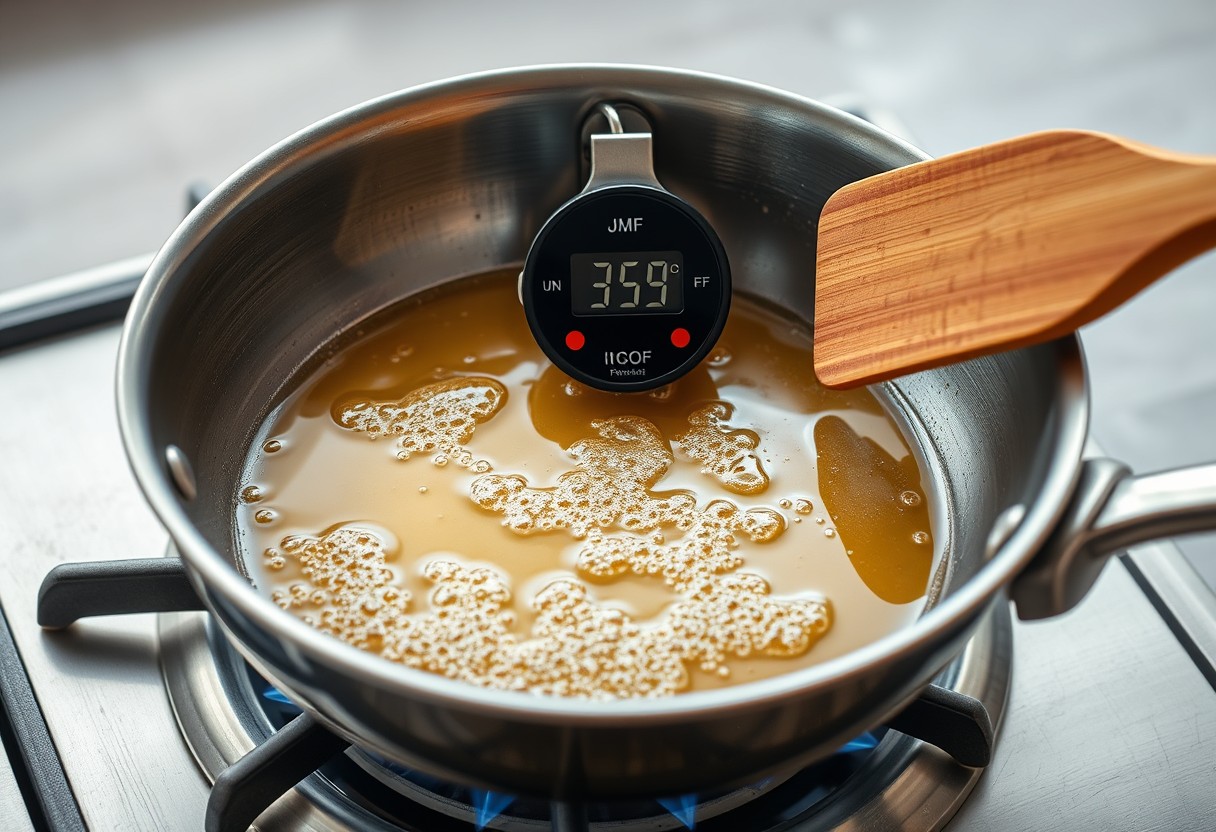
You can prevent kitchen disasters and maintain your oil’s quality by recognizing the signs of overheating. When oil starts smoking, it has passed its safe temperature limit, releasing harmful compounds and altering food flavor. Different oils have varying heat thresholds, so understanding these differences is essential for safety and cooking performance. Learn how to identify heat levels accurately and choose the right oil by reading more in this guide on Choosing the Right Engine Oil for Your Car.
Key Takeaways:
- Oil begins to break down when it reaches its smoke point, releasing visible smoke and potentially harmful compounds, so recognizing this stage prevents health risks and flavor degradation.
- Different oils have distinct smoke points based on refinement and composition; for example, unrefined olive oil smokes at a lower temperature than refined avocado oil, making the right choice essential for specific cooking methods.
- Visual cues like wisps of smoke, a shimmering surface, or rapid rippling indicate overheating, while a simple breadcrumb or wooden spoon test can confirm safe frying temperatures without relying on equipment.
Categorizing Oil Types and Smoke Points
Selecting the right cooking fat begins with understanding its chemical stability under heat. Oils high in monounsaturated or saturated fats tend to resist oxidation better, making them more suitable for high-temperature applications. Those rich in polyunsaturated fats, like soybean or flaxseed oil, break down faster and release harmful compounds when overheated. Always match your oil’s composition to your cooking method-this prevents toxic smoke and preserves flavor. Visual cues like shimmering or smoking are secondary to knowing what’s in the bottle.
- Saturated fats offer highest heat resistance
- Monounsaturated oils perform well at moderate to high heat
- Polyunsaturated fats degrade quickly under intense heat
- Refined versions typically have higher smoke points
- Chemical structure determines stability more than origin
| Olive oil (extra virgin) | 325-375°F / High in monounsaturated fat, best for low to medium heat |
| Avocado oil (refined) | 480-520°F / Stable due to high monounsaturated content |
| Coconut oil (unrefined) | 350°F / Saturated fat base makes it heat-resistant |
| Canola oil (refined) | 400-450°F / Moderate stability, widely used for frying |
| Soybean oil | 450°F / High polyunsaturated content increases oxidation risk |
Refined versus unrefined fats
Relying on refinement status helps you predict how an oil behaves when heated. Refined fats undergo processing that removes impurities and raises the smoke point, making them more stable at high temperatures. Unrefined versions retain more natural flavor and nutrients but start breaking down sooner. You’ll notice unrefined coconut or olive oil produces smoke earlier, signaling degradation. For searing or deep-frying, refined oils are safer because their structure withstands prolonged heat without releasing harmful byproducts.
Identifying high-heat thresholds
Knowing when oil nears its limit prevents dangerous flare-ups and off-flavors. Watch for the first wisp of pale blue smoke, which indicates the smoke point has been reached. At this stage, beneficial compounds deteriorate and toxins like acrolein form, posing respiratory and health risks. Heat beyond this threshold also ruins food texture and taste. You’re not just avoiding smoke-you’re preserving safety and quality. A steady shimmer without fumes means you’re within a safe range.
Environmental Factors in Heat Retention
- Thermal conductivity varies significantly between pan materials, directly influencing how quickly oil reaches dangerous temperatures.
- Oil volume affects heat distribution, with thinner layers heating faster and more unevenly.
Thermal conductivity of various cookware
Your pan’s material determines how rapidly heat transfers to the oil. Aluminum and copper bases offer high thermal conductivity, causing oil to heat quickly and requiring close attention to avoid overheating. Stainless steel, while durable, often has slower, less even heat distribution unless layered with aluminum. Cast iron retains heat intensely once hot, increasing the risk of surpassing the smoke point without visual cues. Nonstick pans typically heat more gradually but can still reach damaging temperatures if left unmonitored on high settings.
Impact of oil quantity on heating speed
A shallow layer of oil heats much faster than a deep one due to reduced mass and greater surface exposure. When you use only a thin film, the temperature can spike rapidly, especially on high-conductivity cookware, raising the risk of crossing the smoke point before you notice. Conversely, a larger volume absorbs heat more evenly and buffers sudden spikes, giving you slightly more control. Still, too much oil can retain excessive heat, posing a safety hazard when introducing food.
Step-by-Step Manual Testing Methods
Before adding food, you can rely on simple, reliable techniques to determine if your oil is ready. These hands-on tests require no special tools and deliver immediate feedback. Watching for visual cues and using common kitchen items helps prevent underheating or dangerous overheating. Always perform these checks just before cooking to ensure accuracy, as oil temperature shifts quickly. Your safety and the quality of your dish depend on precise timing and observation.
| Test Method | What to Look For |
| Wooden Spoon Test | Bubbles form steadily around the submerged tip |
| Bread Cube Test | Cube sizzles immediately, browns in 30-60 seconds |
| Shimmering Surface | Oil flows like liquid silk, reflects light evenly |
| Thin Smoke | First wisp appears-remove from heat immediately |
The wooden spoon and bread cube tests
Hold the handle of a wooden spoon just above the oil’s surface. When small bubbles begin to cluster around the tip, the oil has reached a proper frying temperature, typically between 325°F and 375°F. For a more precise check, drop a one-inch bread cube into the oil. If it sizzles instantly and turns golden within a minute, the oil is ready. Never use your fingers for this test-keep hands clear to avoid splashes and burns.
Observing shimmering and viscosity changes
Watch the oil closely as it heats. A well-preheated oil will develop a smooth, reflective sheen, moving fluidly across the pan like water. This shimmer indicates even heat distribution and proper viscosity for searing. If the surface starts to ripple aggressively or emit faint smoke, the oil is nearing its limit. At the first sign of smoke, pull the pan off the burner-this means the oil has hit or exceeded its smoke point and could degrade or ignite.

Professional Tips for Heat Maintenance
Maintaining a steady oil temperature is essential for consistent frying results and food safety. Fluctuations can lead to greasy textures or undercooked items, undermining your efforts even with high-quality oil. Active pan management means constantly adjusting heat and monitoring conditions rather than setting it and forgetting it. Use a reliable thermometer and keep your burner output aligned with your cookware’s heat retention. Small, deliberate changes prevent overshooting or sudden drops that compromise the integrity of your fry.
- Always monitor oil with a deep-fry thermometer for real-time accuracy
- Adjust burner settings gradually to match evaporation and food load
- Choose heavy-bottomed pans that distribute heat evenly and resist hot spots
- Avoid overcrowding, which destabilizes temperature equilibrium
- Preheat oil fully before introducing food to maintain initial thermal stability
Regulating burner intensity during frying
You must adapt your burner’s output as frying progresses to sustain optimal oil behavior. Once oil reaches the desired temperature, reducing the flame slightly prevents overheating while compensating for ongoing heat absorption. A too-high flame leads to rapid degradation and potential smoke, while too low causes oil to fall below effective frying range. Maintaining this balance ensures foods crisp properly without absorbing excess grease or burning at the edges. Precision here defines professional-level control.
Managing batch sizes to prevent oil cooling
Adding too much food at once plunges oil temperature beyond recovery, leading to soggy, unevenly cooked results. Each item introduced lowers the thermal energy, so smaller batches allow oil to rebound quickly and stay within the ideal frying window. Never exceed half the pot’s capacity with raw ingredients, especially when working with refrigerated proteins or wet batters. Keeping portions controlled preserves texture, color, and cooking efficiency-critical for achieving that golden crispness consistently across every batch.

The Pros and Cons of Reaching the Smoke Point
Exposing oil to high heat until it nears or reaches its smoke point can dramatically alter your cooking results, both positively and negatively. While distinctive browning and crisp textures are achievable at these temperatures, pushing oil too far risks degrading its molecular structure, leading to off-flavors and potentially harmful compounds. You must weigh the desire for restaurant-style searing against the stability of the oil you’re using, as not all oils respond the same way under intense heat.
| Pros | Cons |
|---|---|
| Enhances Maillard reaction for deeper flavor | Breaks down healthy fatty acids |
| Creates crispy, golden crust on proteins | Generates acrid smoke and unpleasant odor |
| Improves mouthfeel in stir-fries and seared dishes | Reduces oil’s nutritional value |
| Allows for fast, high-heat cooking methods | Produces harmful free radicals |
| Maximizes pan efficiency in professional settings | Increases risk of fire hazard |
| Develops complex, toasted notes in food | Alters oil’s chemical composition irreversibly |
| Works well with stable, high-smoke-point oils | Can leave residue on cookware |
| Improves visual appeal through caramelization | Loses viscosity and protective coating ability |
| Used intentionally in some traditional techniques | May trigger respiratory irritation from fumes |
| Offers control over texture precision | Destroys antioxidants like vitamin E |
Flavor development and texture enhancement
Heat that brings oil close to its smoke point intensifies the Maillard reaction, giving meats and vegetables a rich, savory crust that’s difficult to achieve at lower temperatures. You’ll notice a significant improvement in mouthfeel and surface crispness, especially when searing steak or stir-frying vegetables. When done correctly with a heat-stable oil, this method unlocks deep, roasted flavors and an appealing golden-brown finish that elevates everyday dishes into something exceptional.
Nutritional degradation and safety hazards
Once oil begins to smoke, its beneficial components start breaking down, including essential fatty acids and natural antioxidants. You’re not just losing nutritional value-you’re also introducing potentially harmful substances like aldehydes and free radicals into your meal. The smoke itself is a clear warning sign: inhaling it can irritate your lungs, and continued heating increases the risk of combustion. Staying below the smoke point preserves both health benefits and kitchen safety.
Final Words
You now have the practical knowledge to judge when oil has crossed the threshold from properly heated to dangerously hot. Recognizing visual cues like wisps of smoke or a rapid shimmer across the surface gives you control over both flavor and safety. Using the right oil for your cooking method-whether searing, frying, or sautéing-makes a clear difference in performance and health outcomes. You can avoid harmful compounds and off-flavors by staying attentive and applying simple tests. Cooking with confidence means understanding heat, not fearing it.
FAQ
Q: How can I tell when oil is too hot without a thermometer?
A: Watch for visible signs like wisps of smoke rising from the surface, which indicate the oil has reached or exceeded its smoke point. Another clue is rapid, uneven shimmering across the pan-if the oil starts to look like it’s dancing violently or forms small bubbles at the edges immediately after being added, it’s likely overheating. A simple test involves dropping a small piece of bread or a wooden chopstick into the oil; if it sizzles vigorously and browns within seconds, the temperature is high but possibly still safe. If it darkens almost instantly or begins smoking, the oil is too hot and should be cooled slightly before use.
Q: Does the type of oil affect how quickly it gets too hot?
A: Yes, different oils have distinct chemical compositions that determine their heat tolerance. Refined oils such as avocado, sunflower, or peanut oil can withstand temperatures above 400°F due to lower impurity levels. Unrefined oils like extra virgin olive oil or flaxseed oil contain more free fatty acids and antioxidants, making them prone to breaking down and smoking at lower temperatures, often around 325-375°F. Choosing the right oil for your cooking method helps prevent premature overheating.
Q: Can overheated oil change the taste of my food?
A: Overheated oil develops off-flavors that transfer directly to food. Once oil passes its smoke point, it begins to degrade, producing bitter, acrid notes similar to burnt plastic or charred paper. This alters the intended flavor profile of dishes, especially in delicate preparations like sautéed vegetables or pan-seared fish. In stir-fries or deep-frying, repeated exposure to degraded oil results in greasy, unappetizing textures because broken-down oil no longer coats ingredients evenly.
Q: Is smoking oil dangerous to cook with?
A: Smoke signals the breakdown of oil molecules into harmful compounds such as acrolein, which irritates the eyes and respiratory system. Prolonged inhalation of cooking fumes from overheated oil may contribute to long-term lung irritation, particularly in poorly ventilated kitchens. Beyond health concerns, continued use of smoking oil reduces its effectiveness in transferring heat and increases the risk of flare-ups, especially near open flames. Turn off the stove and let the oil cool if you see consistent smoke.
Q: Can I reuse oil that has started to smoke?
A: It’s best to avoid reusing oil that has visibly smoked during cooking. The structural damage alters its fat composition, lowering its smoke point further and increasing the likelihood of rancidity. Used oil that has been overheated also carries residual flavors from previous cooking, which can taint new dishes. For safety and quality, strain fresh oil after each use only if it hasn’t smoked or darkened significantly, and store it in a sealed container away from light.