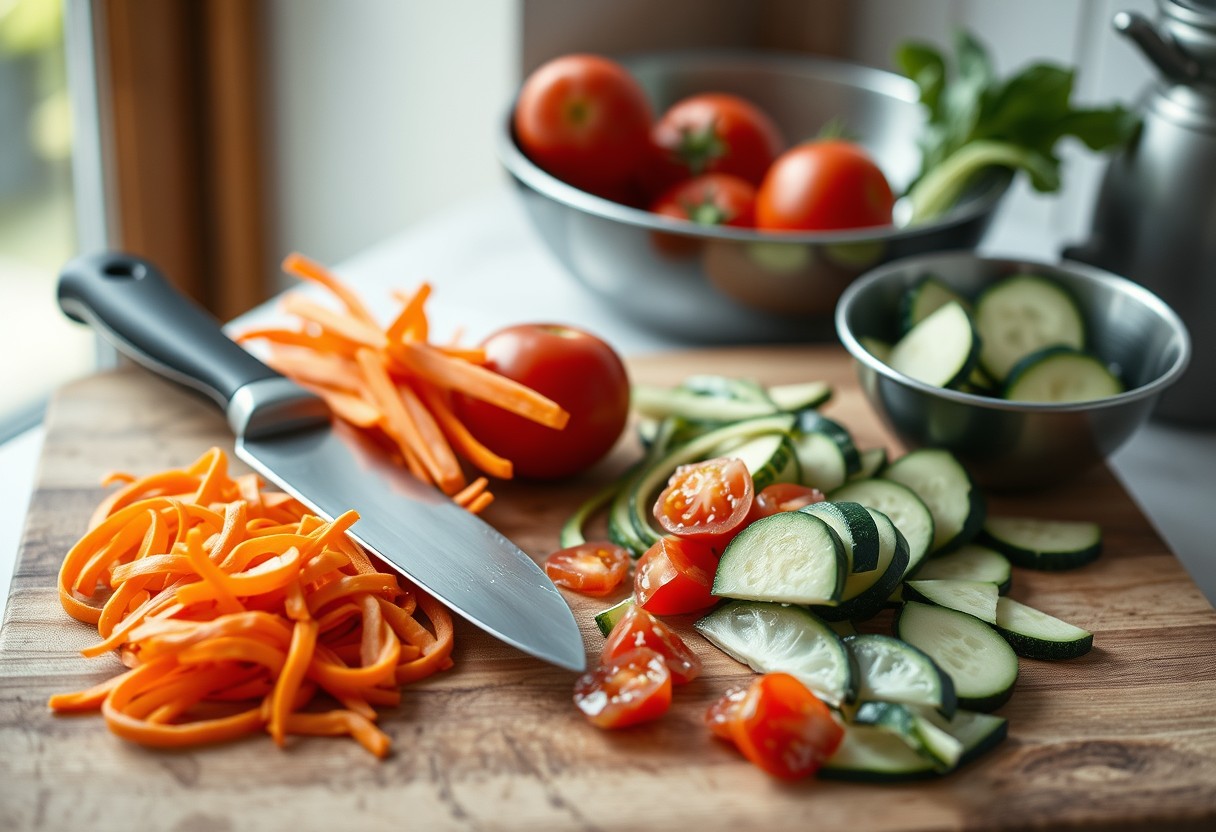
You may not realize it, but how you slice your carrots or chop your onions directly affects flavor, texture, and even cooking performance. A diagonal cut exposes more surface area, boosting caramelization. A thick cube holds moisture differently than a thin julienne. These choices shape every bite-influencing taste, mouthfeel, and how well ingredients absorb seasonings.
Key Takeaways:
- Different cutting techniques expose varying amounts of a vegetable’s cellular structure, directly influencing how its natural sugars, acids, and volatile compounds are released during cooking and perceived by your taste buds.
- The shape and thickness of a vegetable piece affects how it interacts with heat-thin slices may caramelize quickly while thick chunks retain crunch, altering both flavor development and mouthfeel in the final dish.
- Cut consistency changes not only cooking performance but also visual appeal; uniformly sized pieces create balanced texture and appearance, guiding expectations that shape the overall eating experience.
The Butcher’s Alchemy of the Cell
Smashed Walls and Escaping Sulfur
When you slice into a raw onion, you rupture microscopic compartments where sulfur-rich enzymes lie dormant. These compounds remain inert until cell walls break, triggering a rapid chemical reaction that produces volatile irritants. You’ve felt their sting in your eyes and nose-this is not mere discomfort, it’s evidence of active biochemistry unleashed by your knife. Crushing or chopping increases this effect dramatically, flooding the air with pungent molecules. Even subtle changes in cut depth or pressure alter how intensely these substances are released.
The Violence of the Dull Knife
A blunt blade doesn’t cut-it tears, smashing plant cells instead of slicing through them cleanly. This destruction releases far more reactive compounds than necessary, overwhelming your dish with sharp, acrid notes. With each pass of a poorly sharpened edge, you unintentionally intensify bitterness in garlic, heat in onions, and astringency in cruciferous vegetables. A clean cut from a sharp knife limits cellular damage, giving you control over flavor balance. Precision here isn’t about appearance-it’s about chemical restraint.
The Architecture of the Crunch
Geometry shapes how force travels through food as you bite, altering the sensation in your mouth. A sharp angle or thin edge fractures more easily under pressure, delivering a clean snap that signals freshness and precision. When you cut vegetables to create defined edges and varied thicknesses, you control the resistance each bite offers. The way a carrot splinters or a cucumber yields depends not just on its structure but on how deliberately you shaped it. This mechanical feedback loop-between knife, vegetable, and jaw-directly influences satisfaction, turning a simple crunch into a moment of textural delight.
Shards Versus Slabs
Thin, angular shards of radish or jicama break with a sharp report between your teeth, releasing flavor instantly and creating a sense of crispness. You experience more surface area per bite, which increases contact with saliva and taste receptors right at the moment of fracture. In contrast, thick slabs compress before splitting, muting that initial pop. The clean, sudden collapse of a well-formed shard delivers a more intense sensory punch, making the vegetable feel fresher and more vibrant even if it’s identical in composition.
The Resistance of the Fiber
Fibrous vegetables like celery or green beans respond dramatically to cut direction. Slicing them on the bias lengthens the grain exposure, forcing your teeth to tear through more cellular strands with each bite. This added resistance builds anticipation and prolongs flavor release. When you cut across the grain into narrow rounds, the fibers separate easily, yielding a quicker, less engaging chew. That slight pull before the break-when done right-triggers a deeper sense of satisfaction, turning a background texture into a focal point of the eating experience.
The Visual Deception of the Plate
Uniformity in vegetable cuts sends an immediate signal to your brain about what kind of meal you’re about to experience. When every carrot baton is identical, your mind assumes precision, care, and a professional standard of cooking you trust before the first bite. This visual consistency primes your palate to perceive cleaner flavors and higher quality, even if the ingredients are identical to a haphazard chop. You’re not just eating food-you’re interpreting a visual language, and symmetry becomes a promise of control and flavor reliability.
The Authority of the Julienne
Perfectly matched matchsticks of bell pepper or zucchini command attention through their disciplined repetition. Each julienne slice reflects a level of skill that silently asserts dominance over the plate’s composition. You interpret this precision not just as aesthetic choice but as evidence of culinary intent-a sign the cook respects the ingredient and the process. When every strand is the same thickness, your expectations rise: you anticipate even cooking, balanced texture, and a dish that delivers on its promise of refinement, even before tasting.
Color Saturation and Surface Light
Smooth, cleanly cut surfaces reflect light differently than ragged edges, altering how vibrant your vegetables appear. A sharp knife preserves cell integrity, resulting in glossy, bright pieces that catch the eye like polished gems. You perceive these as fresher and more flavorful, even when flavor hasn’t changed. The way light dances across uniform slices enhances color saturation, making greens appear livelier and reds deeper. This optical enhancement tricks your brain into anticipating a more intense taste experience, all shaped by the quality of the cut.
The Pan’s Violent Kiss
Every time you drop diced vegetables into a screaming hot pan, you’re not just cooking-you’re triggering a rapid chemical exchange between blade and heat. The way you cut determines how much surface area meets that aggressive sear, directly influencing the depth of caramelization. A precise chop from a sharp knife creates clean edges that blister quickly, while ragged tears from a dull blade trap moisture and steam instead. For a masterclass in precision, consult A Visual Guide to 13 Extremely Handy Knife Cuts to refine your technique and maximize flavor through fire.
Rapid Charring and the Small Dice
Small dice expose more surface area, making them especially vulnerable to the pan’s intense heat. When uniformly cut, these tiny cubes brown almost instantly, creating a crisp, smoky crust that contrasts beautifully with their tender interiors. Uneven pieces, however, lead to inconsistent results-some vanish into charred bits while others remain raw. Your knife work must be exact; even a slight variation can turn potential complexity into acrid disappointment under such high stakes.
Moisture Retention in the Large Chunk
Larger cuts resist the pan’s assault, preserving internal moisture even as their exteriors sear. This structural resilience allows thick wedges or planks to develop rich browning without drying out completely. The key lies in starting with a clean, single-motion cut that seals cell walls rather than shredding them, minimizing juice loss upon contact with heat. When executed well, these substantial pieces offer both textural contrast and concentrated sweetness born from slow, contained evaporation.
The Trap for Salt and Fat
Grooves and the Adhesion of Sauce
When you slice a zucchini at an angle or score the surface of a carrot, you’re not just adding flair-you’re engineering micro-reservoirs that hold sauce more effectively. These deliberate grooves create surface tension, allowing flavorful liquids to cling instead of pooling at the bottom of the plate. A julienne of bell pepper will trap less oil than one with crosshatched cuts, proving that your knife’s path directly influences how intensely each bite tastes. The ridges become invisible pockets, ensuring every mouthful delivers a consistent balance of seasoning and richness.
The Porosity of the Rough Cut
Chopping herbs or vegetables with a coarse hand creates fractured edges that are far more absorbent than clean slices. When you crush garlic or roughly chop parsley, you expose cellular gaps that eagerly soak up olive oil or lemon juice, making dressings adhere more completely. This texture-driven porosity means your palate detects flavor faster and more fully. A roughly torn kale leaf, for instance, will carry vinaigrette deeper into its structure, delivering a more intense and immediate taste experience with each bite.

The Weight of the Tradition
Every cut you make carries centuries of culinary intent, shaped not just by necessity but by identity. The knife, far from a mere tool, becomes an extension of cultural memory, passed down through generations in the precise angle of a slice or the rhythm of a chop. What you wield in your hand connects you to lineages of cooks who understood that how you cut defines not only texture and taste but belonging. In every stroke, tradition asserts itself-quietly, insistently-turning preparation into ritual and food into heritage.
French Rigor and the Battonet
When you slice a carrot into a battonet, you submit to a standard forged in the kitchens of Escoffier, where uniformity was not preference but principle. This exactness ensures even cooking, yes, but it also reflects a deeper belief: that discipline in the cut brings clarity to the dish. You’re not just preparing vegetables-you’re aligning yourself with a system that values precision as a form of respect, both for ingredients and craft. The clean lines you produce are less about appearance than about control, a culinary order passed down through strict training and sharper knives.
The Tao of the Cleaver
The cleaver in your hand is not just a blade but a philosophy made steel, shaped by centuries of movement in Chinese kitchens where one tool rules all. With it, you crush, chop, scoop, and slice, guided by a rhythm that values fluidity over formality. Your wrist learns to follow the natural resistance of the vegetable, adapting rather than imposing. Here, the act of cutting becomes a balance of force and grace, where efficiency and mindfulness are not opposed but fused in every decisive strike.
Final Words
You shape your meals more than you realize when you decide how to cut each vegetable. The size, angle, and consistency of your cuts influence texture, aroma, and even temperature perception in every bite. A carrot sliced crosswise releases different sugars when roasted than one julienned for stir-frying. Onions torn apart along their grain bleed flavor more gently. Your knife work isn’t just preparation-it’s a direct line to taste, mouthfeel, and satisfaction. What lands on your plate begins long before cooking, starting the moment your blade meets food.
FAQ
Q: Does the shape I cut vegetables into really affect how they taste?
A: The shape changes how vegetables interact with heat and seasoning, which alters their flavor. A carrot sliced into rounds exposes different surface areas than one cut on a diagonal or julienned, leading to variations in caramelization. Thin strips cook faster and develop more browning, enhancing sweetness through the Maillard reaction. Chunks retain moisture and stay denser, delivering a milder, earthier bite. It’s not that the raw ingredient changes, but how it transforms during cooking reshapes the eating experience.
Q: Why do some recipes insist on specific cuts like brunoise or chiffonade?
A: Precision cuts ensure even cooking and balanced texture within a dish. A brunoise-tiny, uniform cubes-is used in sauces so each spoonful releases consistent flavor. Chiffonade, the fine slicing of leafy herbs like basil, maximizes aromatic release without toughness. In a stir-fry, uneven pieces mean some vegetables turn mushy while others remain crisp. Professional kitchens use standard cuts not for show, but because size and shape directly control mouthfeel and timing.
Q: Can cutting technique influence how much oil or salt a vegetable absorbs?
A: Exposed surfaces act like sponges for fat and seasoning. A halved tomato has less edge than one diced into small cubes, which means fewer channels for oil to seep in. Diced potatoes brown more deeply in a roasting pan because increased surface area allows fat to cling and crisp the edges. When roasted with the same amount of salt, finely chopped onions will taste saltier overall due to greater surface exposure, even if the total sodium is unchanged.
Q: Is there a difference in crunch depending on how I slice celery or radishes?
A: Cutting across the grain of fibrous vegetables interrupts long strands, creating a cleaner snap. Slicing celery crosswise yields short fibers that break easily between the teeth, giving a sharp crunch. Cut lengthwise, it resists more, feeling stringy. Radishes sliced thin on a bias offer a delicate crispness ideal for salads, while thick wedges deliver a stronger, juicier burst. The direction of the knife changes the structure of each bite.
Q: Do traditional cuts like baton or paysanne serve a functional purpose beyond appearance?
A: These methods originated from practical cooking needs in large-scale or wood-fired kitchens. Baton cuts-thick matchsticks-are sturdy enough to hold shape in stews without disintegrating. Paysanne, slices cut to follow the natural curve of carrots or zucchini, increase surface contact with a hot pan, promoting even browning. In peasant soups, such cuts allowed ingredients to cook predictably over fluctuating heat sources, ensuring meals were reliable even without precise thermometers.