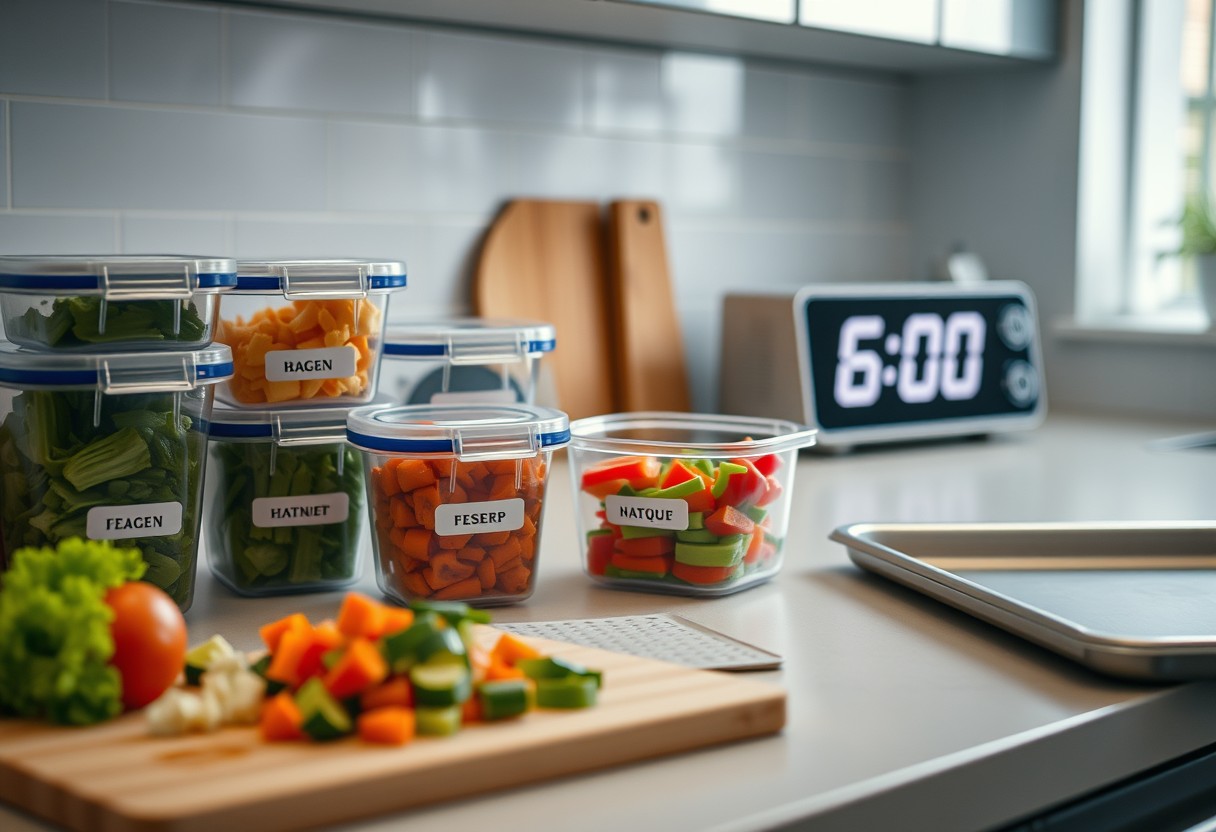
You can realistically prep a week’s worth of nutritious meals in just 60 minutes with the right strategy. Skipping proper planning is the most common mistake that leads to wasted time and food. By focusing on simple recipes, smart ingredient overlap, and efficient cooking order, you maintain control without sacrificing quality. This guide shows you how to maximize every minute-no special skills or equipment needed.
Key Takeaways:
- A focused one-hour meal prep works best when you limit your recipe count to three core dishes-such as a grain, a protein, and a roasted vegetable-using overlapping ingredients to cut down on time and cleanup.
- Prep order matters: begin with foods that cook unattended, like grains in a rice cooker or sheet pan meals in the oven, so you maximize passive cooking time while chopping or seasoning other components.
- Invest in stackable, portion-sized containers to streamline storage; dividing meals immediately after cooking reduces decision fatigue during the week and helps maintain consistent portion sizes.
Planning Your Menu for Maximum Efficiency
Selecting recipes that rely on overlapping core ingredients streamlines your entire prep process, cutting down both shopping time and kitchen effort. When you build meals around shared components-like using the same cooked chicken breast, quinoa, and bell peppers in a stir-fry, salad, and bowl-you reduce chopping, cooking, and cleanup. Focus on dishes that naturally align in flavor profiles and ingredient needs, such as Mediterranean or Asian-inspired meals, to avoid buying one-off spices or sauces. This method minimizes waste and ensures every item in your fridge has multiple purposes.
Factors for Choosing High-Yield, Low-Effort Ingredients
Smart ingredient selection makes a dramatic difference in how far your hour stretches. Stick to items that require minimal prep but deliver maximum versatility across meals. These choices save precious minutes without sacrificing nutrition or taste.
- Batch-cooked grains like brown rice or farro can fuel three to four different dishes
- Canned beans eliminate soaking and cut cooking time significantly
- Frozen vegetables are pre-chopped and retain nutrients, ideal for quick additions
- Pre-cut produce may cost slightly more but preserve your limited time
- Rotisserie chicken offers ready-to-use protein with almost zero hands-on effort
Tips for Building a Simplified Weekly Menu
A streamlined weekly menu doesn’t have to be repetitive-it just needs structure. Plan around a small set of proteins and starches that can be seasoned differently to feel unique each day. Repurposing the same base ingredients in varied combinations keeps your meals interesting without complicating your prep.
- Choose one main protein and prepare it in two ways (e.g., grilled and sauced)
- Use one grain across multiple meals with different mix-ins for variety
- Incorporate three core vegetables that appear in at least two recipes
- Designate two flavor themes (e.g., Mexican and Italian) to guide seasoning choices
- Limit condiments to three staple sauces to avoid clutter and waste
Streamlining Your Pre-Cooking Preparation
Clear your countertops, gather every tool you’ll need, and lay them within arm’s reach before touching a single ingredient. Wash and dry storage containers ahead of time so they’re ready when food comes off the heat. Having everything visible and accessible eliminates frantic searches mid-process and cuts wasted motion by half. You won’t afford even ten seconds of hesitation once the timer starts, so this silent setup phase is where your efficiency is truly won or lost.
How-to Utilize Pre-Washed and Pre-Cut Shortcuts
Saving precious minutes starts with smart ingredient choices-opt for pre-washed greens, diced onions, or frozen chopped vegetables that don’t sacrifice flavor or texture. While fresh whole ingredients may feel ideal, the time spent rinsing, peeling, and slicing can derail your schedule. These shortcuts maintain quality while reducing prep labor by up to 70%, especially for stir-fries, grain bowls, or soups. Just check labels to avoid added salts or preservatives that undermine your health goals.
Tips for Organizing Tools and Appliances for Rapid Access
- Keep your chef’s knife, cutting board, and mixing spoons on standby-clean and assembled like a workstation
- Plug in appliances you’ll use-like the rice cooker or blender-so they power up instantly
- Store frequently used spices in a caddy instead of scattering them across cabinets
- Use small bowls for pre-measured oils, seasonings, or marinades to eliminate mid-cook measuring
- A clutter-free zone around your stove and prep area prevents dangerous slips or spills under pressure
Executing the 60-Minute Cooking Sprint
You can cook an entire week’s worth of meals in one hour by mastering multitasking in a small kitchen space. Start with dishes that require oven time, then use that same window to handle stovetop tasks. Keep heat levels in check-don’t overcrowd pans or open the oven too often. Use timers and trust your instincts; visual cues like browning and bubbling are just as important as the clock. Stay focused but flexible, adjusting times slightly when needed. Efficiency comes from rhythm, not rigidity.
A Step-by-Step How-to for Parallel Processing
Begin by turning on the oven and loading sheet pans with proteins and vegetables that roast at similar temperatures. While those heat up, start sautéing aromatics in a large skillet for grains or sauces. Once seared, transfer items to make room for new ingredients without losing momentum. Simultaneously boil pasta or lentils in a pot while finishing off stir-fries. Timing overlap is key: aim to finish stovetop dishes just as roasted foods come out. This method maximizes appliance use and minimizes downtime.
| Action | Tips for Success |
|---|---|
| Preheat oven and load first batch | Use convection mode if available for faster, even cooking |
| Start stovetop components | Use high smoke-point oils and medium-high heat to avoid sticking |
| Cook grains or legumes | Set them early-they take time but need little attention |
| Finish quick-cooking proteins | Add delicate items like fish or spinach last to prevent overcooking |
Factors That Ensure Even Cooking Across Multiple Dishes
Uniform ingredient sizing makes the biggest difference when managing several dishes at once. Chop vegetables and proteins into consistent pieces so they cook at the same rate, especially in shared pans or batches. Arrange food evenly on sheet trays-overcrowding leads to steaming instead of roasting. Rotate pans halfway through baking, particularly in older ovens with hot spots. Match cookware to burner size and keep lids handy to trap heat when needed. Consistency beats complexity every time.
- Keep cuts uniform to prevent some pieces from burning while others stay raw
- Use oven racks positioned in the middle third for balanced airflow
- Select heavy-bottomed pans that distribute heat evenly on the stovetop
- Monitor doneness visually-browning and texture tell you more than the timer
- Allow space between items on sheet pans for proper caramelization and crispness
Mastering Storage and Portioning Techniques
Divide your meals immediately after cooking while ingredients are still hot to prevent bacterial growth and preserve freshness. Use airtight containers sized for single servings to maintain portion control and minimize contamination. A well-organized fridge setup ensures each container retains optimal temperature and avoids cross-contact with raw or uncooked items. For a practical example of balanced weekly planning, check out A Week’s Worth of Quick and Easy Breakfasts, Lunches, … to visualize effective portioning in action.
Tips for Air-Tight Sealing and Labeling
Seal each container securely to protect against moisture loss and odor absorption from stronger-smelling foods. Always cool food slightly before sealing to reduce condensation, which can lead to sogginess or bacterial growth. Label every container with the dish name and prep date using masking tape or reusable stickers. This prevents confusion and ensures you follow a first-in, first-out usage system. Keep a stack of similarly sized containers to streamline the process and maintain consistency.
- Use airtight lids to preserve texture and prevent spoilage
- Cool food slightly before sealing to avoid excess condensation
- Label with contents and date for accurate rotation
- Store upright and avoid overfilling to maintain seal integrity
Factors Influencing the Shelf Life of Prepped Foods
Temperature consistency, ingredient composition, and container quality directly impact how long your meals remain safe and appetizing. Foods with high moisture content, like cooked vegetables or sauces, degrade faster than drier proteins or grains. Dairy and egg-based dishes require stricter temperature control to prevent spoilage. Acidic components, such as tomatoes or vinegar, can extend shelf life slightly due to natural preservative properties. Always store prepped meals at or below 40°F and monitor for signs of texture changes or off-odors.
- Moisture content affects spoilage speed-drier foods last longer
- Acidic ingredients may slightly extend freshness
- Proteins should be tightly sealed to avoid odor transfer
- Refrigerator temperature stability is essential for safety
Reviving and Customizing Your Meals
Even with perfectly prepped dishes, flavors can dull after days in the fridge. You can restore vibrancy by incorporating quick enhancements just before eating. A splash of citrus, a drizzle of olive oil, or a handful of fresh herbs transforms a meal from stale to satisfying. Reheating correctly preserves texture while smart toppings add contrast and brightness. These small actions make a noticeable difference in how your food tastes and feels-without requiring extra prep time during your one-hour window.
How-to Reheat Without Losing Texture
Oven reheating at 350°F restores crispiness in roasted vegetables and proteins far better than a microwave. For grains and soups, use a stovetop with a splash of water to prevent drying. Covering food loosely traps steam when needed but allows airflow to avoid sogginess. Microwaves are fast but often leave textures rubbery or uneven-especially with meats and stir-fries. When possible, opt for low-and-slow reheating to preserve moisture and structure. Stirring halfway ensures even warmth without overcooking edges.
Tips for Adding Fresh Toppings to Prevent Flavor Fatigue
Fresh elements added at serving time keep meals tasting dynamic. Try slicing avocado, cherry tomatoes, or cucumber right before eating. A sprinkle of chopped cilantro, green onion, or toasted nuts introduces new flavor layers. Fermented options like kimchi or sauerkraut add tang and gut-friendly benefits. These finishing touches require minimal effort but deliver a bold sensory upgrade. Keep cut toppings in small containers for easy access.
- Add a squeeze of lemon or lime juice for brightness
- Top with toasted seeds or nuts for crunch
- Drizzle with hot sauce or tahini for depth
- Include fresh herbs like parsley or basil for aroma
- Use pickled vegetables to cut through richness
Evaluating and Refining Your Prep System
Time leaks often hide in plain sight during your meal prep session. You might not notice how much extra chopping, redundant seasoning, or disorganized ingredient layout slows you down until you track it. After your prep, reflect on which steps felt awkward or took longer than expected. Was a recipe too complex? Did you run out of bowls? Identifying these friction points helps you adjust before next week. Small changes-like pre-measuring spices or switching cutting boards-can yield noticeable time savings over multiple sessions.
Factors That Affect Your Weekly Preparation Speed
- Number of unique recipes requiring different techniques
- Availability of pre-cut or pre-washed ingredients
- Efficiency of your kitchen layout and tool placement
- Level of multitasking during the cooking sprint
- Consistency in following a structured prep order
Your weekly prep speed isn’t fixed-it shifts based on variables you can control. If you’re using five different pans for five different dishes, you’re creating unnecessary cleanup and monitoring effort. Recipes with overlapping cook times and shared ingredients boost efficiency. The fewer decisions you make mid-process, the smoother it goes. A cluttered workspace or dull knife adds hidden delays that accumulate fast. Streamline by standardizing methods and minimizing variables each week.
How-to Scale Your Meal Prep for Larger Families
Feeding more people doesn’t mean doubling your time, but it does require smarter scaling. Batch-cooking grains and proteins in large quantities saves effort without sacrificing variety. Use modular components like shredded chicken, roasted vegetables, or seasoned beans that can be mixed into different meals. Portioning early prevents overcooking and waste. Consider family members’ preferences when planning repeats-some dishes freeze better than others. The key is expanding volume without adding complexity, keeping your one-hour window realistic and sustainable even with more plates to fill.
To wrap up
You can successfully meal prep an entire week’s worth of food in just one hour by focusing on smart planning, efficient cooking methods, and strategic organization. Prioritize recipes with overlapping ingredients, use time-saving kitchen tools, and stick to a strict schedule during cooking. With consistent portioning and proper storage, your meals stay fresh and ready to eat. Over time, you’ll refine your rhythm, cutting minutes off each step and making the process feel effortless. Your future self will appreciate the effort when weekday meals become quick, healthy, and stress-free.
FAQ
Q: How can I realistically meal prep a full week’s worth of food in just one hour?
A: Focus on simplicity and overlap. Choose 2-3 core recipes that use similar ingredients and cooking methods, like roasted chicken, quinoa, and sheet-pan vegetables. Cook proteins and grains in bulk while vegetables roast simultaneously in the oven. Use multitasking-while the oven preheats, chop onions; while food cooks, portion leftovers. One hour becomes efficient when you eliminate downtime and stick to a strict timeline.
Q: What kitchen tools help save time during a one-hour meal prep session?
A: A sharp chef’s knife, large cutting board, two sheet pans, a rice cooker or instant pot, and multiple storage containers streamline the process. A rice cooker frees up stove space and requires no monitoring. Sheet pans allow vegetables and proteins to cook together at the same temperature. Pre-measured spice blends and oil in a spray bottle reduce decision-making and cleanup.
Q: Can I include breakfast and snacks in my one-hour prep without overloading myself?
A: Yes, if you choose no-cook or assembly-only options. Portion out overnight oats in jars with milk and chia seeds during your prep. Wash and cut fruit ahead of time and store it in clear containers. Fill small bags with nuts, seeds, or pretzels. These tasks take minutes and can be done while waiting for other items to cook, maximizing idle moments.
Q: How do I keep meals from getting boring when prepping so much at once?
A: Build variety through mix-and-match components rather than entirely different dishes. Prepare a base like brown rice, quinoa, or salad greens, then add different proteins (grilled chicken, black beans, hard-boiled eggs) and rotating sauces (pesto, tahini dressing, salsa). Store dressings separately to maintain texture. Small changes create new flavor profiles without extra cooking time.
Q: What’s the best way to reheat and finish meals during the week after batch cooking?
A: Reheat grains and proteins with a splash of water or broth in the microwave, covered, to restore moisture. Finish roasted vegetables under the broiler for 2-3 minutes to regain crispness. Add fresh toppings like avocado slices, lemon juice, or chopped herbs right before eating. A fried egg cooked fresh can transform a basic bowl into a satisfying meal with minimal effort.