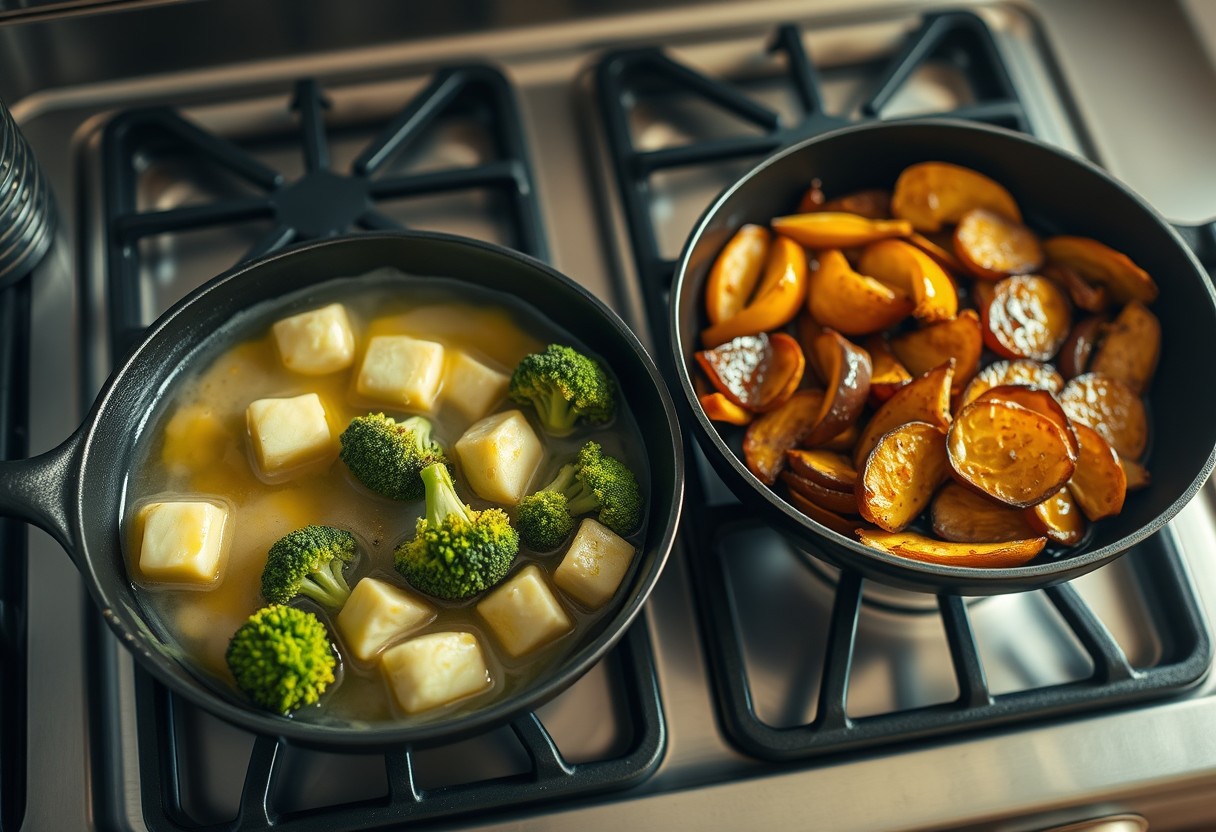
You’ve chopped, prepped, and cranked the heat, yet your vegetables end up soggy instead of golden and crisp. The issue often lies in how moisture escapes-or doesn’t-during cooking. A crowded pan traps steam, preventing browning, while low heat fails to trigger the Maillard reaction that creates flavor and texture. Learn how to avoid common missteps and achieve restaurant-quality results at home. For more, see this discussion on How to prevent vegetables from becoming soggy when stir-fry.
Key Takeaways:
- Overcrowding the pan traps steam, preventing vegetables from browning and instead leaving them limp and soggy.
- Excess moisture on the surface of vegetables or from cooking too many at once lowers the pan’s temperature and promotes steaming over searing.
- High heat and proper spacing allow Maillard reactions to occur, creating the golden, crisp texture that defines well-roasted vegetables.
The Sin of the Crowded Pan
Overfilling your baking sheet sabotages the entire roasting process before it truly begins. When vegetables are piled too close together, they roast unevenly because air cannot circulate freely around each piece. Instead of browning, they begin to steam from within, trapped by their neighbors on all sides. You’re not just losing crispness-you’re inviting sogginess at the structural level. For consistent results, spread your vegetables in a single layer with breathing room between them.
The Huddled Masses
Crowding creates zones where heat stagnates and moisture accumulates, no matter how high your oven temperature. Each vegetable piece releases moisture during cooking, and without space, that wetness has nowhere to escape. You end up with soft, pale chunks instead of defined, caramelized edges. Think of it like trying to sunbathe under an umbrella-nothing dries, nothing transforms. Give every piece its own real estate on the pan for optimal exposure and texture.
Thermal Suicide
When vegetables touch, they transfer heat inefficiently, creating cold spots that disrupt even cooking. One piece may blacken while another stays raw, all because the pan’s surface can’t recover heat fast enough between contact points. This thermal imbalance leads to inconsistent browning and limp interiors. By spacing them properly, you allow direct radiant heat to work uninterrupted, ensuring each piece crisps from edge to center without relying on its neighbor’s fate.
Water is the Assassin
Excess moisture on the surface of your vegetables is the single most common reason they steam instead of sear. When you toss wet produce into a hot pan, the immediate result is a violent burst of steam that clings to each piece, forming a barrier between the food and the heat. This layer prevents browning and promotes sogginess from the very first minute. Even a light sheen of water-left behind after rinsing-can sabotage crispness. Dry vegetables thoroughly before cooking; anything less guarantees disappointment.
The Towel Ritual
After washing, take a moment to pat each vegetable piece dry with a clean cotton towel. Paper towels work in a pinch, but cloth absorbs more effectively and reduces waste. Press firmly along edges and crevices where water hides-broccoli florets and mushroom caps are especially prone. Skipping this step means introducing extra water directly into the pan, which forces steaming over browning. A 10-second drying ritual can make the difference between limp results and deep golden crust.
Osmotic Sabotage
Salt draws out moisture through osmosis, and seasoning too early can pull water from the interior of vegetables just when you need high surface heat. If you sprinkle salt before cooking, especially on watery types like zucchini or eggplant, you’re triggering a slow leak that undermines crispness. The surface may look dry at first, but minutes later, beads of liquid appear. Wait to salt until after searing has begun, or use a pre-salting method that includes draining and re-drying if time allows.
Fear of the Flame
High heat isn’t optional when you’re chasing crisp, caramelized vegetables-it’s non-negotiable. If your stove stays on low or medium, you’re not protecting your food, you’re condemning it to steam from the inside out. That gentle sizzle you hear? It’s the sound of failure. True searing happens fast, loud, and hot, driving moisture off the surface so browning can occur. Without this intensity, you’ll never reach that golden crust you want.
Lukewarm Failure
Running your pan too cool guarantees disappointment. Vegetables tossed into a tepid skillet release water faster than the heat can evaporate it, creating a damp environment where sogginess thrives. You won’t see color, only pale, limp results. The pan must be visibly hot-droplets of water should skitter and vanish instantly. Anything less means your vegetables are boiling, not browning, and that’s the opposite of what you’re after.
Smoke Point Reality
You need an oil that can withstand extreme heat without breaking down. If your oil starts smoking heavily within seconds, it’s failed you, releasing acrid fumes and toxic compounds. This isn’t a warning-it’s damage already happening. Oils like refined avocado, safflower, or peanut handle high temperatures safely. When you choose a low-smoke-point oil, you sabotage your own effort before the first flip.
Choosing the Right Sacrifices
Not every vegetable behaves the same under heat, and your success hinges on selecting those with structural integrity over those burdened by excess water. You’ll face a choice: include a high-moisture ingredient that risks sogginess or leave it out for the greater good of texture. Zucchini, eggplant, and bell peppers often release so much liquid they steam the entire batch, undermining crispness. Opting for denser vegetables like carrots, parsnips, or turnips gives you a far better chance at achieving that sought-after golden crust.
The Mushy Offenders
Zucchini, tomatoes, and mushrooms are among the worst culprits when it comes to sabotaging crispness. Their high water content floods the pan the moment heat hits, creating steam instead of sear. Even with perfect technique, these vegetables often wilt before they can caramelize. You may love them roasted, but including them without adjustment guarantees a limp outcome. Consider roasting them separately or pre-cooking to drive off moisture if you insist on their presence.
Rooted in Success
Root vegetables like sweet potatoes, beets, and rutabagas possess the dense cellular structure needed to withstand high heat without collapsing. Their natural sugars also promote deep browning and a crisp exterior when given space and time. Unlike their watery counterparts, these vegetables release moisture slowly, allowing evaporation rather than pooling. When you prioritize these sturdy options, you’re building a foundation for texture that holds up from the first bite to the last.
Geometry of the Kitchen
Shape defines success when transforming vegetables into golden, crisp delights. How you cut determines how much surface touches the heat, and maximizing that contact is the secret to browning, not sogginess. You control the outcome with every slice-thinner edges caramelize, broad faces sear, and uniform pieces ensure even cooking. The final seasoning remains yours to decide, applied only after roasting to preserve texture and let your instinct guide the finish. Precision here isn’t about perfection-it’s about purpose.
The Uniform Edge
Consistency in size guarantees every piece behaves the same under fire. When chunks vary, smaller ones burn while larger ones steam from trapped moisture. You want even thickness so heat penetrates each unit at the same rate, allowing all surfaces to crisp instead of surrender to sogginess. A steady hand at the cutting board creates the foundation for uniform browning-no guesswork, no excuses. This balance isn’t aesthetic-it’s functional, and it starts the moment your knife meets vegetable.
Charred Perfection
Some blackening isn’t failure-it’s flavor earned. When edges deepen to a rich, smoky brown, they carry depth that paler pieces lack. You’ll recognize the difference: a true char adds complexity, while mush signals mismanagement. Let heat work boldly, knowing those darkened corners are reservoirs of crispness and taste, not overcooked mistakes. Trust your eyes and nose-when the scent turns nutty and the color leans toward mahogany, you’ve struck the balance between raw and ruined.
To wrap up
You now know that sogginess isn’t bad luck-it’s the result of avoidable choices in your kitchen. When vegetables steam instead of sear, it’s because they’re crowded, wet, or cooked at too low a temperature. You control the heat, the space, and the timing. High oven racks, dry produce, and room between each piece make all the difference. A sheet pan should look sparse, not packed. Your goal isn’t quantity but quality: caramelized edges, tender interiors, and real texture. Stick to these principles, and your roasted vegetables will consistently turn golden, crisp, and deeply flavorful.
FAQ
Q: Why do my roasted vegetables always come out mushy instead of crispy?
A: Soggy vegetables usually result from too much moisture and insufficient heat exposure. When vegetables release water during cooking, overcrowding the pan traps steam instead of allowing it to escape. This steam softens the outer layer, preventing browning. Roasting at too low a temperature or failing to dry vegetables before cooking also contributes to a limp texture. For crisp results, spread them in a single layer on a hot baking sheet and avoid flipping too early.
Q: Does the type of pan I use really affect how crispy my vegetables get?
A: Yes, the pan makes a noticeable difference. Thin or dark-colored baking sheets can warp under high heat and create uneven cooking surfaces. A heavy-duty rimmed baking sheet, like a half-sheet pan made of aluminized steel, distributes heat more evenly and supports better browning. Nonstick pans may prevent sticking but often inhibit caramelization because they don’t get hot enough for effective Maillard reactions.
Q: Should I toss my vegetables in oil before roasting, and does the amount matter?
A: Oil helps transfer heat to the vegetables and encourages surface browning. Without it, moisture stays trapped near the skin. Use enough oil to coat each piece lightly-about 1 to 2 tablespoons per pound of vegetables. Too much oil pools at the bottom of the pan and fries rather than roasts the food, leading to greasy, unevenly cooked results. Toss them in a bowl before spreading on the sheet for even coverage.
Q: Why do some of my vegetables burn while others stay soft?
A: This happens when pieces are cut unevenly. Larger chunks take longer to cook, while smaller ones over-char. Uniformity in size ensures each piece cooks at the same rate. A carrot cut into thick rounds and a parsnip sliced into thin coins will never finish together. Aim for consistent shapes and sizes-about 1-inch cubes for dense vegetables like potatoes or turnips, slightly larger for softer ones like zucchini.
Q: Can I roast frozen vegetables and still get them crispy?
A: Roasting frozen vegetables rarely yields crisp results. They contain more internal moisture due to ice crystal formation, which turns to steam in the oven. This excess moisture steams the vegetables instead of roasting them. If using frozen, thaw and thoroughly pat them dry first, then spread in a thin layer on a preheated pan. Even then, fresh vegetables will always caramelize more effectively and develop better texture.