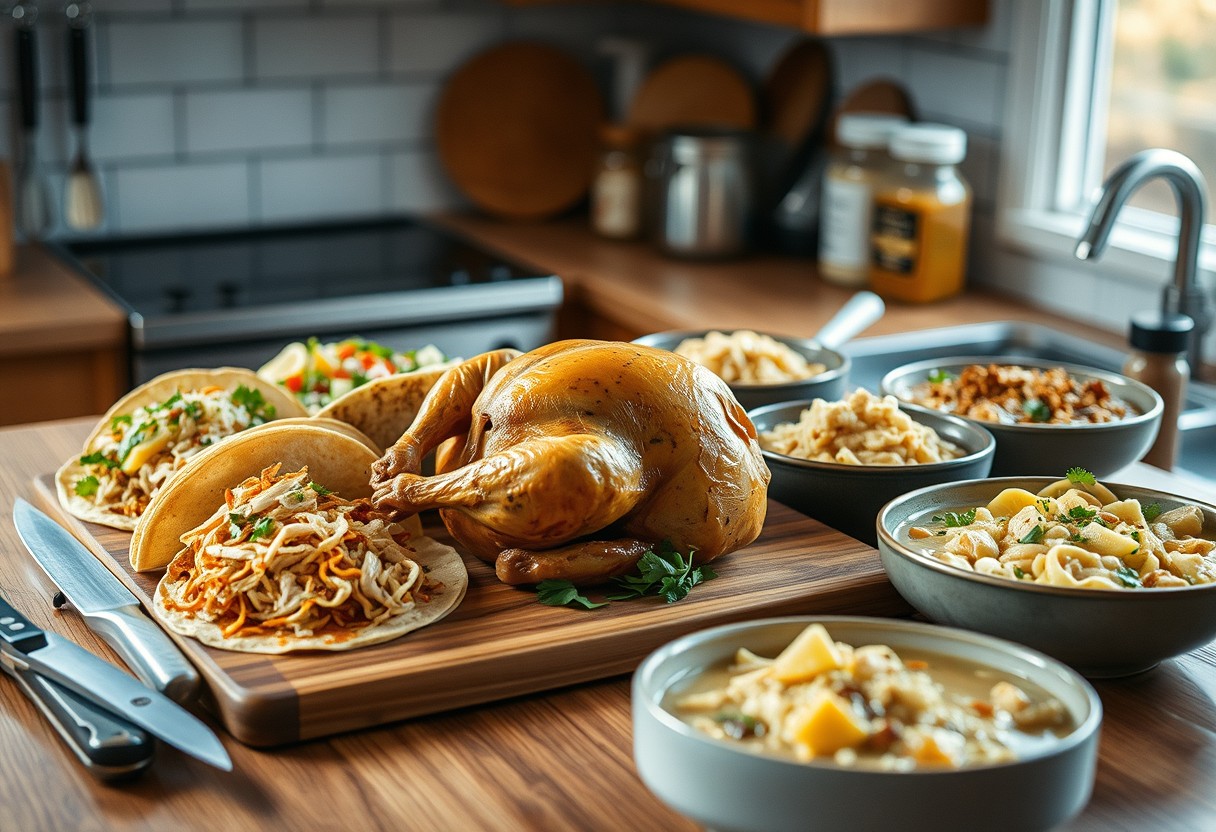
You can save hours every week by cooking one batch of protein and turning it into multiple distinct meals. Improper storage or reheating can lead to foodborne illness, so handling matters critically. With the right approach, a single batch of chicken, beef, tofu, or fish becomes tacos, stir-fries, salads, and bowls-all with unique flavors and textures-without extra prep time.
Key Takeaways:
- Batch-cooking a single type of protein allows for multiple distinct meals when paired with different sauces, spices, and side ingredients, reducing daily cooking time without sacrificing variety.
- Using neutral cooking methods like poaching, roasting, or slow-cooking preserves the protein’s adaptability, making it easy to repurpose into cuisines ranging from Mexican tacos to Asian stir-fries.
- Strategic flavor layering-adding bold ingredients such as miso, harissa, or lime zest at the final stage-transforms the same base protein into unique dishes that feel fresh each time.
Selecting Versatile Proteins: Key Factors for Batch Success
Choosing the right protein lays the foundation for meals that stay flavorful and satisfying after reheating. Opt for lean cuts like chicken breast, turkey, or pork tenderloin, which maintain texture and absorb diverse seasonings without becoming greasy or tough. Hearty options such as beef chuck or short ribs also perform well when slow-cooked, retaining moisture and tenderness across multiple uses. Proteins with moderate fat content and firm structure respond best to reheating, preserving integrity in stir-fries, salads, or grain bowls. Avoid delicate or highly marbled meats that can dry out or turn rubbery when warmed a second time.
- lean cuts like chicken breast or pork tenderloin
- hearty meats such as beef chuck or short ribs
- moderate fat content for moisture retention
- firm texture that holds up to reheating
- neutral flavor profile for recipe flexibility
Identifying neutral-tasting base proteins
A neutral flavor in your cooked protein opens the door to endless meal variations without overpowering spices or residual marinades getting in the way. Chicken, firm tofu, turkey, and white fish naturally lack strong tastes, making them ideal canvases for sauces and seasonings added later. These proteins won’t clash with bold global flavors like curry, chimichurri, or teriyaki when repurposed days later. Stay away from heavily seasoned or smoked varieties unless you’re committed to a specific flavor path. A clean, simple taste at the start ensures your meals can evolve in any direction.
Criteria for choosing quality cuts
Look for consistent thickness and even marbling when selecting raw protein to ensure uniform cooking and avoid dry or underdone sections. Freshness is non-negotiable-choose cuts with a bright color, firm texture, and no off odors to guarantee safety and taste after storage. High-quality proteins absorb flavors better and reheat more evenly, reducing waste and improving meal consistency. Whether buying poultry, beef, or plant-based options, always source from reputable suppliers to maintain standards across your batch-cooked meals.
How-to Master Neutral Cooking Methods for Flexibility
Salt, pepper, and a light hand with aromatics form the foundation of truly adaptable protein prep. By seasoning simply, you preserve the ability to rework cooked chicken, beef, tofu, or fish into nearly any flavor profile later-whether that’s a Korean-inspired bowl or a Mediterranean salad. Avoid strong spices or sugary glazes during the initial cook, as these limit future applications. Stick to clean, subtle enhancements so your protein can seamlessly transition across cuisines without clashing notes.
Roasting, poaching, and slow-cooking basics
Roasting at a moderate 325°F ensures even doneness without browning too deeply, keeping the protein neutral and versatile. Poaching in simmering water or broth gently cooks delicate items like chicken breasts or fish, preserving a blank-flavor canvas. Slow-cooking on low heat works well for tougher cuts, breaking down connective tissue while retaining a consistent, unseasoned base ideal for shredding and repurposing later in tacos, grain bowls, or soups.
Maintaining moisture during the initial cook
You can’t rehydrate dry meat, so protecting moisture from the start is non-negotiable. Brining lean proteins like chicken or pork for 30 minutes before cooking helps them retain juices during roasting or slow-cooking. When poaching, keep the liquid just below a simmer to prevent protein fibers from tightening and squeezing out moisture. Resting meat after cooking-especially larger cuts-locks in succulence, ensuring every portion stays tender when reheated and remixed into new dishes.
Essential Factors for Safe Storage and Reheating
To protect your health and preserve the quality of your cooked protein, temperature control is non-negotiable. Bacteria multiply rapidly between 40°F and 140°F, so you must cool protein promptly and store it below 40°F. Always use clean containers and avoid leaving food at room temperature for more than two hours-one hour if the air is above 90°F. Reheating must reach an internal temperature of 165°F to eliminate pathogens. Protect both flavor and safety by prioritizing speed and consistency in cooling and reheating.
- Refrigerate within two hours of cooking to prevent bacterial growth
- Store in shallow, airtight containers to promote even, rapid cooling
- Label with dates to ensure consumption within 3-4 days
- Use a food thermometer to verify internal reheating temperatures
- Avoid repeated temperature cycling by portioning before freezing
Optimal cooling and portioning techniques
Cooling your protein quickly preserves its texture and reduces the risk of spoilage. Divide large batches into smaller portions immediately after cooking so heat dissipates faster. Placing a full pot in the refrigerator traps warmth in the center, creating a breeding ground for bacteria-never cool large quantities in one container. Use ice baths or spread portions in a single layer on a tray before refrigerating. Once cooled, transfer to sealed containers to maintain moisture and prevent cross-contamination.
Reheating methods that prevent dryness
Reheating with added moisture keeps your protein tender and appetizing. Steam, simmer in a sauce, or use a covered dish with a splash of broth to retain juiciness. Microwaving works well when done at medium power with a damp paper towel over the dish to trap steam. Avoid high heat or prolonged exposure, which can overcook edges while leaving centers cold. For roasted or grilled cuts, slicing before reheating ensures even warmth without toughening the exterior.
How-to Infuse Global Flavors into Pre-Cooked Bases
Transform your batch-cooked protein with bold, global sauces and spices that redefine its character entirely. A simple grilled chicken breast becomes Moroccan tagine with ras el hanout and preserved lemon, or Korean-inspired bowl fare when tossed in gochujang and soy glaze. The right spice blend can transport your dish across continents without altering the base preparation. Explore inspiration from diverse cuisines using accessible ingredients-start with one cup of sauce per pound of protein for even coating. For more high-protein meal ideas, check out 49 High-Protein Recipes That’ll Keep You Satisfied to spark creativity.
Creating flavor profiles from Mediterranean to Asian
Build authentic regional tastes by matching spices and sauces to their cultural roots. Toss pre-cooked shrimp with smoked paprika, garlic, and oregano for a Spanish twist, or stir-fry sliced beef with lemongrass, fish sauce, and brown sugar for a Vietnamese pho-style bowl. Each combination activates distinct aroma compounds that signal freshness and depth, making the same protein feel like a new meal. Stick to traditional pairings-cumin and coriander for Middle Eastern dishes, five-spice powder for Chinese-to maintain integrity and avoid muddled flavors.
Incorporating fresh aromatics and finishing oils
Finish your spiced protein with raw elements that amplify complexity and brightness. Drizzle tahini oil over falafel-seasoned chickpeas or swirl chili crisp onto sesame-ginger chicken just before serving. Fresh scallions, minced cilantro, grated ginger, or crushed garlic add punch without cooking, preserving volatile oils lost to heat. These final touches create contrast against the neutral base, turning simplicity into sophistication. A single tablespoon of flavored oil can redefine an entire plate, making leftovers feel intentional and restaurant-quality.
Expert Tips for Transforming Texture and Form
Changing the physical structure of your cooked protein is one of the most effective ways to avoid meal fatigue. By altering how it looks and feels, you trick your palate into accepting it as a new dish each time. You can stretch one batch across multiple meals simply by adjusting its form-each version delivering a distinct eating experience. Consider these techniques to maximize variety without extra effort:
- Use shredding for pulled texture in tacos or sandwiches
- Apply dicing for even distribution in grain bowls or salads
- Try crisping or searing to add crunch and depth
- Break into flakes for seafood-style applications
- Blend into minced form for sauces or stuffings
Shredding, dicing, and searing for different mouthfeels
Shredding cooked chicken or pork creates tender strands that absorb sauces deeply and work well in soft tortillas or over rice. When you dice the same protein into small cubes, it integrates smoothly into salads or stir-fries, offering a more controlled bite. A quick sear in a hot pan transforms leftover slices into crispy-edged morsels, adding a satisfying contrast that elevates even the simplest dish. This textural shift keeps meals feeling fresh without requiring new ingredients.
Using protein as a filling versus a standalone component
Repurposing your cooked protein as a filling changes both its role and perception on the plate. When tucked into wraps, stuffed peppers, or baked potatoes, it becomes part of a layered experience rather than the center focus. As a standalone item, it relies more on seasoning and presentation to impress. Shifting between these uses prevents boredom-your brain registers the contextual difference almost as much as the flavor, making each meal feel distinct even when the base ingredient remains unchanged.
Strategic Meal Planning Tips for Maximum Efficiency
- Map out a week of diverse dishes using one batch of cooked protein to save time and reduce effort
- Plan meals that require minimal active cooking by relying on complementary pantry staples
- Align meal timing with the shelf life of cooked protein to maintain freshness and flavor
Scheduling meals based on protein shelf life
Design your weekly menu so the first dishes use the protein within two days of cooking, when texture and flavor are at their peak. Reserve heartier applications like stews or casseroles for later in the week, as they handle slight moisture loss better. Consuming perishable proteins beyond five days increases the risk of spoilage, so plan accordingly. Rotate meals to ensure nothing sits too long, keeping every plate tasting fresh and safe.
Building a pantry of complementary staples
Stock grains, canned beans, dried spices, and jarred sauces that pair seamlessly with your base protein. A well-stocked pantry lets you pivot from a Mexican-inspired bowl to an Asian-style stir-fry without extra prep. Having versatile ingredients on hand cuts active cooking time dramatically and supports daily variety. You’ll rely less on last-minute decisions and reduce food waste by combining what you already own into satisfying, distinct meals.
Summing up
You’ve learned how a single batch of cooked protein can become the foundation for diverse, satisfying meals across multiple days. By using neutral cooking methods, storing portions safely, and applying global flavors strategically, you maintain flexibility without sacrificing taste or texture. Transforming chicken, beans, or tofu into distinct dishes-from tacos to stir-fries to grain bowls-relies on varying sauces, spices, and preparation techniques. With thoughtful planning and attention to detail, your kitchen efficiency grows, waste decreases, and meals stay exciting.
FAQ
Q: Can I really turn one batch of cooked chicken into five different meals without it tasting repetitive?
A: Yes, you can create entirely distinct meals by changing the sauce, seasoning, and supporting ingredients. Roast a plain batch of chicken breasts using just salt, pepper, and olive oil, then portion them out. One serving becomes a Thai-inspired salad with lime juice, fish sauce, cilantro, and shredded cabbage. Another goes into a Mediterranean wrap with hummus, roasted red peppers, olives, and feta. A third works in a creamy mushroom pasta, while a fourth can be shredded for tacos with pickled onions and avocado. The fifth might go into a stir-fry with soy sauce, ginger, broccoli, and brown rice. Each dish uses the same base protein but delivers a unique flavor profile and texture.
Q: What’s the best way to cook a large amount of ground beef so it can be used in multiple cuisines later?
A: Brown the ground beef in a wide skillet over medium heat without adding strong spices-skip the taco seasoning or Italian herbs at this stage. Drain excess fat, then divide the meat into portions and store them plain. When ready to use, one portion can become spaghetti bolognese with tomato paste, garlic, and oregano. Another can go into Korean-style lettuce wraps with gochujang, sesame oil, and scallions. A third works in shepherd’s pie when combined with peas, carrots, and gravy. By keeping the initial cook neutral, you avoid flavor conflicts and maintain flexibility across global dishes.
Q: How long can I keep cooked protein in the fridge before turning it into different meals?
A: Most cooked proteins like chicken, beef, pork, or tofu stay safe and fresh in the refrigerator for three to four days. If you plan to stretch meals over a longer period, freeze individual portions in labeled, airtight containers. For example, a batch of grilled salmon can be frozen in vacuum-sealed bags and thawed as needed. Reheat gently in a covered pan with a splash of liquid to prevent drying. Always cool cooked protein within two hours of cooking and avoid leaving it at room temperature for extended periods to reduce bacterial growth.
Q: Is there a plant-based protein that works well for meal variation like animal proteins do?
A: Cooked lentils are an excellent plant-based option for diverse meal building. Prepare one pot of brown or green lentils until tender but firm, then drain and cool. Use one cup in a warm curry with coconut milk, turmeric, and spinach. Mix another cup into a grain bowl with tahini dressing, roasted sweet potatoes, and kale. Fold a third portion into a stuffed bell pepper with rice and diced tomatoes. Lentils absorb surrounding flavors easily and hold their shape well, making them ideal for transformation without losing structure or taste.
Q: Can I change the texture of cooked chicken to make it feel like a new ingredient each time?
A: Absolutely. Shred, dice, slice, or chop the chicken depending on the dish you’re creating. Pulled chicken works in quesadillas or enchiladas, while small cubes fit perfectly in creamy casseroles or egg salads. Flattening a breast and slicing it thinly makes it ideal for sandwiches or stir-ins. For a crispier version, reheat shredded chicken in a hot oven or air fryer until edges are slightly crunchy-this gives a fried-like texture for salads or tacos. Altering form changes mouthfeel and perception, making the same base feel entirely different from one meal to the next.