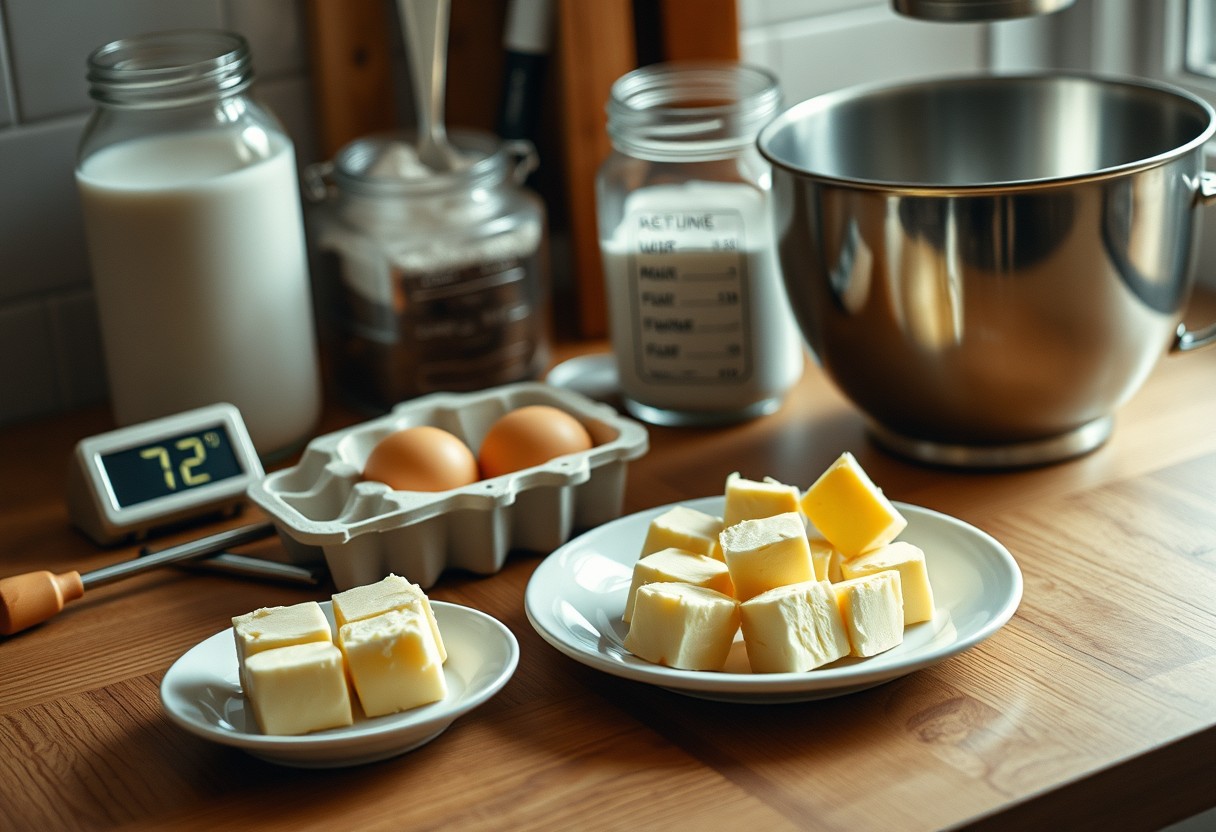
When you let ingredients like eggs, butter, or milk warm to room temperature, you enable smoother emulsions and more consistent baking results. Cold ingredients can resist mixing, leading to dense cakes or uneven batters, while warmed components blend effortlessly. This small step can mean the difference between a fluffy cake and a kitchen fail. You’ve likely seen recipes insist on it-but now you’ll understand why.
Key Takeaways:
- Dairy and eggs blend more evenly into batters when at room temperature, reducing the risk of curdled mixtures and promoting uniform texture in baked goods.
- Room-temperature ingredients help leavening agents activate more consistently, leading to better rise and structure in cakes and muffins.
- Bringing components like butter to room temperature allows for greater air incorporation during creaming, resulting in lighter, fluffier results.
The Emulsion Equation
Temperature directly affects how well fats and liquids bind in batters and sauces. When you add cold eggs to a room-temperature butter and sugar mixture, the fat can seize and turn grainy, breaking the emulsion needed for a smooth texture. This destabilization leads to curdled batters, which impacts both the rise and final crumb of baked goods. By bringing ingredients like eggs, milk, or cream to room temperature first, you ensure they integrate evenly, creating a stable, airy emulsion. A stable mix means consistent results, especially in delicate recipes like sponge cakes or custards where structure hinges on proper blending.
Thermal Shock and Texture
Temperature mismatches can ruin your dish’s final texture in seconds. When you add cold ingredients like eggs or dairy into a warm batter, the sudden shift causes thermal shock, which may lead to uneven mixing, grainy custards, or curdled sauces. This reaction disrupts delicate protein structures, especially in sensitive recipes like soufflés or ganache. By bringing components to room temperature first, you maintain consistency and encourage smooth integration. The result? A silkier mouthfeel and professional-quality finish every time.
The Rise of Leavening
When you’re working with leavening agents like baking powder or yeast, the temperature of your ingredients directly impacts how well your batter or dough rises. Cold butter or eggs can slow down yeast activity and prevent proper aeration, leading to dense, flat results. Room-temperature ingredients blend more smoothly, creating the ideal environment for air pockets to expand during baking. This is especially critical in cakes, muffins, and yeasted breads where lift and crumb structure define success. By allowing dairy, eggs, and fats to warm up beforehand, you give your leavening agents the best chance to perform consistently and effectively.
When Cold is Actually Better
You might assume warming ingredients always improves results, but certain components perform best when kept cold. Butter, for example, should remain chilled when making flaky pie crusts or biscuits-its solid state creates steam pockets during baking, leading to distinct layers. Similarly, cold eggs stabilize whipped cream and meringues more effectively by slowing air incorporation just enough to build structure. Even some cookie doughs benefit from refrigeration, as cooler temperatures prevent excessive spreading. Resisting the urge to bring everything to room temperature can be the difference between success and disappointment, especially in delicate pastries where precision matters most.
Practical Thawing Tactics
Planning ahead makes all the difference when bringing ingredients to room temperature. Never thaw perishables at room temperature for more than two hours, as this increases the risk of bacterial growth. Instead, transfer dairy, eggs, or butter from the freezer to the refrigerator 24 hours in advance for a slow, safe transition. For faster results, place sealed items like cream cheese in a bowl of cool water-this method can cut thawing time in half without compromising safety. You’ll maintain ingredient integrity while ensuring your recipe performs as expected.
To wrap up
You achieve more consistent results in baking when ingredients like eggs, butter, and dairy reach room temperature before mixing. Cold ingredients disrupt the emulsion needed for smooth batters, leading to uneven textures or collapsed structures. Room-temperature components integrate more readily, supporting proper aeration and even rising during baking. This simple step improves the physical behavior of your mixtures, especially in delicate recipes like cakes or custards. You may not notice dramatic differences in every recipe, but in finicky ones, the temperature of your ingredients can make or break the final product.
FAQ
Q: Why does bringing butter to room temperature matter in baking?
A: Room-temperature butter has the right consistency to trap air when beaten with sugar, a key step in creating light, fluffy cakes and cookies. Cold butter doesn’t blend smoothly, leading to a dense or uneven texture. When properly creamed, softened butter forms tiny air pockets that expand in the oven, giving baked goods their rise and tender crumb.
Q: Can I use cold eggs in a cake recipe, or do they really need to be at room temperature?
A: Room-temperature eggs blend more evenly into batters, especially those containing creamed butter and sugar. Cold eggs can cause the fat to seize up, resulting in a curdled or lumpy mixture. They also contribute to better volume when whipped, as in sponge or angel food cakes, where air incorporation is essential for structure.
Q: How long does it take for ingredients to reach room temperature?
A: Most dairy items like eggs, milk, or butter take about 30 to 60 minutes on the counter. A stick of butter typically softens in 45 minutes, while eggs can take 30 minutes out of the fridge. In a hurry? Place eggs in a bowl of warm (not hot) water for 10-15 minutes to speed up the process without cooking them.
Q: Does cream cheese really need to be softened before mixing?
A: Softened cream cheese blends smoothly into cheesecake batters or frostings. Cold cream cheese resists mixing, leading to lumps that are hard to remove even with extended beating. A smooth base ensures a creamy, uniform texture in the final product, especially important in no-bake desserts or delicate fillings.
Q: What happens if I bake with cold ingredients by mistake?
A: Using cold ingredients can result in dense, heavy, or unevenly textured baked goods. Cold butter may not cream properly, cold eggs can cause batter to split, and cold dairy can weaken gluten development or emulsion stability. The final product might not rise as expected or could have a gummy or curdled appearance.